
Review · ITALY
Ancona: Urban Trek Tour with Wine and Food Tasting
Ancona gives you a lot in a small package: Greek origins, Roman monuments, sea views, and steep coastal paths within about 6 km. I like the way this walk connects the city’s natural harbour and high cliffs instead of treating its old sights as isolated stops. I also like having Ivonne Raffaeli, a local guide with a personal connection to Marche, lead a private outing in English or Italian.
The main catch is the food and wine tasting. It is part of the experience’s theme, but the meal and drinks are not included in the $235 price. You also need to allow four hours, wear proper walking shoes, and avoid shorts.
Why this Ancona walk is worth considering
- 2,400 years in 6 km: Greek, Roman, medieval, and modern Ancona fit into one active route.
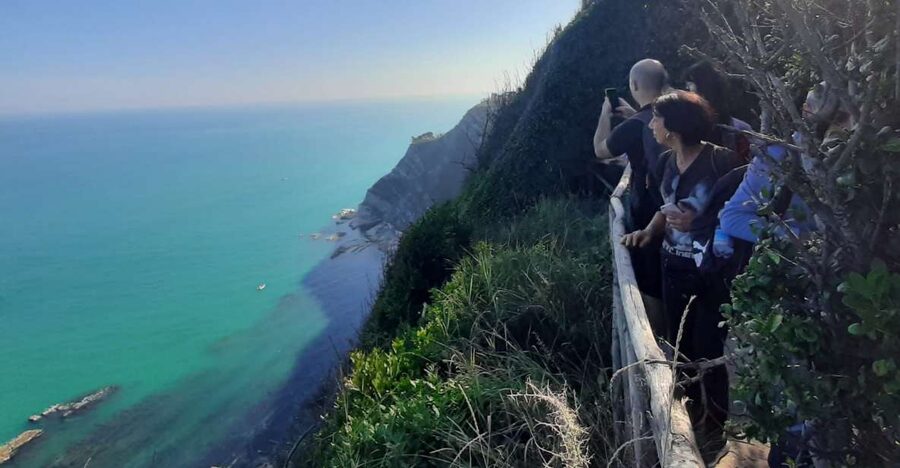
- Cliff-top views: Passetto and Cardeto Park give you broad views across the sea and harbour.
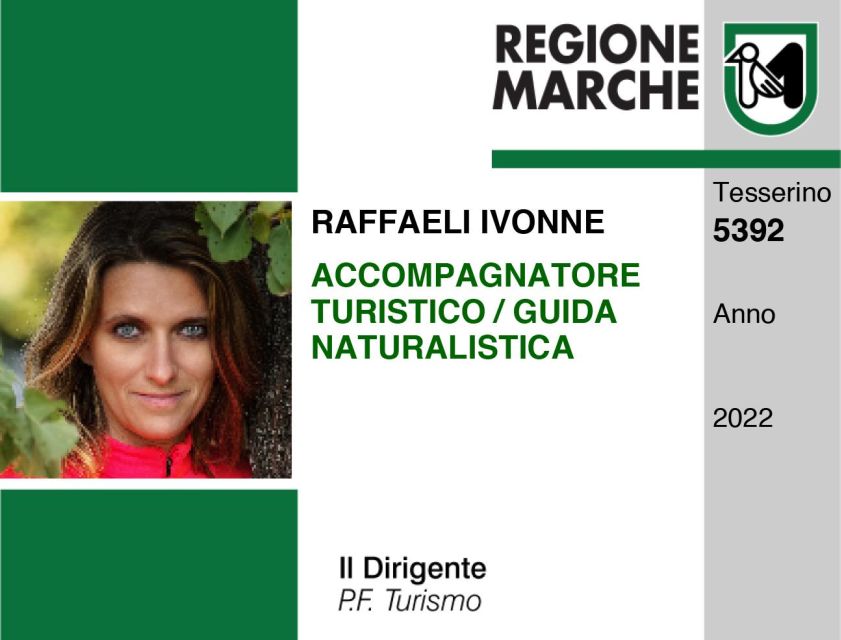
- A private guide: Ivonne Raffaeli leads the walk in English or Italian.
- Strong Roman stops: The Arch of Trajan and Roman amphitheatre add real substance to the city walk.
- Food with local character: The suggested finish includes stockfish, roast potatoes, and Marche wines.
- A proper walking outing: Four hours and 6 km make this more than a quick port stroll.
Ancona, the elbow-shaped Greek port
Ancona sits on a promontory at the northern foothills of Mount Conero. Its shape reaches into the sea like an elbow, which explains the city’s name: Ankon, the Greek word for elbow.
The Dori, a Greek population from Sicily, founded Ancona in 387 BC. They chose this spot for its natural harbour, and the port remains central to the city’s identity. As you walk, it helps to keep that practical origin in mind. Ancona was not founded merely for a pretty view. Its position offered shelter, sea access, and a useful point for movement across the Adriatic.
I like that this route lets you see the city from both sides of its character. The sea-facing sections show why the site was chosen, while the cathedral, amphitheatre, and triumphal arch reveal the layers built on top of that first Greek settlement.
The walk is private, so the pace and conversation can be adjusted more easily than on a large group excursion. The guide speaks English and Italian. Ivonne Raffaeli led one English-language visit for a couple who had only a short time ashore because their ship was delayed, adapting the visit to fit their available window. That flexibility matters, especially in Ancona, where cruise schedules can be less predictable than you hope.
More food and drink stops around Italy
- Etna Sunset Tour: Volcano trek, Cave & tasting from Catania
★ 4.8 · 1,290 reviews - From Catania: trek on Mount Etna, Lava Cave & tasting Tour
★ 4.8 · 563 reviews - Catania: Mount Etna Sunset Trekking with Wine Tasting
★ 5.0 · 140 reviews
Starting at Passetto and the sea
The route includes Passetto of Ancona, a coastal area known for its position beside the sea. This is where you begin to understand Ancona as a city shaped by its edge. Rather than starting with a museum interior, the walk opens with air, cliffs, and views.
You should expect some walking on an active route, not a flat promenade. The tour covers roughly 6 km over three to four hours, so comfortable shoes are essential. The description does not provide a detailed breakdown of every slope or stair, but the high-cliff setting makes this unsuitable for wheelchair users and less comfortable for anyone who finds uneven or uphill walking difficult.
Passetto is also a good early reminder that Ancona is not only about ancient stones. The sea is part of the city’s daily setting, and the route keeps returning you to that connection.
Crossing Cardeto Park above the cliffs
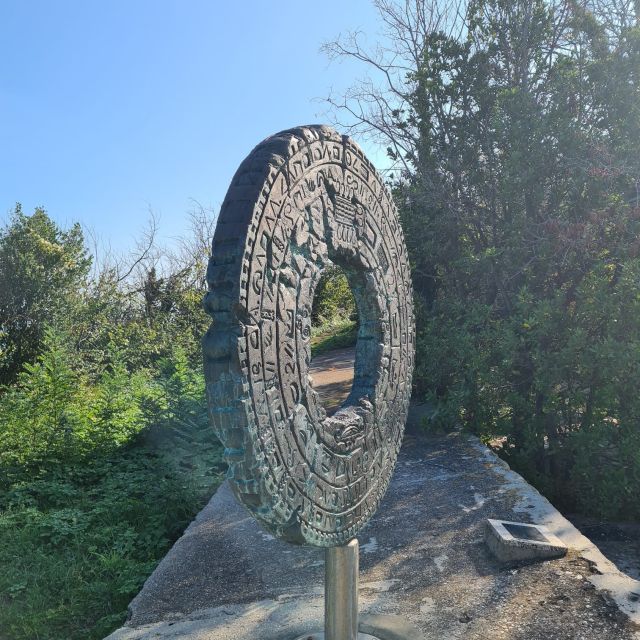
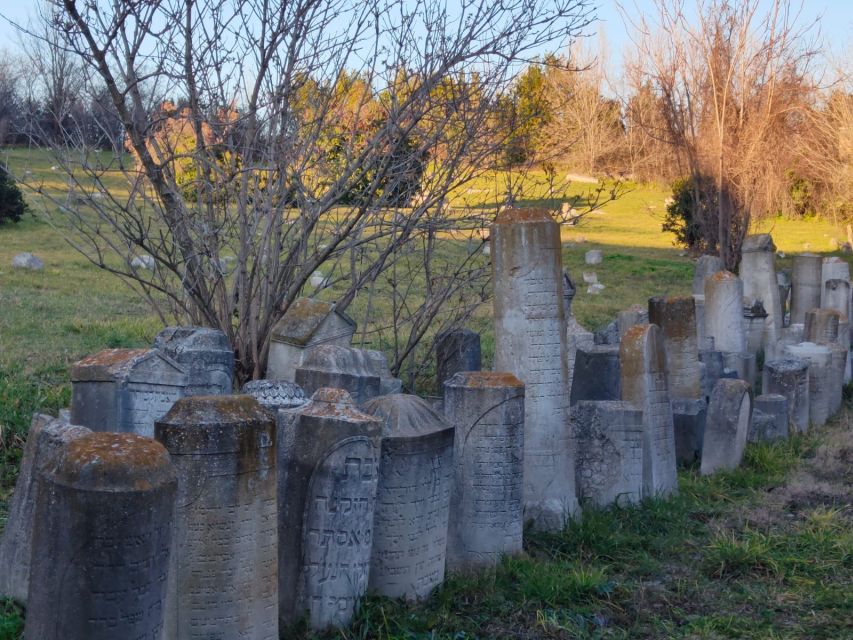
From Passetto, the walk crosses Parco del Cardeto, a park above Ancona’s cliffs. This is one of the most distinctive parts of the outing because the park combines open views with traces of the city’s past.
The route includes the old Jewish cemetery and an old town wall. Those details give the park more weight than a simple scenic pause. You are walking through a place shaped by different communities and by Ancona’s defensive needs, while the cliffs keep the sea close at hand.
I like this contrast. The park can give you a break from the harder architectural focus of the historic centre, but it does not abandon the city’s story. You get greenery, high viewpoints, and surviving evidence of earlier life in the same stretch.
The weather matters here. The walk can operate during most of the year, and light rain does not automatically cancel it. Bring a raincoat or umbrella if the forecast is uncertain. A thunderstorm makes the route unsafe, and in heavy rain Ivonne may offer another option for you to accept or decline.
The 1860 Old Light House
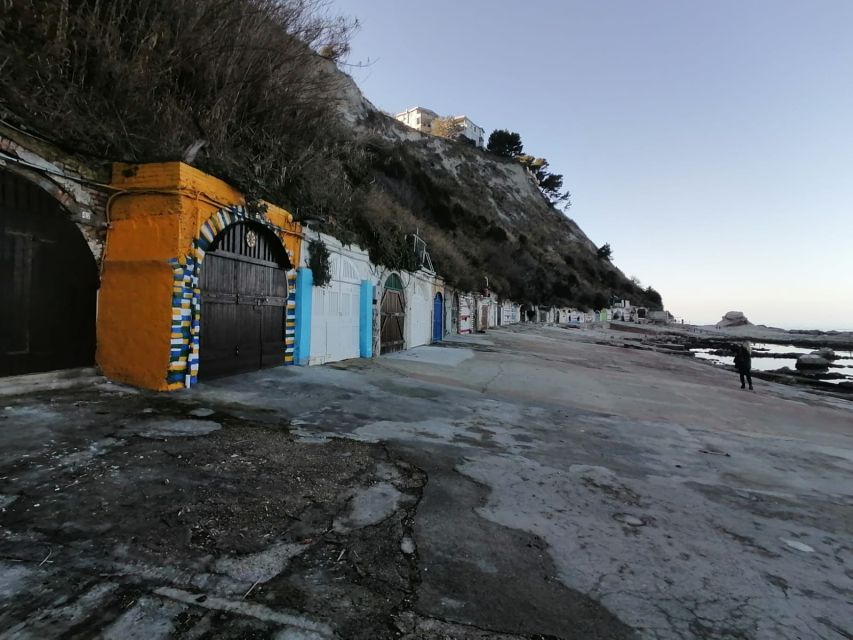
The Old Light House, dating from 1860, is another stop along the route. Its presence fits Ancona’s port setting: a coastal city needs ways to guide ships and mark its approach.
This is not presented as a long interior visit or a major museum stop. Treat it as part of the broader walk, where the value comes from seeing how the port works as a place rather than only reading about it. The light house also helps bridge Ancona’s ancient past and its later development as a working harbour.
If you enjoy cities where the old and practical sit side by side, this is a useful stop. If you want a long visit inside every monument, the four-hour schedule will feel more like a connected overview than a series of extended admissions.
More food tours around Italy
- From Siracusa: Etna Tour – Trek, Wine and Food
★ 4.8 · 50 reviews - Arequipa: Colca Canyon Trekking 2 days and 1 night + food
★ 4.8 · 3 reviews
The Roman amphitheatre from the first century BC
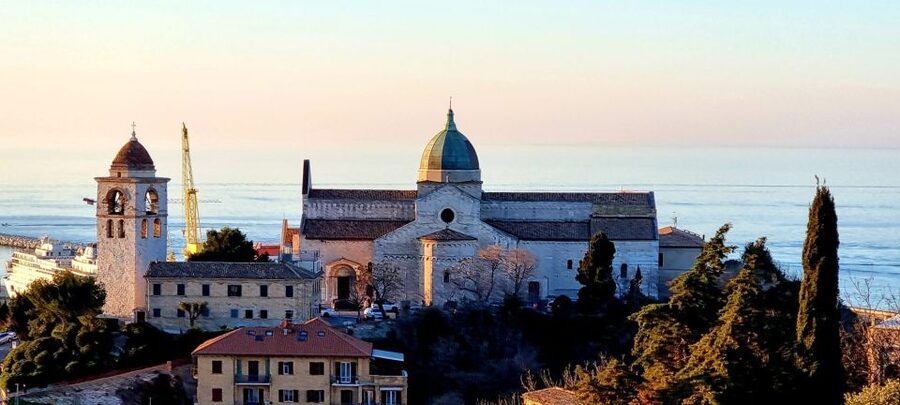
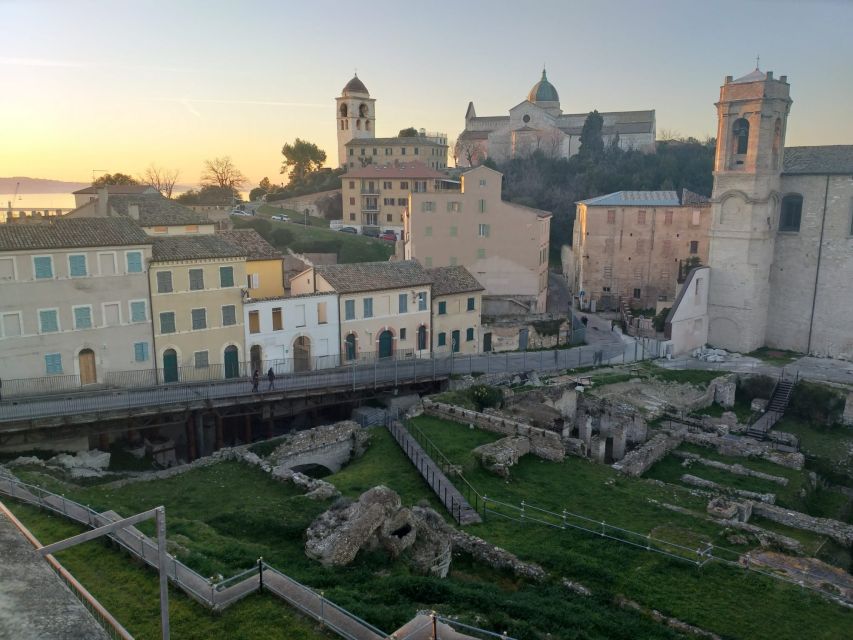
The Roman amphitheatre dates from the first century BC. It adds an important Roman layer to the route and shows how Ancona continued to matter after its Greek foundation.
The tour does not promise a lengthy archaeological presentation or a dedicated museum visit, so you should expect to see the site as one part of the walking circuit. That is not a weakness if you want a city orientation with historical context. It could be a limitation if Roman archaeology is your main reason for booking and you prefer a specialist site tour.
The amphitheatre works well in the overall sequence. You have already seen the harbour and the cliffs, then the park’s cemetery and old wall, and now you encounter a monument tied to public life in Roman Ancona. The route keeps shifting your view of the city instead of repeating the same kind of stop.
Ancona Cathedral on Colle Guasco
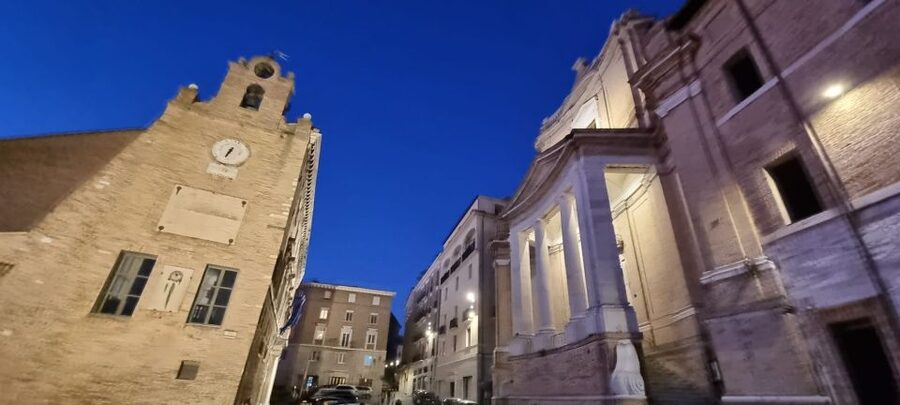
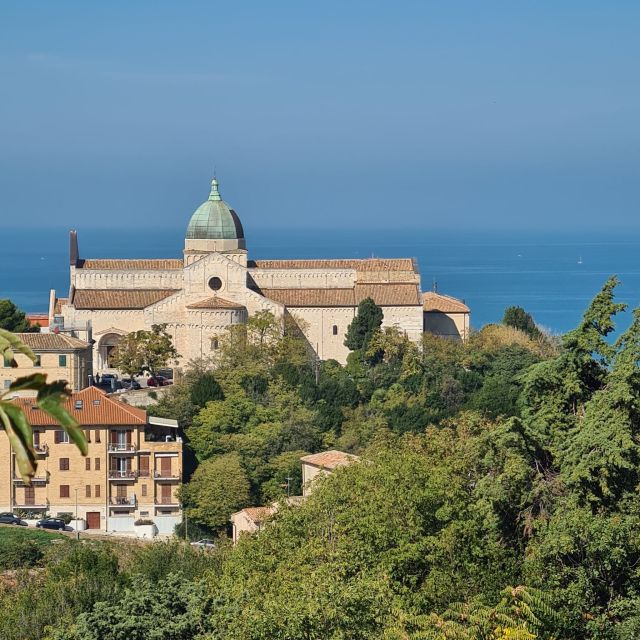
The Cathedral of Ancona sits on Colle Guasco, the hill in front of the port. It is dedicated to Saint Ciriacus, the city’s patron, and is described as one of the best examples of Romanesque architecture in the area.
This is likely the architectural high point of the walk. The cathedral’s hilltop position matters as much as its style. From Colle Guasco, you can connect the religious centre of the city with the harbour below and the promontory beyond.
The climb is also the point to take seriously if you have limited mobility. The walk is not suitable for wheelchair users, and it is not designed as an easy, flat circuit. Children under six and people over 95 are also excluded from the activity, according to the supplied conditions.
For most reasonably active walkers, the hill is part of the experience rather than an annoyance. You are not simply being driven to a church. You are approaching one of Ancona’s major landmarks through the shape of the city itself.
The Arch of Trajan beside the port
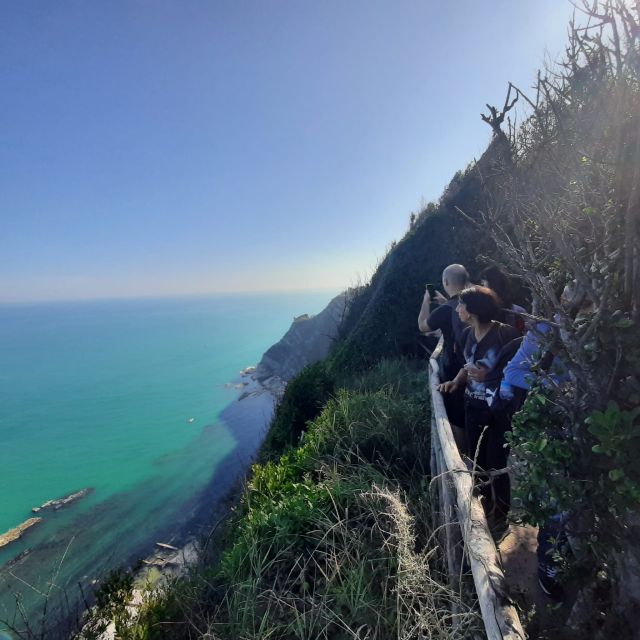
The Arch of Trajan dates from AD 115 and was built as a Roman triumphal arch during the Roman Empire. Its location by the port makes it especially fitting on this route.
A triumphal arch can look like a single isolated monument when seen quickly. Here, its setting helps explain its purpose. The port was central to Ancona, and the arch links imperial Rome with the harbour that had made the city useful for centuries.
I appreciate that the route includes both the amphitheatre and the Arch of Trajan. Together they give you two different Roman touchpoints: one connected with public entertainment and one tied to imperial display and the port. You do not need to be a Roman history specialist to see the difference.
The arch also gives the walk a satisfying connection back to the water. After the viewpoints and hilltop cathedral, you return to the port area with a clearer sense of why Ancona grew where it did.
Stockfish, roast potatoes, and Marche wine
The food and wine element is best understood as a suggested finish, not an included tasting. The recommended local dish is stockfish with roast potatoes. Wine choices include Rosso Conero or Lacrima di Morro d’Alba for red, and Verdicchio dei Castelli di Jesi, Matelica, or Pecorino Offida for white.
This is a useful way to end because the menu points you toward local products rather than generic Italian fare. Stockfish gives you a dish with a strong coastal connection, while the wine list introduces several names from the Marche region.
Budget separately for this part. The $235 price covers the walking itinerary and guide, but not food or drinks. The information does not state a fixed restaurant, meal price, or tasting format, so you should confirm exactly where the finish will take place and how much time you will have for it.
That distinction became important for one ship passenger whose disembarkation was slow and whose schedule included a visit to the ship’s command post. The shortened visit left no time for the food and wine. If you are arriving by cruise ship, do not assume the tasting is guaranteed unless your available time is confirmed in advance.
Is $235 good value for a private four-hour walk?
The listed price is $235 per group up to one person. That wording is unusual, so check the final booking total and group conditions before paying, especially if you are booking for more than one person. The experience is described as a private group, which usually makes the guide’s time the main part of the cost, but the supplied details do not spell out how the price changes for additional people.
For a solo visitor, the value depends on what you want. A four-hour private walk with an English-speaking local guide can be worthwhile if you want context, a planned route, and the freedom to ask questions. The route covers a lot of ground and includes places that are spread across the promontory, so you are paying for more than a short port orientation.
For a couple or small private party, compare the total price with the cost of arranging separate transport, a guide, and a meal. The food and wine still cost extra, and hotel pickup and drop-off are not included. You meet in front of the war memorial in the centre of the square, so you need to make your own way there.
The strongest value comes when you can use the full four hours. If your ship gives you only two hours ashore, the price becomes harder to justify, and the route will need to be cut. Contact the provider with your exact arrival and all-aboard times if you are visiting from a cruise.
Who will enjoy this tour most?
I would choose this walk if you like active city touring with coastal views and want a guide to connect the landmarks. It suits adults and older children over six who can manage 6 km, hills, and a few hours on foot.
It is also a good fit if you have already seen Italy’s famous cities and want a smaller port with Greek and Roman layers. Ancona does not rely on one headline monument. Its appeal comes from seeing the harbour, cliffs, park, cemetery, town wall, cathedral, amphitheatre, light house, and arch as parts of one place.
You may want another option if you need step-free access, dislike walking in uncertain weather, or want a food-focused experience where the meal is included. The title may suggest a tasting tour, but the actual price leaves food and wine to you.
A guide who can adjust the pace is helpful here. Ivonne Raffaeli received especially strong praise for her clear explanations and for adapting the route when one group had less than two hours. The available feedback gives her a perfect score from three of the four recorded bookings, with the lower score tied to the missed food and wine rather than a complaint about her effort.
Practical details before you book
Meet Ivonne in front of the war memorial in the centre of the square. Hotel pickup and drop-off are not included, so allow time to reach the meeting point.
Bring comfortable shoes and a passport or identity card. A copy of the ID card is accepted. Shorts are not allowed, so plan clothing carefully, particularly in warm weather.
The walk is offered in English and Italian. It runs for about four hours and covers 6 km. It can take place in most seasons, with light rain handled using a raincoat or umbrella. Thunderstorms are considered unsafe, and heavy rain may lead to another option.
Free cancellation is available up to 24 hours before the start for a full refund. You can also reserve now and pay later, which is useful if your port schedule is still shifting.
Should you book the Ancona Urban Trek?
Book it if you want a private, active introduction to Ancona that combines sea views with Greek, Roman, religious, and later city history. The route is thoughtfully varied, and Ivonne Raffaeli’s ability to adapt the walk is a real advantage for English-speaking visitors.
Before booking, confirm two points: the exact price for your party and how the food and wine finish will work. If you have a full four hours and can comfortably walk 6 km, this is a strong way to see Ancona beyond the port gate. If you have a tight ship schedule, limited mobility, or expect an included tasting, choose carefully or ask for a shorter custom plan.
FAQ
How long does the Ancona Urban Trek Tour last?
The tour lasts about four hours, with the walking portion described as three to four hours.
How far do I walk?
The total distance is about 6 km.
What sights are included?
The route includes Passetto of Ancona, Parco del Cardeto, the old Jewish cemetery, an old town wall, the 1860 Old Light House, the first-century BC Roman amphitheatre, Ancona Cathedral, and the Arch of Trajan from AD 115.
Is food and wine included in the price?
No. Food and wine are not included. The suggested choices are stockfish with roast potatoes and local Marche wines, including Rosso Conero, Lacrima di Morro d’Alba, Verdicchio dei Castelli di Jesi, Matelica, and Pecorino Offida.
Where does the tour meet?
The guide waits in front of the war memorial in the centre of the square.
Is hotel pickup included?
No. Hotel pickup and drop-off are not included.
What languages does the guide speak?
The tour is available in English and Italian. The experience provider is Ivonne Raffaeli.
What should I bring?
Bring comfortable shoes and a passport or identity card. A copy of the ID card is accepted.
Can I take the tour in rainy weather?
The walk can operate in light rain if you bring a raincoat or umbrella. Thunderstorms are unsafe, and heavy rain may lead to another option that you can accept or decline.
New treks around Italy
- Motta Camastra: River Trekking Tour in the Alcantara Gorges★ 4.4 · 15 reviews
- River Trekking Gole Alcantara★ 5.0 · 11 reviews
- Portofino Park Trekking- Discover San Fruttuoso Bay★ 5.0 · 3 reviews
- Private Cinque Terre Trekking Tour★ 5.0 · 3 reviews
- Piano Provenzana: Guided Mt. Etna Snowshoeing Trek★ 5.0 · 3 reviews
- Palermo: Monte Gallo Trekking Tour with Picnic★ 5.0 · 2 reviews
- Etna Southern Slope Guided Easy Trek★ 4.8 · 36 reviews
- Mount Etna: Private Trek on the North Slope Craters★ 5.0 · 4 reviews
Italy Trekking Tours, side by side.
Mount Etna: Trek to 3000m with cable car and 4×4
Read our review →
Mount Etna: Summit Crater Trek with Cable Car
Read our review →
Etna: summit craters trekking with volcano guide 3350mt
Read our review →
Catania: Mount Etna Trekking Tour Beyond the Tourist Trails
Read our review →
Mount Etna: Guided Trek 3,000 Meters to the Summit
Read our review →
Stromboli: Sunset Trekking at Sciara del Fuoco
Read our review →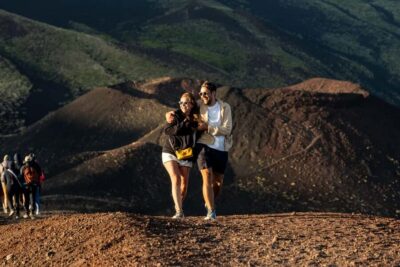
Etna Sunset Tour: Volcano trek, Cave & tasting from Catania
Read our review →
From Catania: trek on Mount Etna, Lava Cave & tasting Tour
Read our review →Lists this trek appears in