
Review · ITALY
Etna South: High Altitude Winter Trek with an Alpine Guide
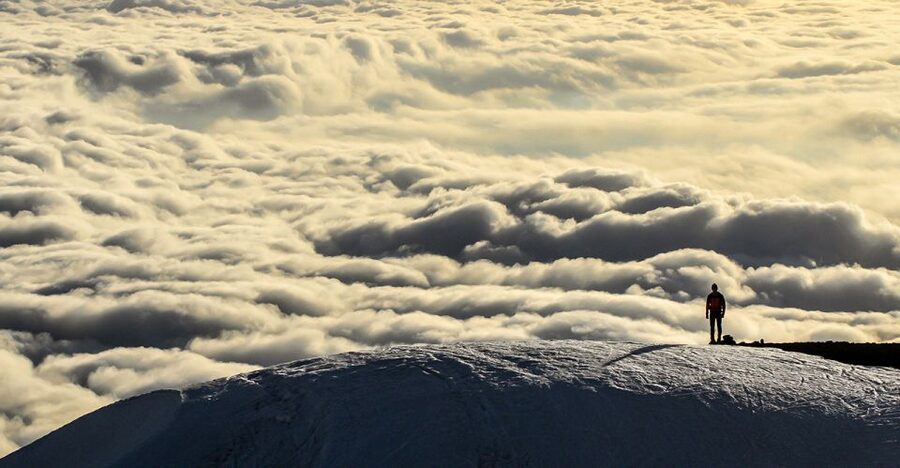
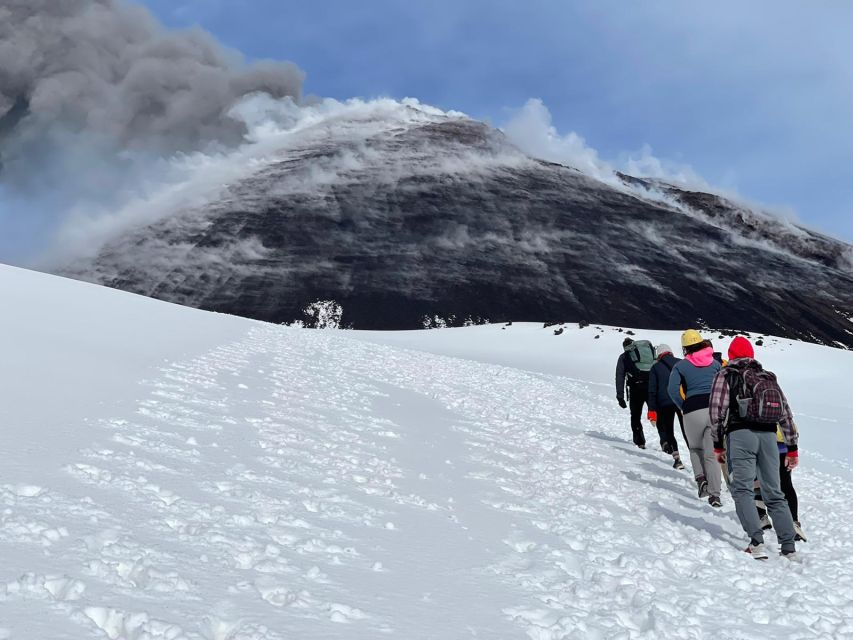
Etna’s winter side is a study in contrasts: white snow, black lava, and a smoking summit high above Sicily. From Rifugio Sapienza, you ride the cable car to 2,500 meters, then walk toward 3,000 meters with a licensed alpine and volcanological guide. On a clear day, the views reach across Sicily. In active periods, you may even smell sulfur or see fresh lava from a safe distance.
I like two things right away. First, the small groups make it easier to ask questions and keep a steady pace. Guides such as Massimo, Antonio, and Fabio have explained Etna’s eruptions, craters, and geology in clear terms. Second, the tour includes boots, helmet, poles, and snow equipment, so you do not need to assemble a full winter mountaineering kit.
The catch is simple: this is not a gentle family walk. Snow, ice, loose volcanic sand, wind, and altitude make it suitable only for experienced hikers in good health. Weather and volcanic activity can change the route or cancel the outing, and the €50 cable car ticket is extra, paid in cash.
Key points to know before booking
- You reach about 3,000 meters: The cable car handles the first major rise, but you still climb on foot through snow and uneven volcanic ground.
- The 2001 eruption cone is part of the route: You see a newer volcanic feature rather than only the main summit.
- Valle del Bove provides the big scenic payoff: The immense volcanic depression gives the hike scale and drama.
- Barbagallo craters add variety: Expect broad black volcanic forms, snow, and changing views across the southern crater zone.
- Winter gear is supplied: Hiking boots, helmet, walking sticks, and necessary snow equipment are included.
- The cable car costs extra: Budget €50 per person in cash, in addition to the $106 tour price.
A winter climb built around Etna’s changing colors
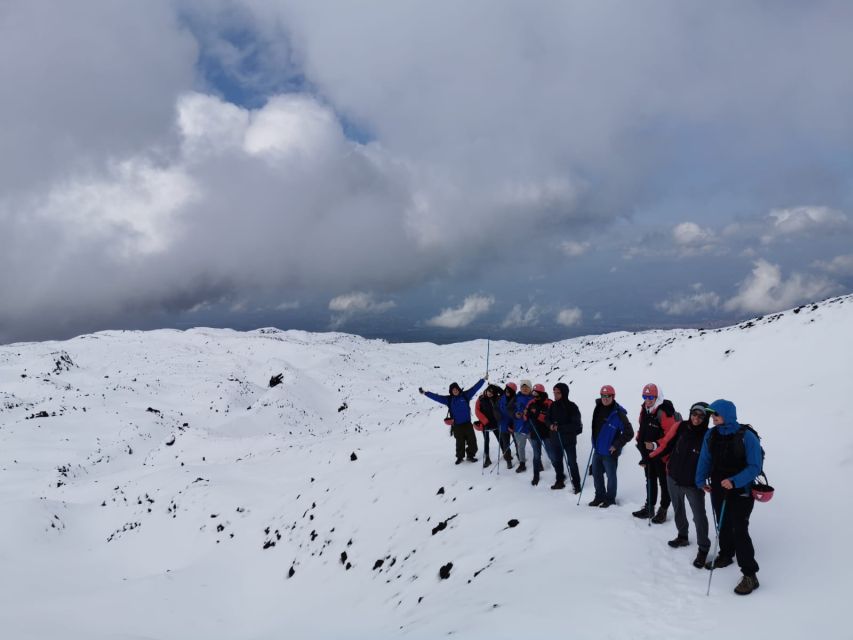
I like this outing because it lets you see Etna as a working volcano, not just a mountain with a famous name. Snow softens the dark lava fields, while the summit and smaller cones remind you that the ground here is never entirely quiet.
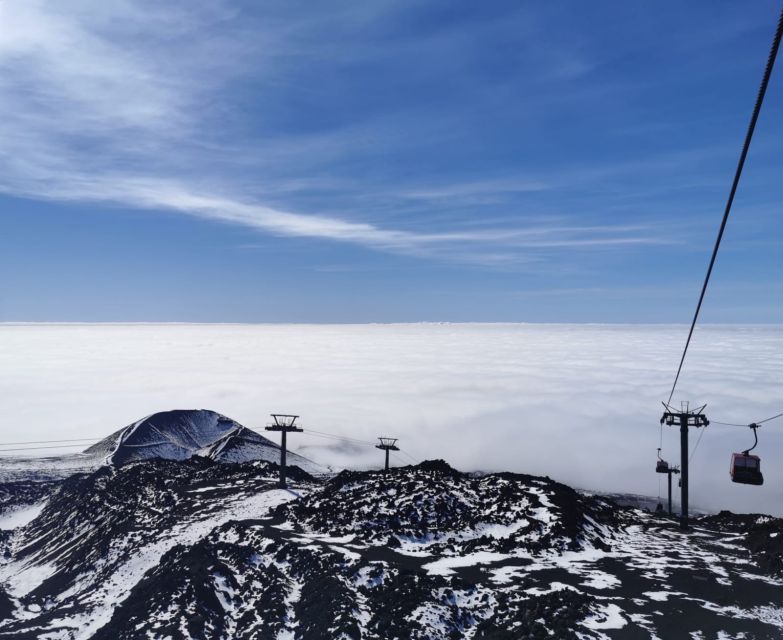
The experience lasts about five hours. That sounds manageable, but the altitude changes the feel of the walk. You begin at Piazzale Rifugio Sapienza, on Etna’s southern side, then take the cable car for roughly 20 minutes to about 2,500 meters. From there, the real hiking begins.
You climb toward roughly 3,000 meters, with the exact high point shaped by snow, ice, wind, visibility, and volcanic conditions. The walk is designed for experienced hikers rather than first-time walkers. It is not technical mountaineering, but uneven volcanic sand and packed snow can make every step less predictable.
A clear day can give you a view across part of Sicily from close to 2,870 meters. Poor visibility can change the experience completely. You may still enjoy the textures, slopes, and craters, but the broad views can disappear into cloud.
More volcano treks around Italy:
- Mount Etna: Trek to 3000m with cable car and 4×4
★ 4.6 · 3,823 reviews - Mount Etna: Summit Crater Trek with Cable Car
★ 4.8 · 1,875 reviews - Etna: summit craters trekking with volcano guide 3350mt
★ 4.7 · 1,712 reviews
Starting at Rifugio Sapienza and riding to 2,500 meters
You meet the guide at the Ashàra Etna & Stromboli Guides information point in Piazzale Rifugio Sapienza, near the Terrazza dell’Etna restaurant. This is the practical starting point, so plan your arrival around that location rather than expecting hotel pickup.
The cable car ride takes about 20 minutes. It saves your legs for the high-altitude section and gives you a quick sense of Etna’s scale. The ride itself is not the main event, but it matters because the tour begins high above the lower slopes instead of spending hours climbing from the base.
The cable car ticket is not included. It costs €50 per person and must be paid in cash on the spot. That extra charge is easy to miss when comparing prices, so add it to the advertised $106 price before deciding if the outing fits your budget.
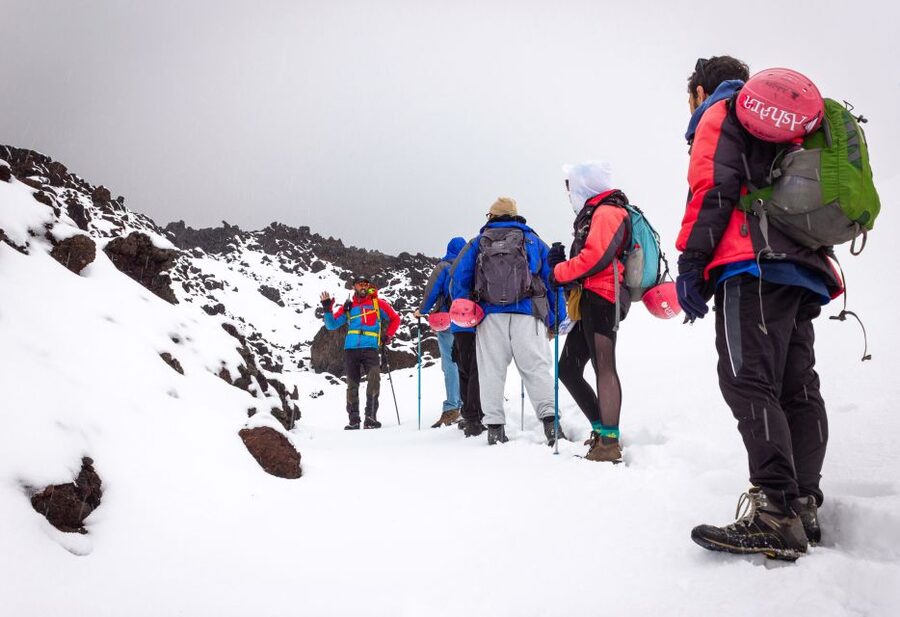
At the upper station, the guide checks the group and sets the pace. The small-group format is useful here. A guide can explain how to use the poles, watch the footing, and respond to changing conditions more easily than on a large bus-style excursion.
Walking over snow, ash, and loose volcanic sand
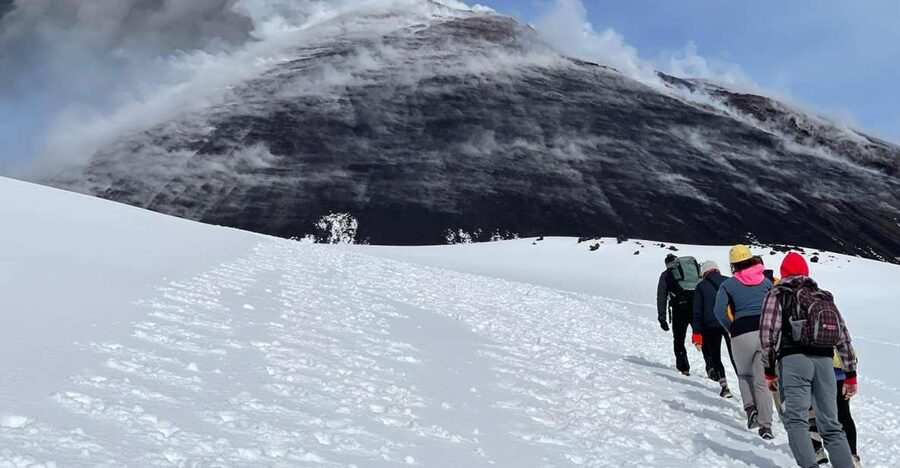
The first walking section takes you into Etna’s high southern crater zone. The terrain can alternate between snow and dark volcanic ground, sometimes within a short distance. That contrast is one of the best reasons to choose the winter version of the hike.
Snow equipment is supplied, along with hiking boots, a helmet, and walking sticks. The equipment helps, but it does not remove the physical demands. You still need balance, warm clothing, and the stamina to walk uphill at altitude.
One useful detail from the experience is that the uneven sandy ground can be more tiring than the distance itself. Volcanic sand shifts under your feet, so the climb may feel less stable than an ordinary trail. Snow and ice add another challenge. Your guide may slow the group, change direction, or stop the excursion if the surface becomes unsafe.
Bring warm layers, a windbreaker, gloves, a hat, scarf, long trousers, spare socks, food, and drinks. The mountain can feel much colder and windier than Sicily’s towns below. Do not arrive in shorts, open-toed shoes, or a sleeveless shirt. Large bags and luggage are not allowed.
The 2001 eruption cone and the story beneath your boots
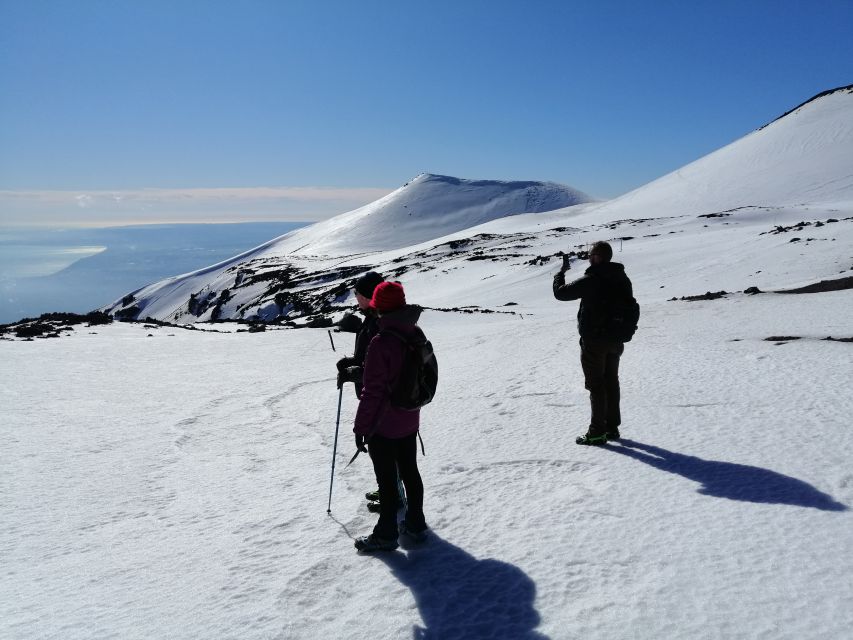
The route includes the cone formed during Etna’s 2001 eruption. This gives the hike a clear point of reference: you are not simply walking near an old crater, but seeing a feature tied to a recent eruption in Etna’s long active life.
Your guide explains the eruption and the volcanic forces that shaped the area. Guides work in French, Italian, and English, and the small groups make it easier to ask about lava, craters, and the layers under the snow.
I would pay attention here rather than treating the cone as just another photo stop. Etna’s appeal is not only visual. The mountain shows how quickly volcanic terrain can change, and the 2001 cone helps put that process in human time.
The route can also feel unusually wild despite the cable car access. One guide described the southern crater area through a route that crossed several volcanic features, with snow lying beside black lava under a clear blue sky. That mix of fresh-looking snow and harsh volcanic rock is the visual signature of this winter walk.
More winter activities around Italy
- Kiruna: Snowshoe Trek with Aurora Hunt and Warm Beverage
★ 4.5 · 20 reviews - Polar Night Snowshoe Trek
★ 5.0 · 12 reviews - Kiruna: Snowshoe Trek with Warm Beverage and Sandwich
★ 4.5 · 6 reviews - Montreux: Snowshoe Trek with Fondue and Wine
★ 5.0 · 3 reviews
Valle del Bove, Etna’s great open scar
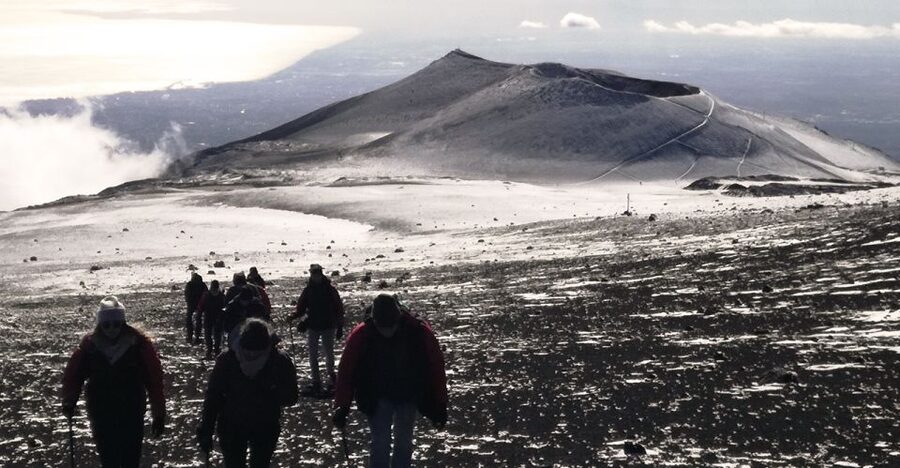
The tour then reaches viewpoints connected with Valle del Bove, a huge volcanic depression on Etna’s eastern side. The walk and guided explanation here take about 40 minutes, including scenic views along the way.
Valle del Bove gives you a sense of the mountain’s size. Individual craters can seem like isolated mounds when you are walking among them. This broad opening helps you understand that Etna is a vast volcanic system, not a single neat cone.
The views depend heavily on visibility. On a bright day, the open valley and distant parts of Sicily can make the climb feel worthwhile even before you reach the higher craters. In cloud or strong wind, the guide may focus more on safety and geology than on long-distance scenery.
A small point worth noting: the terrain around the valley is not a polished viewing platform. You are out on snow and volcanic ground, so keep your hands free and your attention on your footing. The supplied poles are useful, especially when descending.
Barbagallo craters and the southern crater zone
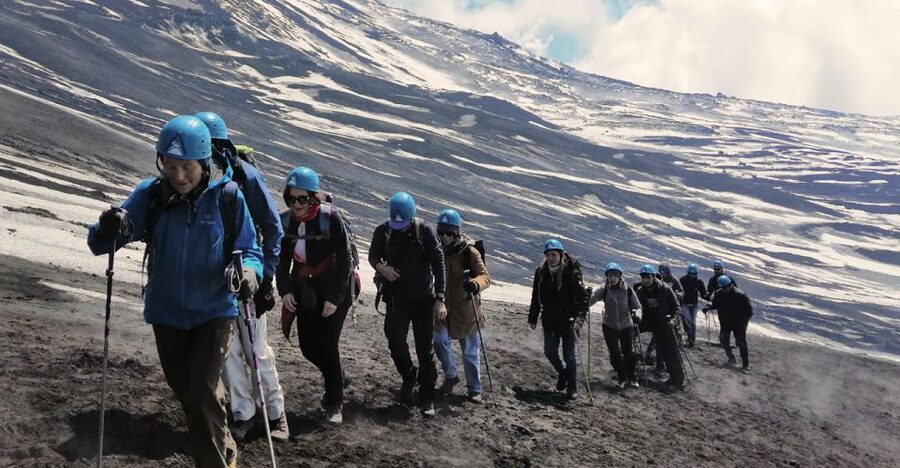
The walk to the Barbagallo craters takes about an hour and is one of the main hiking sections. Here you move through a cluster of volcanic forms rather than following a single ordinary mountain trail.
The craters show Etna’s changing character. Snow can collect on the rims and hollows, while black ash and lava remain visible nearby. Your guide points out the shapes and explains how eruptions create cones, channels, and fresh deposits.
This is also where the outing feels most like a real high-altitude trek. The route may include long stretches of snow, loose ground, and uphill walking. You should be ready for a slower pace and regular breaks. A previous outing led by Fabio included frequent checks to make sure everyone was managing the effort, a useful approach on a mountain where fitness alone does not predict how altitude will feel.
Do not expect a quiet walk without other people anywhere on Etna. The cable car and upper mountain area can draw other groups. The small-group format still gives you a more personal experience than a large organized excursion, especially when the guide stops to explain a crater or answer questions.
Viewing the summit crater from a safe distance
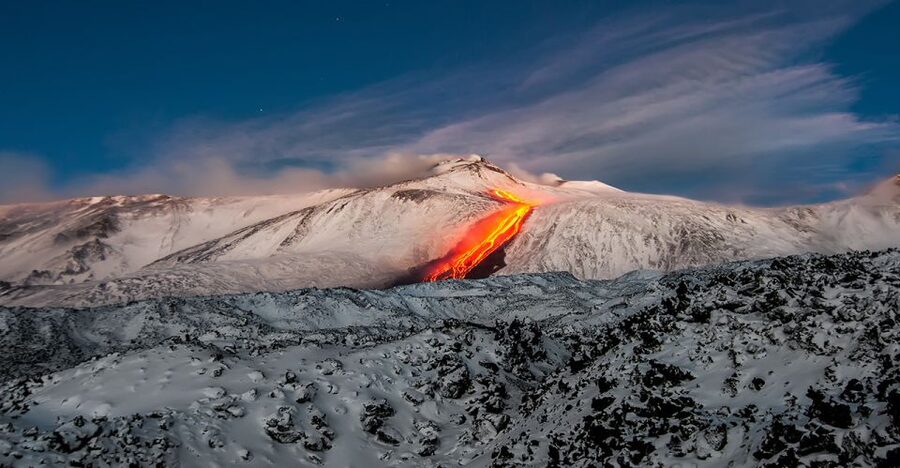
The route takes you toward a view of Etna’s summit crater, but you do not walk right up to its edge. That distance is important. Etna is active, and safety limits are part of the experience rather than an inconvenience.
You may see steam, smell volcanic gases, or find that recent activity has changed the exact route. In one winter outing, fresh lava was still emerging in the active zone around 3,050 meters. That detail captures both the excitement and the uncertainty of this mountain. Conditions can be remarkable one day and unsuitable the next.
The guide has authority to stop the walk or change the route if volcanic activity, ice, wind, or another hazard threatens the group. I see that as a strength. A fixed promise to reach one exact point would be less responsible on an active volcano.
The summit view is best treated as a bonus within a carefully managed route. You are there to experience Etna safely, not to force a summit approach at any cost.
A possible lava channel before the ride down
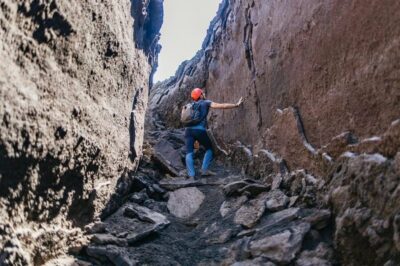
If snow and ground conditions allow, the guide may include a lava channel before returning to the cable car’s upper station. This stop is not guaranteed, so do not book the tour with the expectation that every group will see it.
A lava channel can help you picture how molten rock moved during an eruption. It also adds another type of volcanic feature to a day that already includes cones, crater rims, ash, snow, and the broad Valle del Bove.
After this final section, you return to the upper cable car station and ride down for another 20 minutes. The descent marks the end of the high-altitude portion, and you finish back at the Ashàra information point at Rifugio Sapienza.
The full outing is listed as five hours, but exact timing can shift with snow, stops, group pace, and safety decisions. Keep the rest of your day flexible rather than booking a tight connection immediately afterward.
What the $106 price really includes
At $106 per person, the cost is reasonable if you need winter equipment and want a guide who can interpret the volcanic terrain. The price includes an authorized alpine or volcanological guide, hiking boots, helmet, walking sticks, and necessary snow gear.
The cable car is the main extra expense at €50 in cash. Food, drinks, and transport to Rifugio Sapienza are also separate. There is no hotel pickup or drop-off, so you must arrange your own way to Etna South.
The value depends on your starting point. If you already own suitable boots, poles, and snow equipment, the included gear may matter less. If you are visiting Sicily without winter hiking kit, the equipment saves you from renting or carrying several bulky items.
The guide adds value beyond route finding. Massimo has explained eruption stories and geology during the climb, while Antonio has led tours in English and answered detailed questions about the route and summit area. Fabio has been praised for keeping a tough walk controlled with regular breaks. Guide assignments can change, but the named guides show the level of specialist input you may receive.
Free cancellation is available up to 24 hours before the activity for a full refund, and you can reserve now and pay later. Weather-related changes are a different matter because the mountain operator may alter or cancel the outing for safety.
Who should choose this Etna winter trek?
I would choose this tour if you want a serious half-day mountain experience and are comfortable walking on snow and uneven volcanic ground. It suits fit adults with hiking experience who value geology, scenery, and a small group more than a quick photo stop.
It is not suitable for children under 10, pregnant women, people with mobility, heart, respiratory, or back problems, or people with vertigo, epilepsy, or high blood pressure. Wheelchair users and people without hiking experience should also choose another Etna activity.
Be honest about your condition before starting and tell the guide about medical issues. High altitude, cold, wind, and exertion can combine quickly. The guide can adjust the plan, but cannot make an unsuitable route safe for everyone.
English, French, and Italian are available. If you have questions about volcanic activity or geology, ask them during the walk. The small group makes this much easier than trying to speak up on a crowded coach excursion.
Should you book the 3,000-meter winter route?
Book it if your idea of an excellent Etna day includes snow, black lava, crater views, and a demanding uphill walk. The cable car cuts out much of the lower climb, while the guide, equipment, and small group make the high section more manageable.
Skip it if you want a relaxed sightseeing outing, dislike cold or unstable footing, or have medical conditions listed in the restrictions. The weather can erase the big views, and the final route may change even after you arrive.
For the right person, this is a memorable way to meet Etna on its own terms. You see the 2001 eruption cone, Valle del Bove, Barbagallo craters, and the summit crater from a safe distance, with snow turning the familiar volcanic ground into something stark and new. Just budget for the cable car, bring serious winter clothing, and accept that safety comes before any promised viewpoint.
FAQ
Where does the Etna winter trek begin?
You meet at the Ashàra Etna & Stromboli Guides information point at Rifugio Sapienza in Etna South, near the Terrazza dell’Etna restaurant.
How long does the activity last?
The experience lasts about five hours, including the cable car rides, guided walking, crater visits, and return to Rifugio Sapienza.
How high does the hike go?
The cable car takes you to about 2,500 meters. From there, you hike to roughly 3,000 meters, depending on conditions.
Is the cable car included in the price?
No. The cable car costs €50 per person and must be paid in cash on the spot.
What equipment is provided?
The activity includes hiking boots, a helmet, walking sticks, and necessary snow equipment.
What should I bring?
Bring warm clothing, a windbreaker, gloves, socks, a scarf, a hat, long trousers, food, drinks, and cash.
Can I join without hiking experience?
No. The activity is intended for experienced hikers who are in good health.
What languages are available?
Guided tours are available in English, French, and Italian.
Can the route change?
Yes. Volcanic activity, ice, weather, or other safety concerns can require the guide to change or stop the excursion.
Is the summit crater visited up close?
You view Etna’s summit crater from a safe distance. The route does not promise access directly to the crater edge.
New treks around Italy
- Motta Camastra: River Trekking Tour in the Alcantara Gorges★ 4.4 · 15 reviews
- River Trekking Gole Alcantara★ 5.0 · 11 reviews
- Portofino Park Trekking- Discover San Fruttuoso Bay★ 5.0 · 3 reviews
- Private Cinque Terre Trekking Tour★ 5.0 · 3 reviews
- Piano Provenzana: Guided Mt. Etna Snowshoeing Trek★ 5.0 · 3 reviews
- Palermo: Monte Gallo Trekking Tour with Picnic★ 5.0 · 2 reviews
- Etna Southern Slope Guided Easy Trek★ 4.8 · 36 reviews
- Mount Etna: Private Trek on the North Slope Craters★ 5.0 · 4 reviews
Volcano Treks, side by side.
Mount Etna: Trek to 3000m with cable car and 4×4
Read our review →
Mount Etna: Summit Crater Trek with Cable Car
Read our review →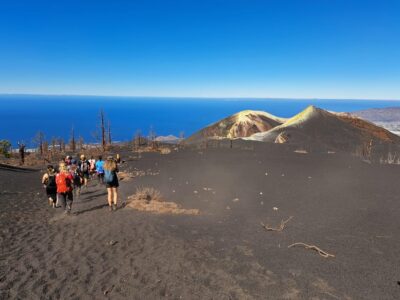
Etna: summit craters trekking with volcano guide 3350mt
Read our review →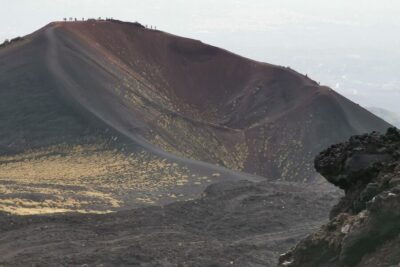
Catania: Mount Etna Trekking Tour Beyond the Tourist Trails
Read our review →
Mount Etna: Guided Trek 3,000 Meters to the Summit
Read our review →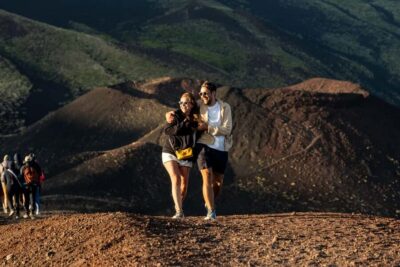
Etna Sunset Tour: Volcano trek, Cave & tasting from Catania
Read our review →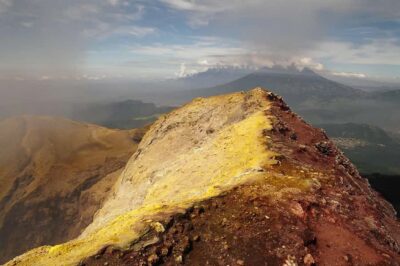
Lists this trek appears in