
Review · SICILY
Etna trekking tour
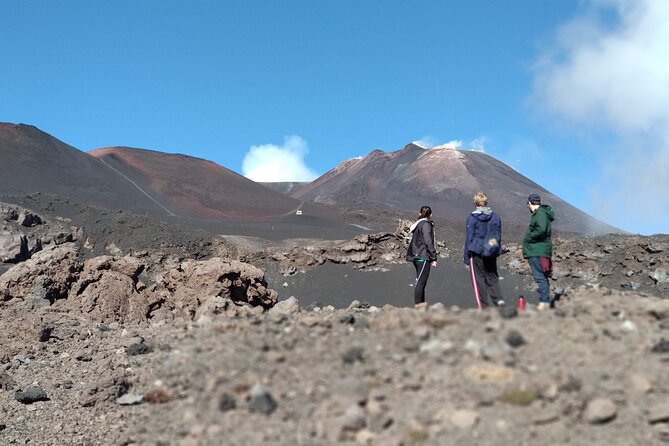
Mount Etna is at its most striking when the green lower slopes give way to black lava, volcanic sand, sulphur fumes, and the Barbagallo Craters. This EtnaWay outing combines a 4×4 jeep, cable car, and long hike, taking you from Sicily’s lemon coast toward the summit craters before descending across the volcano’s northern side.
I like the small group of up to 10 and the practical gear support, including hiking poles, backpacks, wind jackets, and boots if requested in advance. I also like that guide Cristian is known for explaining Etna’s activity clearly, not just pointing out views. The main catch is the demanding route and unclear timing: the tour is described as 6 to 7 hours in one place, while the detailed itinerary lists about 11 hours.
Key things to know before booking
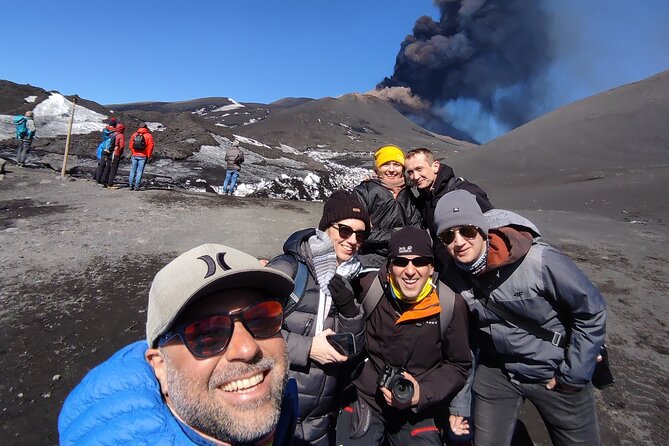
- The route reaches about 2,900 meters: You hike around the Barbagallo Craters and toward the summit crater area, where cold, wind, gas, and thin air can make conditions tough.
- Three types of transport shape the day: A 4×4 jeep handles the lower approach, the cable car climbs from 1,800 to 2,500 meters, and you continue on foot.
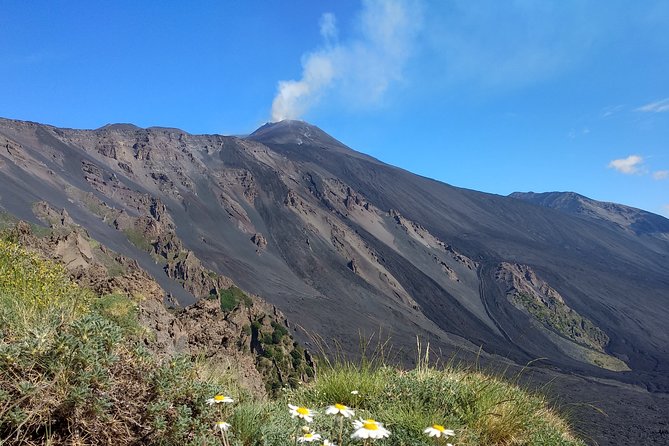
- The descent crosses fresh volcanic terrain: Expect ash, lapilli, sandy gullies, lava rocks, and paths formed by eruptions in 2002 and 2017.
- Lunch is not included: Bring food or buy it at shops near the start of the outing.
- The group is capped at 10 people: That is a useful size for a mountain guide, especially on loose volcanic ground.
- Good fitness is required: This is a serious mountain day, not a sightseeing ride with a short stroll.
Why this Etna route feels different from a standard volcano visit
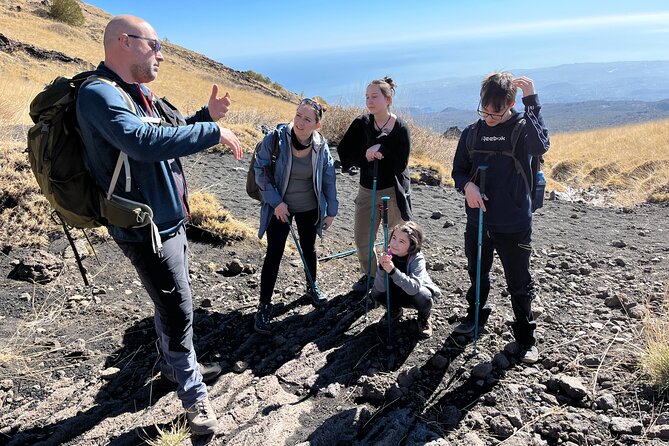
Many Mount Etna outings stop at a viewpoint, a lower crater, or the Rifugio Sapienza area. This one is built around movement through several volcanic zones, so you see Etna change under your feet.
The day starts near Fornazzo, on the eastern side of the volcano, at Bar & Restaurant Mareneve on Via Mongibello. From there, the 4×4 route leaves the Riviera dei Limoni, the lemon-growing coast, and climbs toward Etna’s villages and old mountain tracks.
I like this opening because it gives you a sense of Etna as a whole mountain, not just a dramatic cone. Ancient mule roads and coalmen’s paths lead into the protected Etna Park, where dried lava flows cut across the slopes like dark roads.
The scenery is stark and easy to read. Lower down, you may see more vegetation and settled villages. Higher up, the black lava becomes the main feature, with old flows showing where the volcano has repeatedly changed its own routes.
More volcano treks around Italy:
- Mount Etna: Trek to 3000m with cable car and 4×4
★ 4.6 · 3,823 reviews - Mount Etna: Summit Crater Trek with Cable Car
★ 4.8 · 1,875 reviews - Etna: summit craters trekking with volcano guide 3350mt
★ 4.7 · 1,712 reviews
The 4×4 climb through Etna Park
The 4×4 vehicle is useful rather than decorative. It carries you over rougher mountain tracks and gets you farther into the upper volcanic area than an ordinary car can manage.
The route reaches roughly 1,000 meters before continuing toward the south slope ski station at Rifugio Sapienza, around 1,800 meters. The contrast between the cultivated lower country and the bare upper slopes is one of the strongest parts of the day.
At this stage, I would pay close attention to your clothing. Etna can feel very different from the warm Sicilian coast, and the included or loaned wind jacket may become important. The operator can also provide hiking poles, backpacks, and hiking boots, but you need to request the right equipment and boot size in advance.
The small group matters here. With no more than 10 people, the guide can keep an eye on the pace and help you manage uneven rock or loose ash. This is especially helpful if the group has mixed hiking ability.
From Rifugio Sapienza to 2,500 meters by cable car
At Rifugio Sapienza, the cable car carries you from about 1,800 meters to 2,500 meters. It saves energy for the part of the day that requires real walking.
The cable car also gives you a quick change in scenery. You leave the lower access roads behind and arrive in a more exposed volcanic zone, with lava flows and broad views across the mountain.
This is not the end of the ascent. From 2,500 meters, the route continues on foot toward the Barbagallo Craters at about 2,900 meters. If you are used to low-altitude walks, the height and loose surface may slow you down.
The tour requires a strong physical fitness level, and that wording should be taken seriously. You will walk over uneven lava, climb volcanic paths, and later descend through ash and lapilli. A good pair of shoes, steady footing, and comfort with a long day outdoors will make a major difference.
Walking among the 2002 and 2017 lava flows
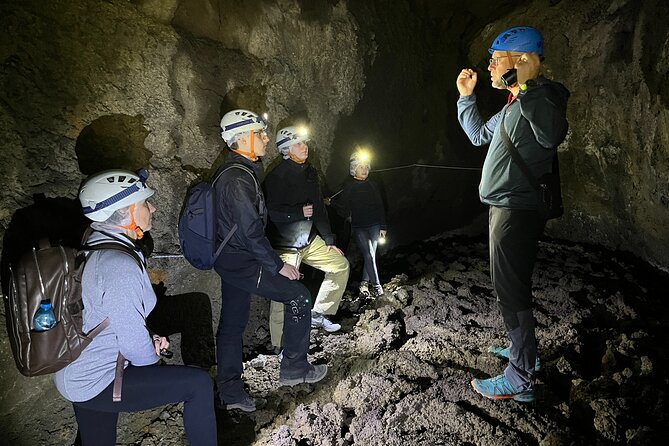
The trekking section passes through volcanic ground formed by eruptions in 2002 and 2017. That gives the walk a clear sense of time. You are not looking at a single old crater. You are moving across areas shaped by relatively recent eruptions.
The 2002 eruption created the Barbagallo Craters, which are among the key sights on the route. The 2017 lava flows came from the Southeast Crater, and the path continues toward the summit crater area.
The surfaces here are not smooth hiking trails in the usual sense. Lava rocks, black sand, ash, and broken volcanic ridges make every step part of the experience. Hiking poles can be especially useful on the descent, when loose material tends to shift under your boots.
I like this section because the guide can connect what you see to Etna’s continuing activity. Guide Cristian is specifically praised for explaining the volcano and its sounds and activity, so ask questions as you go. Etna is easier to understand when someone explains why one flow looks different from another.
More treks around Italy:
- Catania: Mount Etna Trekking Tour Beyond the Tourist Trails
★ 4.9 · 1,596 reviews - Mount Etna: Guided Trek 3,000 Meters to the Summit
★ 4.8 · 1,407 reviews - Stromboli: Sunset Trekking at Sciara del Fuoco
★ 4.6 · 1,372 reviews - Etna Sunset Tour: Volcano trek, Cave & tasting from Catania
★ 4.8 · 1,290 reviews
The summit crater area and Etna’s high-altitude mood
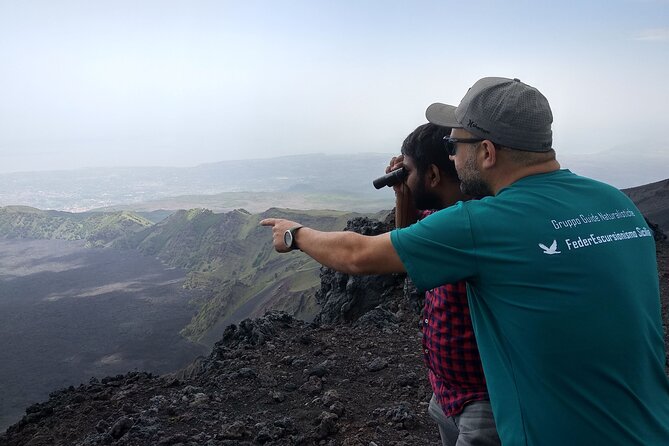
At the top section, the setting becomes almost stripped bare. Vegetation disappears, sulphur smells hang in the air, and gas escapes from the volcanic ground. Wind can push clouds below you, leaving the upper mountain surrounded by open views.
The route includes walking along the edge of the Central Crater area. Conditions at the summit depend on weather and volcanic safety decisions, so the exact experience can change. You should not expect a fixed, guaranteed view of every crater or distant island.
On a clear day, the outlook can extend to the Aeolian Islands, the Calabrian coast, and much of Sicily’s interior. That is a major reward for the effort, but it is weather-dependent. Cloud or wind can close in quickly at this height.
The sulphur smell and ongoing gas emissions are part of what makes this feel like an active volcano rather than a dead geological monument. They can also make the setting less comfortable for some people. I would not choose this outing if you want a gentle, polished walk with predictable conditions.
Descending the northern slope through ash and lapilli
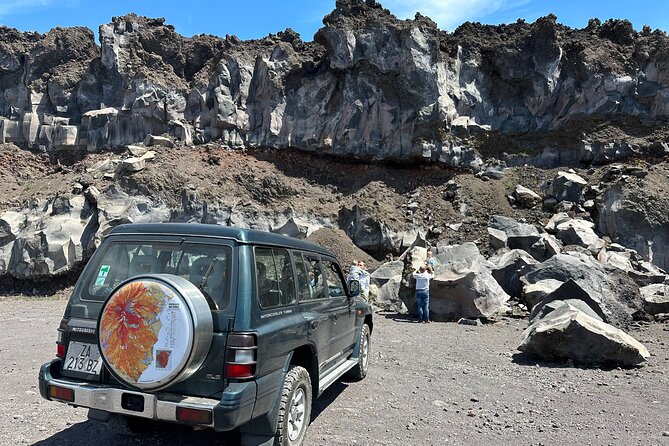
The descent is not simply a return along the same route. You head down Etna’s north side, stepping over rocks shaped by fire and sinking into volcanic sand.
The path passes through sandy canyons covered with ash and lapilli. Lapilli are small volcanic fragments, and they behave differently from ordinary gravel. They can slide beneath your boots, making downhill walking tiring and requiring careful foot placement.
The route reaches Piano delle Concazze, a broad high area at about 2,800 meters. The volcanological observatory is located here, adding another point of interest to a section that otherwise feels wide, empty, and exposed.
This is where the physical demands can catch up with you. The ascent is strenuous, but descending loose material uses different muscles and can be harder on knees and ankles. Hiking poles are worth requesting, especially if you do not often walk on ash or volcanic sand.
A picnic break, with lunch still your job
The guide plans to stop for a picnic in a comfortable area. Breakfast is included, but lunch is not, so you need to bring your own meal or buy food at local shops near the beginning of the tour.
That detail matters because the route is long and the high mountain section may not offer convenient food stops. I would buy or pack lunch before setting off, rather than depend on finding something later in the day.
The break is also a chance to drink, adjust layers, and check your feet before the final descent. On a day with changing temperatures and rough ground, these small pauses help you finish comfortably.
Do not read the picnic stop as a restaurant meal or a long formal lunch. It is a practical mountain break during a demanding outing. Bring food that travels well and enough water for your own needs.
Finishing at Piano Provenzana
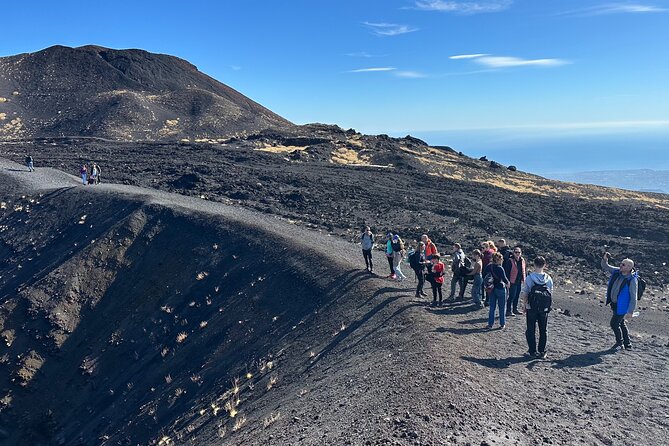
After the break, the route continues downward toward the 2002 lava flow, then reaches a beech forest before ending at Piano Provenzana, around 1,900 meters.
This final section gives you another sharp change in scenery. The summit area is bare and black, while the lower slopes near Piano Provenzana bring back trees and a more familiar mountain setting.
The route then crosses Etna Park and returns to the meeting point at Bar & Restaurant Mareneve. The ending point is the same place where the excursion begins, which keeps the day simpler than an outing that finishes far from its starting point.
The supplied timing needs careful attention here. The tour summary says approximately 6 to 7 hours, while the detailed route says 11 hours. That is a significant difference, especially if you are arranging dinner, transport, or a second activity. I would confirm the expected start and return time with EtnaWay before booking.
The Valle del Bove viewpoint
The outing also includes a stop at Valle del Bove, or the Ox Valley, for about an hour. This broad volcanic depression provides one of the best views of Etna’s eastern side.
The valley helps you understand the scale of the volcano. Instead of focusing only on summit craters, you see a huge open formation cut into the mountain, shaped by eruptions and collapse over time.
This stop is less physically demanding than the high-altitude trekking, but it still adds value to the day. It gives you a place to pause and take in the mountain from a wider angle.
Because the exact order can depend on conditions and route planning, treat the Valle del Bove visit as part of the overall Etna day rather than a separate short excursion. You are paying for a connected mountain experience, not just one viewpoint.
What the $145.12 price gets you
At $145.12 per person, this is not the cheapest way to see Etna. The value comes from the amount of support built into the day: an authorised guide, insurance, helmet, breakfast, 4×4 transport, cable car access, and a small group limited to 10 people.
The available loaner equipment also reduces the cost of preparing for a serious mountain walk. Hiking poles, a backpack, wind jacket, and hiking boots can be provided if you ask ahead of time and give the needed size.
Lunch is the main extra cost to plan for. You may also need to consider personal clothing and any gear not requested in advance.
I think the price makes more sense for you if you want a guided ascent and descent with transport arranged across different parts of the mountain. It is less appealing if your goal is simply to reach a viewpoint, take photographs, and return quickly.
Who should book this Etna trek?
I would choose this outing if you want a full day of volcanic terrain rather than a short stop at Rifugio Sapienza. It suits fit hikers who enjoy uneven paths, changing weather, loose ash, and a route that keeps revealing new surfaces.
It is also a good choice if you want explanation along with scenery. The guide’s role is important here, since Etna’s lava flows, gases, craters, and observatory make more sense when someone puts them in context.
I would think twice if you dislike exposed mountain conditions, have difficulty walking on loose ground, or want a relaxed family outing. Service animals are allowed, but the strong fitness requirement and rough terrain should guide your decision.
The group size is one of the best practical features. Ten people is small enough for a more personal pace than a large coach excursion, though the group still needs to follow the guide’s route and timing.
Weather, cancellations, and practical planning
The tour requires good weather. If poor conditions force cancellation, you are offered another date or a full refund. If the minimum number of participants is not reached, the same options apply.
You can cancel for a full refund up to 24 hours before the start time. Changes or cancellations inside that 24-hour window are not accepted for a refund, so keep local time in mind.
The meeting point opens between 9:00 and 9:30 in the morning, Monday through Sunday, according to the supplied schedule. Confirmation arrives within 48 hours of booking, subject to availability.
I would plan to arrive ready for the mountain, not for a casual breakfast stop. Wear layers, request any borrowed equipment before the day, and sort out lunch at the beginning. The operator includes breakfast, but the information does not specify exactly what it contains.
Should you book the EtnaWay trek?
Book it if your ideal Etna day includes a 4×4 approach, cable-car ascent, high-altitude hiking, recent lava flows, summit crater views, the Valle del Bove, and a small group. The combination gives you a far fuller picture of the volcano than a quick roadside visit.
Skip it if you want a short, easy excursion or if the difference between the stated 6 to 7 hours and the detailed 11-hour route would cause problems. Confirm the actual duration before paying.
For fit hikers who want Etna to feel like a real mountain, the route offers strong value. Guide Cristian’s clear explanations, the included safety equipment, and the chance to walk through lava fields make this a serious but rewarding day out.
FAQ
Where does the Etna trekking tour start and finish?
The tour starts and ends at Bar & Restaurant Mareneve, Via Mongibello 41, Fornazzo, Sicily. The activity returns to the same meeting point.
How long does the Etna tour last?
The tour summary gives an approximate duration of 6 to 7 hours, while the detailed itinerary states 11 hours. Confirm the expected timing with EtnaWay before booking.
Is lunch included?
No. You can bring your own lunch or buy food at local shops near the beginning of the tour. Breakfast is included.
What equipment is included or available?
The tour includes a helmet, and the operator can provide hiking poles, backpacks, wind jackets, and hiking boots. You need to request these items in advance and provide your boot size.
How many people are in the group?
The tour has a maximum of 10 participants.
What happens if bad weather cancels the tour?
You can choose another date or receive a full refund if poor weather causes the activity to be canceled. A full refund is also available if you cancel at least 24 hours before the start time.
New treks around Italy
- Motta Camastra: River Trekking Tour in the Alcantara Gorges★ 4.4 · 15 reviews
- River Trekking Gole Alcantara★ 5.0 · 11 reviews
- Portofino Park Trekking- Discover San Fruttuoso Bay★ 5.0 · 3 reviews
- Private Cinque Terre Trekking Tour★ 5.0 · 3 reviews
- Piano Provenzana: Guided Mt. Etna Snowshoeing Trek★ 5.0 · 3 reviews
- Palermo: Monte Gallo Trekking Tour with Picnic★ 5.0 · 2 reviews
- Etna Southern Slope Guided Easy Trek★ 4.8 · 36 reviews
- Mount Etna: Private Trek on the North Slope Craters★ 5.0 · 4 reviews
Volcano Treks, side by side.
Mount Etna: Trek to 3000m with cable car and 4×4
Read our review →
Mount Etna: Summit Crater Trek with Cable Car
Read our review →
Etna: summit craters trekking with volcano guide 3350mt
Read our review →
Catania: Mount Etna Trekking Tour Beyond the Tourist Trails
Read our review →
Mount Etna: Guided Trek 3,000 Meters to the Summit
Read our review →
Etna Sunset Tour: Volcano trek, Cave & tasting from Catania
Read our review →
Lists this trek appears in