
Review · INDIA
Friendship Peak Trek
Friendship Peak is not a gentle walk with a big view at the end. It is a serious 17,348-foot Himalayan summit attempt through the Pir Panjal range, with snow equipment, camping, acclimatization, and a reserve day built into the plan. I like that the expedition provides the hard-to-pack gear, including snow boots, helmets, gaiters, and ice axes. I also like that you get a private trek with a guide, cook, helpers, and common-supply porters, while still setting your own pace within the group.
The catch is simple: you carry your personal bag, and this is not a suitable first high-altitude trek. You should already have two or three demanding treks and roughly 20 to 25 trekking days in the Himalaya or a similar range. The summit requires strong fitness, patience, and a willingness to turn back if conditions are poor.
Key points before you commit
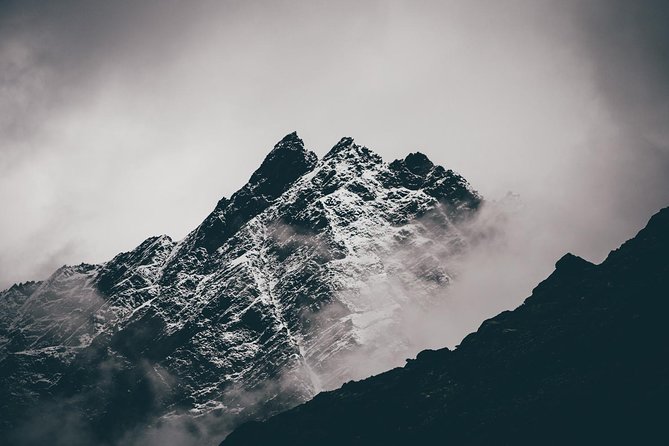
- 17,348-foot summit: Friendship Peak offers broad views toward the Pir Panjal, Dhauladhar, and Great Himalayan ranges.
- Eight-day private expedition: You trek only with your own group, supported by a guide, cook, helpers, and porters carrying shared supplies.
- Snow gear included: Snow boots, helmet, gaiters, and ice axe are provided, along with tents, sleeping bags, mats, and safety equipment.
- A real acclimatization plan: Load ferrying, a move to Camp 1, and a reserve day help prepare you for the summit attempt.
- Meals are covered on the trail: Food begins with lunch on Day 2 and continues through dinner on the final day in Manali.
- Best timing: May to June and September to October are listed as the strongest months for the trek.
Why Friendship Peak is a serious Himalayan objective
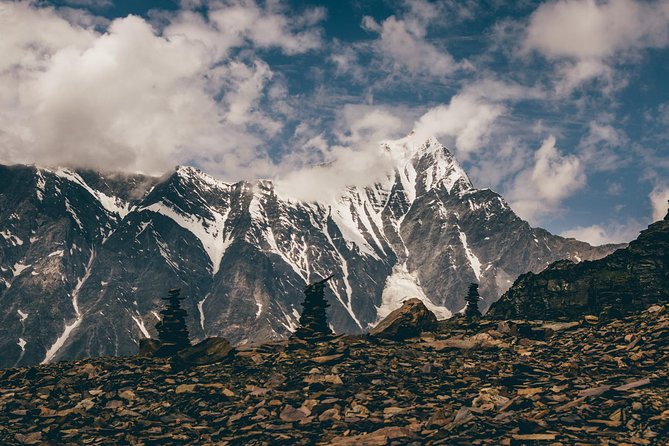
The appeal here is the combination of varied walking and a proper summit effort. Lower sections pass through dense forest, open alpine meadows, and numerous streams. As you gain height, the setting becomes more severe, with snow work and thinner air playing a bigger role.
At the top, you can expect views toward several major peaks, including Hanuman Tibba, Shitidhar, Indra Asan, and Deo Tibba. The summit also gives sightlines toward the Pir Panjal, Dhauladhar, and Great Himalayan ranges. Those views are the reward, but they are not guaranteed. Weather, snow conditions, and your own acclimatization determine how far you get.
I would treat Friendship Peak as a compact mountaineering expedition rather than a standard camping trek. The package includes safety equipment such as static rescue rope, harnesses, carabiners, pulleys, snow stakes, and deadman anchors. That does not make the climb easy, but it shows the kind of terrain and risk the operator is preparing for.
More treks around India:
- Half day trekking (munnar valley Trekking & Tours )
★ 5.0 · 310 reviews - Nag Tibba 2 Days Trek (Pantwari to Pantwari)
★ 5.0 · 274 reviews - Bhrigu Lake and Alpine Meadow Trek
★ 5.0 · 121 reviews
Day 1: Settle into Manali before the mountain work begins
The first night is in a hotel or guesthouse in Manali. This gives you time to arrive, meet the expedition team, check equipment, and prepare for the trail rather than rushing straight into the hills.
Manali is also useful as a final place to organize personal items. Since you carry your own bag, pack with restraint. The operator supplies tents, sleeping bags, sleeping mats, and personal technical equipment listed in the package, but your own clothing and personal necessities still need to fit comfortably on your back.
The trip offers pickup, is near public transportation, and confirmation is provided at booking. Those details make the start easier, but they do not replace careful planning for your arrival in Manali. Give yourself enough time to be rested before the trek begins.
Day 2: From Solang to Bakarthatch
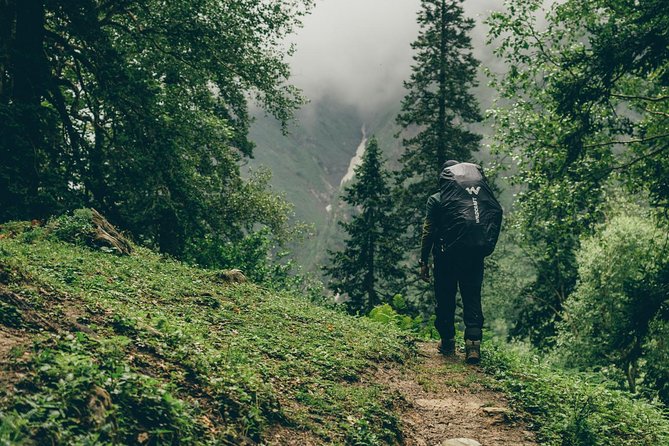
The expedition begins with a drive from Manali to Solang, followed by the first trekking section to Bakarthatch. The route introduces the mix that defines the trek: forest, open grazing areas, mountain views, and streams.
This is not yet the summit push, but it is an important test of your rhythm. You will be carrying your personal bag, so use this day to adjust your pack, footwear, and clothing layers. The camp staff handle food and common supplies, which lets you focus on walking and conserving energy.
Lunch is included from this day onward. Freshly prepared meals are one of the package’s practical strengths. The food is cooked at camp, and past feedback about this operator repeatedly highlights meal quality and reliable timing. At high altitude, that matters. You need enough food to recover, not just something warm to eat.
Day 3: Bakarthatch to Advance Base Camp
The next move takes you from Bakarthatch to Advance Base Camp. By now, the forested lower sections give way to a more exposed high-mountain setting, with alpine meadows and changing snow conditions depending on the season.
Advance Base Camp is where the expedition starts to feel less like a long hike and more like a summit program. Your body has to handle sustained movement at altitude, and the weather can have a greater effect on the day. Your guide and trek leader will be important here, particularly if pace, fatigue, or symptoms of altitude trouble become concerns.
The support team includes a first-aid-certified expedition guide and a mountaineering-course-certified trek leader with first-aid and special rescue training. That is valuable on a route where a small issue can become harder to manage after you move higher.
Same mountains, a different route up:
- Har Ki dun Trek by Himalaya Shelter
★ 5.0 · 102 reviews - Wild Elephant Anakulam & Waterfalls Tour(munnar valley Trekking)
★ 5.0 · 98 reviews - Half Day Hiking in Munnar Trekking Tour
★ 5.0 · 89 reviews - Singalila Trek from Darjeeling
★ 5.0 · 79 reviews
Day 4: Carry supplies to Camp 1, then return
Day 4 uses a load ferry system. You carry supplies toward Camp 1 and then return to Advance Base Camp rather than sleeping higher immediately.
This may feel like a slow day, but it is one of the smarter parts of the schedule. The repeated movement helps you get familiar with the route and lets the team position equipment before the summit phase. It also gives your body more time to adjust to altitude.
The drawback is that the day can feel tiring without the emotional reward of reaching a new overnight camp. I would see it as preparation, not wasted effort. The aim is to make the later move to Camp 1 more controlled.
Day 5: Acclimatization and the move to Camp 1
Day 5 combines acclimatization with moving to Camp 1. The exact pace will depend on the group, weather, and how everyone is responding to altitude.
This is where fitness alone stops being the whole story. You can be strong on flat ground and still struggle when the air gets thin. The required fitness test gives a useful baseline: you should be able to jog or run 5 kilometers in 25 to 30 minutes, or walk 10 kilometers continuously on level or slightly inclined ground with only three or four short breaks.
That benchmark is not a guarantee of summit success. It is a warning not to underestimate the trip. You also need prior high-altitude experience, because knowing how your body reacts above the tree line is more useful than simply being fast.
Day 6: Summit attempt and return to base camp
The summit attempt is the central day. From Camp 1, you make your push for Friendship Peak and then return to base camp.
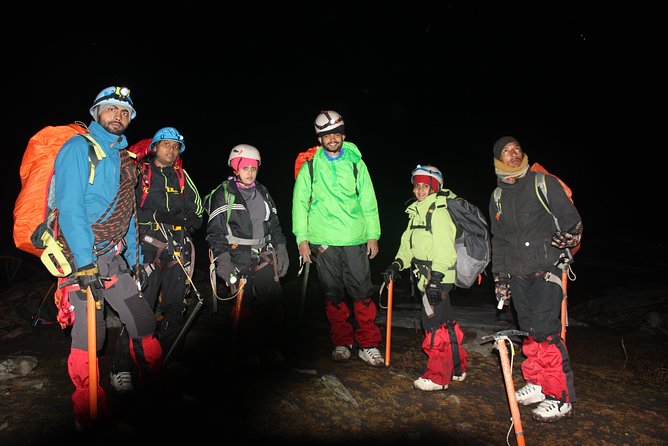
Expect a demanding day with snow equipment and a strong focus on pacing. Your personal kit includes snow boots, a helmet, gaiters, and an ice axe. The safety setup also includes rope and technical rescue equipment. Those items are supplied, but you still need to learn how to use them properly and follow the team’s instructions without trying to rush ahead.
The summit may be the most thrilling part of the trip, but it can also be the point where you need to accept a lower target. Weather can close the route, snow can slow progress, or altitude can make continuing unsafe. A professional expedition should treat a safe return as success, even when the summit is not reached.
The reward, if conditions allow, is a wide Himalayan panorama. Hanuman Tibba, Shitidhar, Indra Asan, and Deo Tibba are among the peaks listed as visible from the summit. Keep your camera ready, but do not let photography distract you from footing, breathing, and the group’s instructions.
Day 7: The reserve day is part of the plan
A reserve day protects the expedition from bad weather or a delayed summit attempt. It may also allow the team to retry the summit if the previous day was unsuitable.
I consider this one of the package’s strongest practical features. High-altitude schedules should not pretend that mountains run on a perfect timetable. A spare day gives the guide more room to make a safe call instead of forcing the summit attempt into a narrow weather window.
You should still understand that a reserve day is not a promise of success. It only provides extra time. If weather remains poor or conditions are unsafe, the team may not be able to summit.
Day 8: Return to Solang and Manali
The final trekking section runs from base camp to Solang, followed by the drive back to Manali. This is a welcome change of pace after the summit effort, though the descent can still be hard on tired knees.
The last night in Manali is included, along with dinner. That gives you a proper place to rest rather than ending the expedition immediately after reaching the road. It also adds useful breathing room if the mountain schedule has left you exhausted.
What the $898.79 price covers
At $898.79 per person, the cost is not small, but it includes far more than guiding. You receive two nights of hotel or guesthouse accommodation in Manali, meals while trekking, forest permits and camping charges where applicable, twin-sharing tents, sleeping bags, sleeping mats, and the expedition team.
The package also covers cooks, helpers, and porters carrying common supplies. For foreign nationals, IMF fees are included. The technical equipment is another major part of the value. Hiring or transporting snow boots, helmets, gaiters, ice axes, ropes, and camp equipment on your own could be difficult, especially for someone flying into India.
The main extra cost to remember is portage for your personal bag. That is not included, so assume you will carry it unless you arrange otherwise with the operator. Travel insurance is also excluded. For a high-altitude expedition, insurance that covers trekking and emergency evacuation is a sensible addition, though the package does not provide it.
Group discounts are available, and the trek is private, so only your own group participates. That combination may suit friends or a small club that wants shared support without joining a large public departure.
Food, equipment, and camp support
Meals begin with lunch on Day 2 and continue through dinner on the last day in Manali. The camp chef prepares the food, and consistent meal timing is especially useful when you are burning energy each day.
The supplied sleeping bag and mat reduce the amount of bulky gear you need to bring. Twin-sharing tents are standard, so do not expect a private tent unless you arrange something separately.
The package lists a broad safety setup: static rescue rope, seat harnesses, carabiners, pulleys, snow stakes, and deadman anchors. You should ask for a clear equipment briefing before the technical sections. Included gear is only useful if it fits and you know how to handle it.
The right person for this trek
I would recommend Friendship Peak to an experienced trekker who wants a structured summit attempt in Himachal Pradesh. You should already have two or three challenging treks behind you, plus 20 to 25 total trekking days in the Himalaya or comparable ranges.
You should also be comfortable carrying your own personal bag, camping for several nights, walking through changing terrain, and accepting a slow pace at altitude. A strong base in running or long-distance walking helps, but previous high-altitude experience matters just as much.
I would not choose this for a first Himalayan trek. A lower route such as Beas Kund would be a more sensible introduction to camping and mountain walking. Friendship Peak asks more from your legs, lungs, judgment, and patience.
When to go and what the weather means
The recommended months are May to June and September to October. These windows are useful because the route can offer better conditions for trekking and summit work, but mountain weather is never automatic.
The experience requires good weather. If the operator cancels because of poor conditions, you are offered another date or a full refund. If you cancel or request a change for personal reasons, the booking is non-refundable and cannot be amended.
Pack for variation rather than one fixed temperature. You will move from Manali’s lower elevation to cold, exposed camps where snow gear is needed. Since the exact personal packing list is not provided, confirm clothing requirements and bag weight with Bikat Adventures before departure.
What I like, and what I would question
The strongest part of this expedition is its structure. The load ferry, acclimatization day, Camp 1 move, summit attempt, and reserve day show a sensible progression rather than a rushed climb.
I also like the practical support. Food, tents, sleeping equipment, technical gear, cooks, helpers, and common-supply porters are included. The positive feedback about supportive trek leaders, well-timed food, professional organization, and good camp meals fits the package’s design.
The weak point is not hidden: you still need to be highly prepared. A guide cannot remove the effects of altitude, and included snow boots do not turn an advanced summit into a beginner route. You also need to budget for insurance and possible personal-bag portage.
Should you book the Friendship Peak Trek?
Book it if you already have serious Himalayan trekking experience and want a guided, privately organized summit attempt with much of the technical kit supplied. The Pir Panjal views, alpine meadows, forest approach, snow sections, and high summit make this a varied eight-day challenge.
Skip it if this is your first trek, if you dislike carrying a pack, or if your fitness is only occasional. Before paying, confirm the departure date, personal equipment sizes, bag arrangements, insurance requirements, and the exact summit conditions expected in your chosen month. For the right trekker, the support and careful itinerary make the $898.79 price reasonable. For an unprepared one, the mountain will quickly expose the difference.
FAQ
How high is Friendship Peak?
Friendship Peak reaches 17,348 feet in the Pir Panjal range of Himachal Pradesh.
How long is the Friendship Peak Trek?
The planned duration is approximately eight days, beginning and ending in Manali.
Is this trek suitable for beginners?
No. The summit is not intended for beginners. You should have completed two or three challenging treks and around 20 to 25 trekking days in the Himalaya or similar ranges.
What equipment is provided?
The package provides tents, sleeping bags, sleeping mats, snow boots, a helmet, gaiters, and an ice axe. It also includes listed safety equipment such as ropes, harnesses, carabiners, pulleys, snow stakes, and deadman anchors.
Are meals and accommodation included?
Yes. Two nights of hotel or guesthouse accommodation in Manali are included. Trekking meals begin with lunch on Day 2 and continue through dinner on the final day in Manali.
What happens if bad weather cancels the trek?
If the experience is canceled because of poor weather, you will be offered a different date or a full refund. Personal cancellations or amendments are non-refundable.
New treks around India
- Sandakphu Singalila Ridge Trek – 6 Days★ 5.0 · 2 reviews
- Rishikesh: Neelkanth Mahadev Guided Trek★ 5.0 · 2 reviews
- Rishikesh: Kunjapuri Temple Sunrise Trek★ 5.0 · 5 reviews
- Private Munnar Tea Trek★ 4.6 · 38 reviews
- Munnar: Sunrise Trekking Adventure with Breakfast★ 3.3 · 3 reviews
- Munnar: Half day Guided Trek★ 4.8 · 24 reviews
- Mcleodganj Nature Trek (3 Hours Guided Walking Tour)★ 5.0 · 2 reviews
- McLeod Ganj: Triund Trek with Manu Adventures India★ 4.8 · 6 reviews
India Trekking Tours, side by side.
Wild Elephant Anakulam & Waterfalls Tour(munnar valley Trekking)
Read our review →
Lists this trek appears in