
Review · DARJEELING
Sandakphu Singalila Ridge Trek – 6 Days
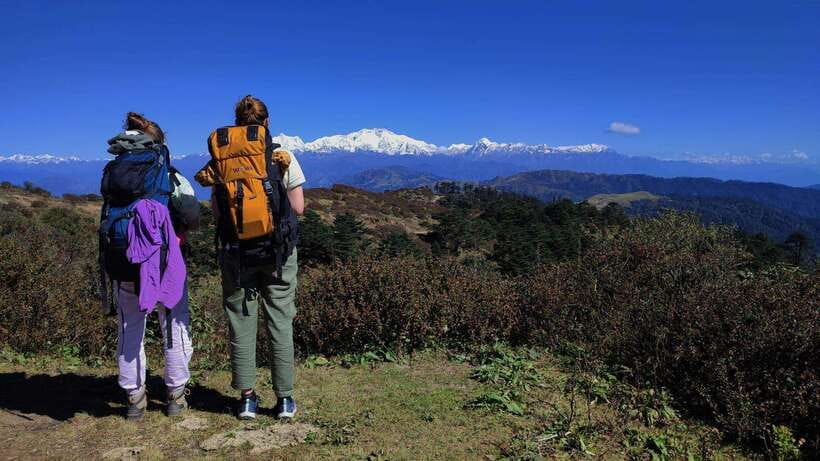
Sandakphu gives you one of India’s finest mountain views: Everest, Kanchenjunga, Lhotse, and Makalu appear together from the high ridge. That alone makes this six-day walk special, but the route earns its keep with quiet forest paths, bamboo and rhododendron groves, village stops, and long stretches above the tree line.
I especially like two things here. First, the scenery changes often, from farm fields to thick forest to open Himalayan ridges. Second, the price of $346 includes meals, permits, guide services, simple lodging, and transport from Darjeeling. The main drawback is the physical demand: several days run about seven hours, and the cold at Sandakphu can be serious. Some shelters may not have a stove or hot-water bag, so you need to bring proper warmth.
Key points of the Sandakphu trek
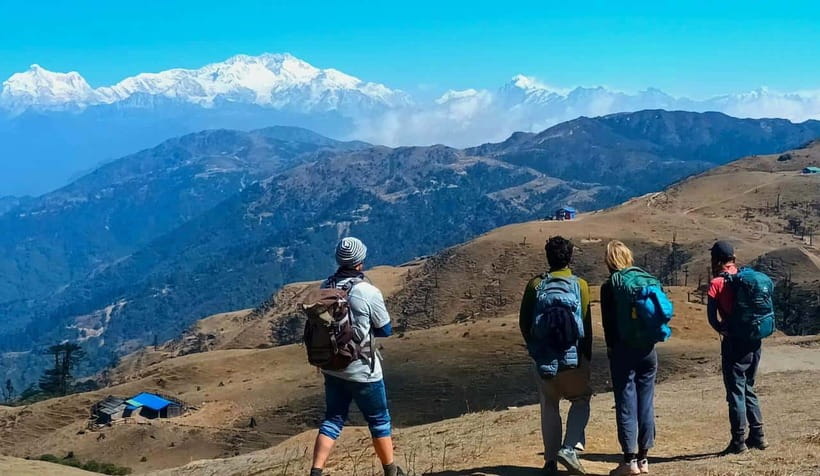
- Four giant peaks from one ridge: From Sandakphu, you can see Everest, Kanchenjunga, Lhotse, and Makalu in one broad view.
- A quiet national park route: Singalila National Park protects forests filled with bamboo, oak, rhododendron, and many bird species.
- A demanding six-day journey: The route covers long walking days, including 21 kilometers from Sandakphu to Phalut.
- Simple mountain lodging: Nights are spent in tea houses and trekkers’ huts, with basic facilities rather than resort comfort.
- Useful inclusions: Vegetarian meals, hot tea and coffee, permits, an English-speaking guide, and shared jeep transport are covered.
- Wildlife is possible, not promised: The park is known for red pandas, though sightings are rare. You may also look for deer, wild boar, birds, and other mountain animals.
Why Sandakphu is worth the effort
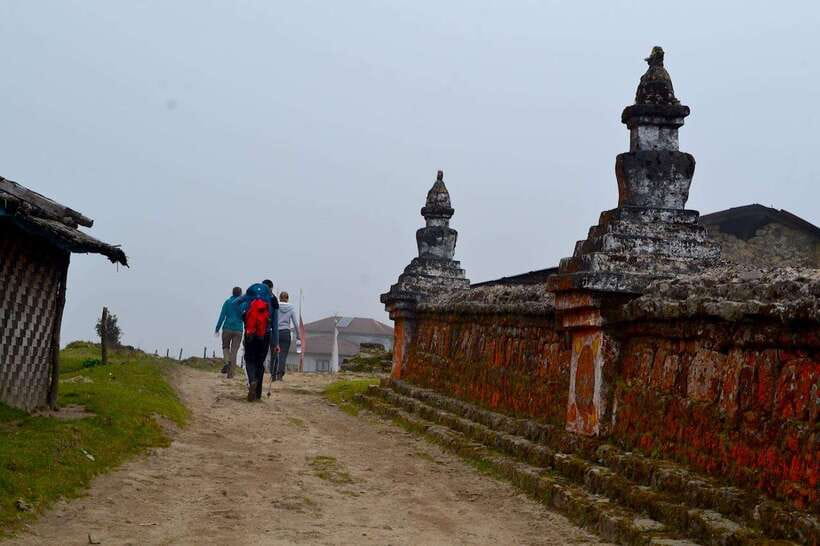
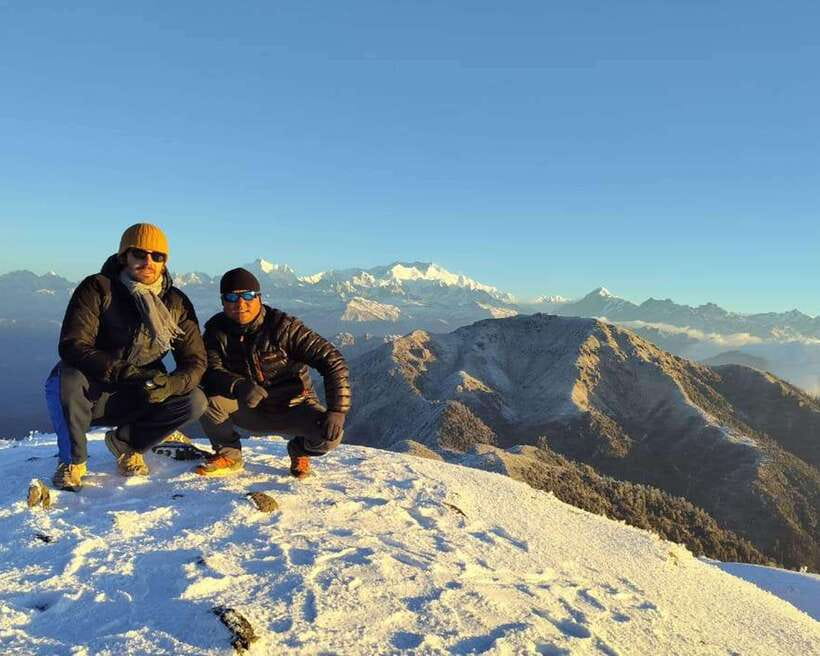
Sandakphu rises to 3,636 meters, or 11,929 feet, making it the highest point in West Bengal. The summit is not just a number on a route map. It is the payoff for climbing through forests and along an exposed ridge where the view opens toward some of the tallest mountains on Earth.
The famous panorama includes Mount Everest at 8,848 meters, Kanchenjunga at 8,586 meters, Lhotse at 8,516 meters, and Makalu at 8,481 meters. You should treat this as a weather-dependent reward. Clear skies are never guaranteed, but the route still has value when clouds cover the main peaks.
I like the way this trek combines scale with solitude. You begin within reach of Darjeeling, yet the trail soon feels far removed from city life. The Singalila Ridge links Nepal and India, and the route repeatedly shifts between sheltered woods and exposed high ground.
The national park adds another layer. This is not simply a climb to a viewpoint. You walk through habitats that support rare animals and many birds. A red panda sighting is possible, but with only about 32 known in the park, you should not book this trek expecting one. Consider the wildlife a bonus, and bring binoculars if you enjoy birdwatching.
More six-day treks around India
- Singalila Ridge Trek from Darjeeling – 6 Days
★ 5.0 · 56 reviews - Kathmandu: 6-Day Limitless Langtang Trek
★ 5.0 · 21 reviews - Kathmandu: 6 Days Langtang Valley Trek with Kyanjin Ri
★ 5.0 · 7 reviews
Day 1: Darjeeling to Gurdum through dense forest
The meeting time is 6:15 a.m. at the Ashmita Trek & Tours office in Darjeeling. From there, shared jeep transport takes you toward Rimbik. The stated drive time is about four hours, followed by a 10-kilometer walk to Gurdum.
The first hiking day takes about 5.6 hours. The route passes through dense forest and rises from roughly 2,286 meters to 2,438 meters. That altitude gain is modest compared with the next two days, but you still need to begin at a steady pace because the trek has only just started.
This is a good introduction to the area. Instead of reaching the high ridge at once, you move through thick woodland and get a sense of how quickly the surroundings change after leaving Darjeeling. The forest provides shade and a softer start than an exposed climb.
The day includes a long transfer before walking, which is worth keeping in mind. Shared jeep travel keeps the package affordable, but it also means the road portion is not private. Pack water and a snack where you can reach them, since the included meals are served during the trekking program rather than necessarily at every point of the transfer.
Day 2: The hard climb from Gurdum to Sandakphu
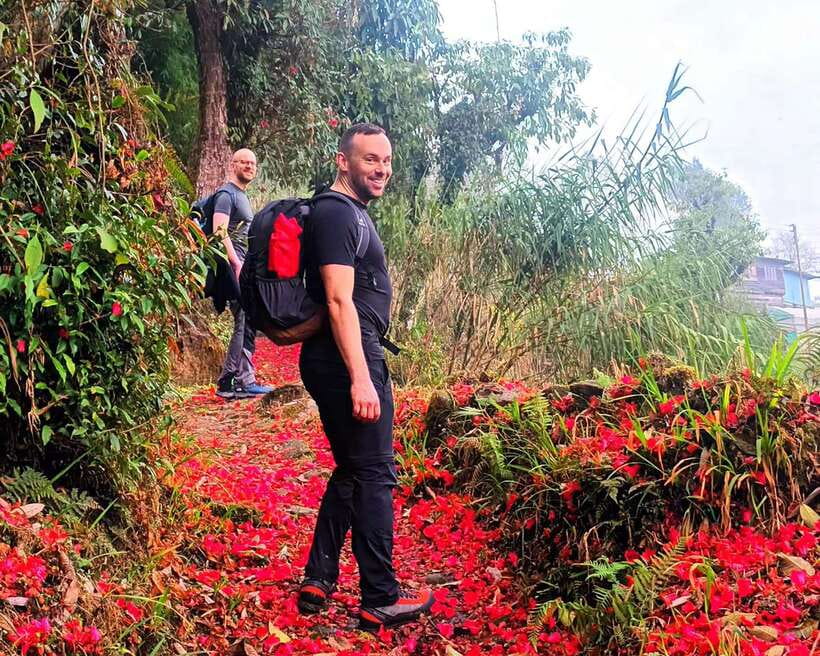
Day two is the key ascent. You walk 13 kilometers from Gurdum through Hattitar to Sandakphu, climbing from about 2,438 meters to 3,636 meters. The walk is listed at seven hours, so this is a serious mountain day even though the distance is not extreme by itself.
The reward is the ridge and the great Himalayan view. As the forest gives way to more open ground, you begin to understand why Sandakphu is the best-known point on this route. The final arrival can feel demanding, particularly if you are not used to altitude or long uphill walks.
This is also where preparation matters most. You need warm clothing, gloves, a jacket, thermal layers, a hat, and reliable shoes. Carry a headlamp or flashlight, because early starts and basic mountain lodging make a light useful. Sunscreen and sunglasses matter too, even on cool days.
The tour specifically excludes people with altitude sickness, diabetes, low fitness, and those over 60. It also is not suitable for children under 15. Those limits are worth taking seriously. This is not a casual countryside walk, and the height at Sandakphu can affect even fit people.
The Sandakphu sunrise viewpoint
At Sandakphu, you rise for a short climb to a viewpoint. This early start is one of the most important moments of the trip. The high ridge gives you a chance to see Everest, Kanchenjunga, Lhotse, and Makalu in one sweeping view.
The exact quality of the panorama depends on weather. Clear conditions can produce an extraordinary mountain scene, while cloud may reduce visibility to nearby slopes. That uncertainty is normal in the Himalayas, so I would judge the trek by the whole route rather than by one promised photograph.
Sandakphu is also where the basic nature of the accommodation matters. You sleep in tea houses or trekkers’ huts, not polished hotels. A verified booking experience praised the scenery, food, and pleasant guide companionship, but noted that every shelter did not have a stove or hot-water bag. Bring a good sleeping bag if you have one, plus a reusable bottle that can hold warm water.
More treks around India:
- Half day trekking (munnar valley Trekking & Tours )
★ 5.0 · 310 reviews - Nag Tibba 2 Days Trek (Pantwari to Pantwari)
★ 5.0 · 274 reviews - Bhrigu Lake and Alpine Meadow Trek
★ 5.0 · 121 reviews - Har Ki dun Trek by Himalaya Shelter
★ 5.0 · 102 reviews
Day 3: Sandakphu to Phalut via Sabargram
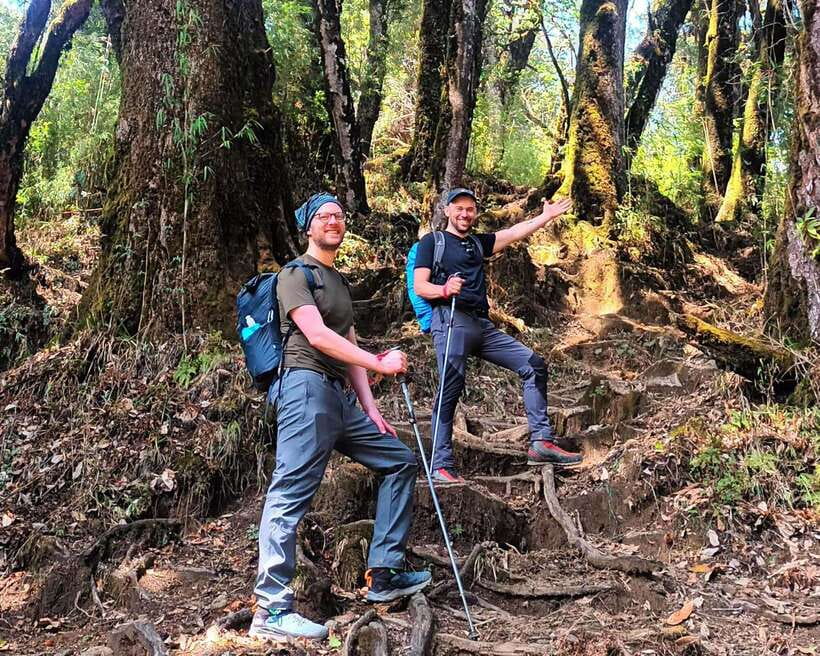
The third day covers 21 kilometers from Sandakphu to Phalut via Sabargram, with about 7.8 hours of walking. The listed altitude changes only slightly, from 3,636 meters to 3,600 meters, but do not mistake that small net change for an easy day.
Long ridge walking can be tiring because you spend hours on exposed ground with few chances to shorten the route. The appeal is the open view and the sense of moving along the spine of the mountains rather than simply climbing to a summit and turning back.
This is likely the day when your footwear and pacing matter most. Blisters or a heavy pack can become a real problem over 21 kilometers. The package does not include a porter, though you can hire one for an extra Rs. 12,000 for six days. If you are unsure about carrying your own gear, arrange that cost before setting out.
The guide carries a basic medical and first-aid kit, but that does not replace personal preparation. Bring any prescribed medicine, personal toiletries, and travel insurance. The tour does not cover medical costs, illness, cancellations caused by unexpected events, or property damage.
Day 4: The descent from Phalut to Gorkhey
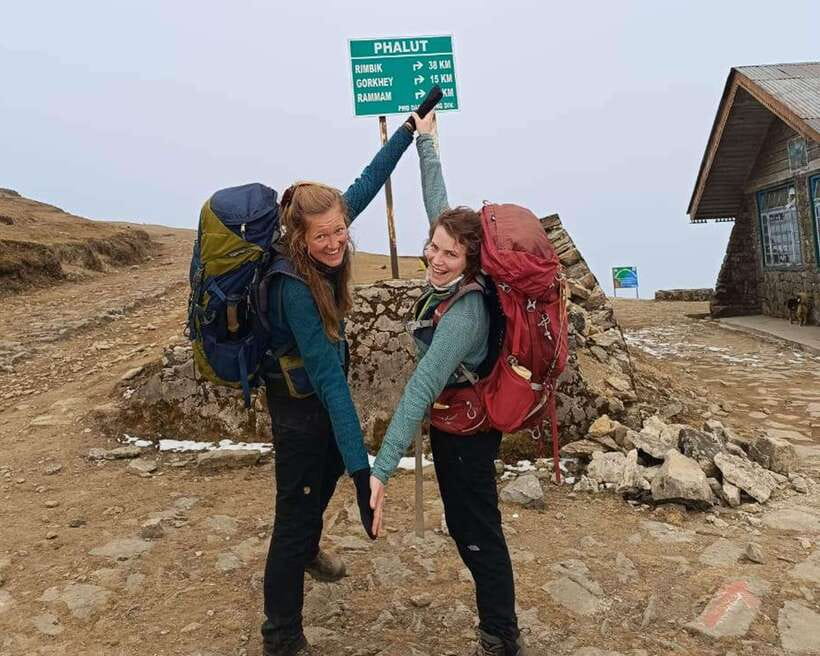
From Phalut, the route drops 14 kilometers to Gorkhey in about seven hours. The altitude falls from approximately 3,600 meters to 2,346 meters, making this a major descent.
Descending can be easier on breathing than climbing, but it can be hard on knees and ankles. Trekking poles would be useful, though personal gear is not included. Take shorter steps and do not rush simply because the trail is going downhill.
Gorkhey gives the route a different feel from the high ridge. After the exposed conditions around Sandakphu and Phalut, the lower altitude and forest setting provide a welcome change. The itinerary describes a mix of agricultural fields, forests, and alpine ridges, and this section helps show that range.
The accommodation remains basic. That is part of the trade-off for reaching places where there are few visitors and little urban noise. You gain a quieter route, but you give up the comfort and backup services found in larger mountain towns.
Day 5: Gorkhey to Timburey through Ramam
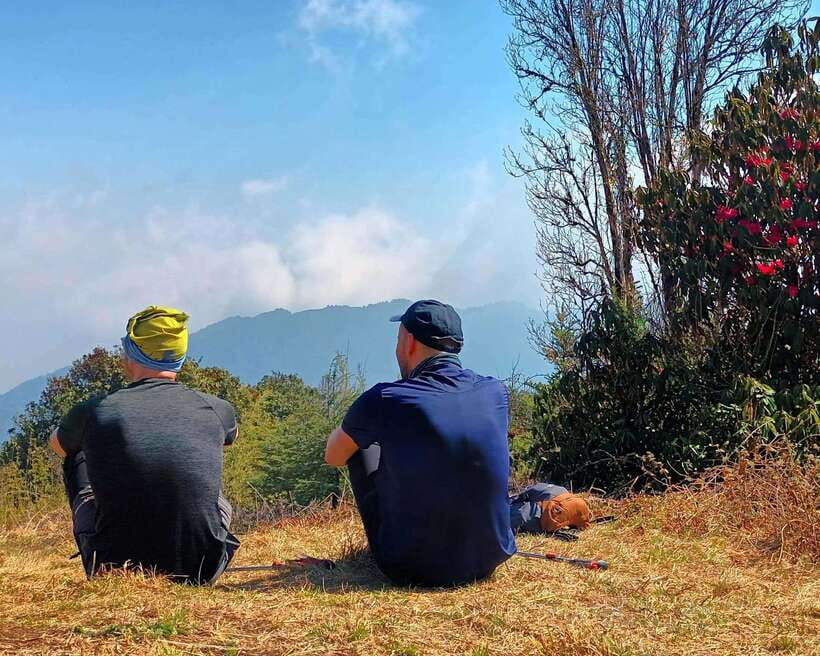
Day five covers 15 kilometers from Gorkhey to Timburey via Ramam, taking about seven hours. The route drops from about 2,346 meters to 1,996 meters.
This section brings you closer to mountain communities and the everyday life of the region. One of the appealing details of the trip is the chance to pass through local villages and meet local people. Those encounters give the walk a human scale after several days focused on peaks and forest.
The meal plan includes breakfast, lunch, and vegetarian dinner, along with hot tea and coffee during the trek. That is useful on long walking days. You still need to budget for bottled water, snacks, chocolate, and other drinks, since those are not included.
Alcohol is not allowed. Feeding animals is also prohibited, a sensible rule in a protected area. Keep food packed away and follow the guide’s instructions around wildlife.
Day 6: Timburey to Srikhola and back to Darjeeling
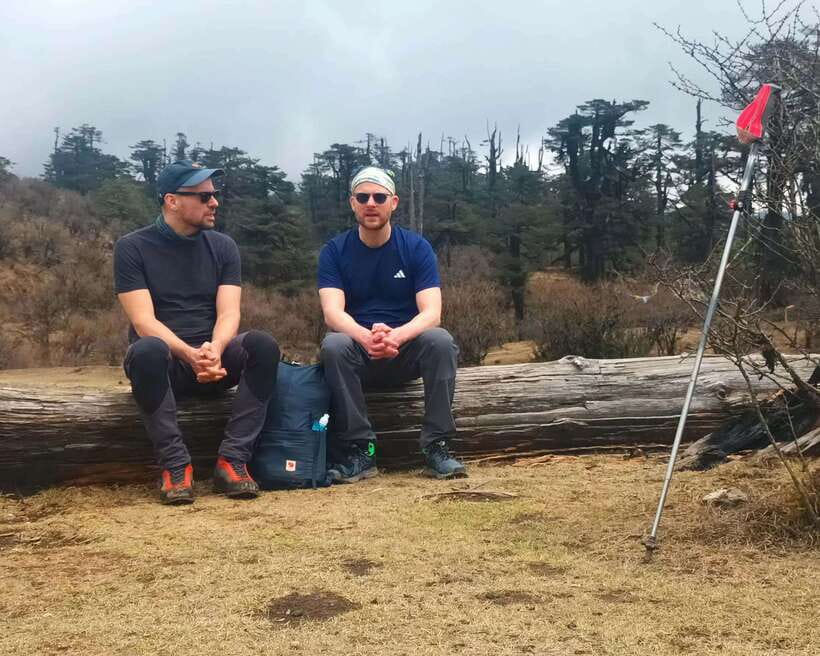
The final walking section is only five kilometers from Timburey to Srikhola. After that, the shared jeep takes you back to Darjeeling, with the drive listed at about four hours.
This short walk gives you a gentler finish after several long days. It also leaves time for the return transfer rather than adding another major climb. You should still expect a full day, since the road journey is substantial.
Accommodation in Darjeeling before and after the trek is not included. Plan for those nights separately, along with meals outside the six-day route. The same applies to any extra stay caused by weather, illness, or transport problems.
What the $346 price really covers
At $346 per person, the package offers solid value for a guided Himalayan trek. The price includes an English-speaking mountaineering-qualified local guide, food during the trek, tea and coffee, tea-house or trekkers’ hut accommodation, forest permits, local and government taxes, and shared jeep transport to and from Darjeeling.
The strongest value comes from the permits and logistics. Singalila National Park access is handled for you, and you do not need to arrange each overnight stop or meal independently. A private group also gives you a more personal structure than a large departure, though the vehicle transfer is shared.
The exclusions can add up. You pay for personal gear, water, snacks, drinks, insurance, Darjeeling accommodation, and any porter or horse support. A porter costs an additional Rs. 12,000 for six days. If you want to keep costs close to the advertised price, arrive with suitable gear and carry your own backpack.
Free cancellation is available up to 24 hours before departure, and you can reserve without paying immediately. The park closes each year from June 15 through September 15 during the monsoon, so those dates are not available for this route.
Food, lodging, and guide support
The food is vegetarian, with breakfast, lunch, and dinner included on trekking days. Tea and coffee are also provided. The strongest praise connected with the experience was directed at the food and the pleasant company of the guide, which matters on a route with long hours and simple accommodation.
No guide name is provided, so you should confirm who will lead your group before departure. You do know that the guide is English-speaking, locally based, and carries a basic first-aid kit.
The sleeping arrangements are functional. Tea houses and trekkers’ huts offer shelter, but conditions vary. The lack of a stove or hot-water bag in every shelter is a real comfort issue, especially at Sandakphu. Pack thermal clothing, warm socks, a sleeping bag suitable for cold nights, and a waterproof bag for clothing and electronics.
Who should book this trek
I would recommend this route to fit hikers who want a mountain experience with real variety rather than a short viewpoint walk. It suits you if you are comfortable with seven-hour days, a 21-kilometer ridge section, basic lodging, and changing weather.
It is less suitable if you want private transport throughout, hotel-style rooms, flexible short walking days, or guaranteed peak views. It is also not suitable for children under 15, people over 60, people with diabetes, people with altitude sickness, or anyone with a low fitness level.
Should you book the Sandakphu Singalila Ridge Trek?
Book it if your main goal is the chance to see four of the world’s highest mountains from one high ridge, and you are willing to work for that view. The route adds forests, village life, wildlife possibilities, and a quiet national park setting, so it offers more than a single summit photo.
Skip it if you need reliable comfort, dislike long walking days, or are not prepared for cold nights and basic shelters. For the right hiker, $346 is a fair package price, especially with meals, permits, guide support, lodging, and Darjeeling transport included. Bring serious warm gear, consider the porter option, and treat clear mountain views as a gift rather than a guarantee.
FAQ
How long is the Sandakphu Singalila Ridge Trek?
The trek lasts six days, including the return drive to Darjeeling on the final day.
What is the highest point of the trek?
Sandakphu is the highest point at 3,636 meters, or 11,929 feet.
Which mountains can I see from Sandakphu?
From the Sandakphu viewpoint, you may see Mount Everest, Kanchenjunga, Lhotse, and Makalu.
Is transportation from Darjeeling included?
Yes. Shared jeep transportation from Darjeeling to the trekking area and back is included.
Are meals included?
Breakfast, lunch, and vegetarian dinner are included during the trek. Hot tea and coffee are also provided.
Is accommodation included?
Yes. Accommodation during the trek is included in tea houses and trekkers’ huts. Accommodation in Darjeeling before and after the trek is not included.
Is a porter included?
No. A porter or horse to carry your backpack costs an additional Rs. 12,000 per porter for six days.
When is Singalila National Park closed?
The park closes during the monsoon season from June 15 through September 15.
Can children join this trek?
No. The trek is not suitable for children under 15. It is also not suitable for people over 60, people with diabetes, people with altitude sickness, or people with a low fitness level.
New treks around India
- Rishikesh: Neelkanth Mahadev Guided Trek★ 5.0 · 2 reviews
- Rishikesh: Kunjapuri Temple Sunrise Trek★ 5.0 · 5 reviews
- Private Munnar Tea Trek★ 4.6 · 38 reviews
- Munnar: Sunrise Trekking Adventure with Breakfast★ 3.3 · 3 reviews
- Munnar: Half day Guided Trek★ 4.8 · 24 reviews
- Mcleodganj Nature Trek (3 Hours Guided Walking Tour)★ 5.0 · 2 reviews
- McLeod Ganj: Triund Trek with Manu Adventures India★ 4.8 · 6 reviews
- Gokarna Nature Walk (3 Hours Guided Trekking Experience)★ 5.0 · 2 reviews
Darjeeling Trekking Tours, side by side.
Lists this trek appears in