Review · CHIANG MAI
Chiang Mai: Karen Tribe & Dual Waterfalls – Private Day Trek
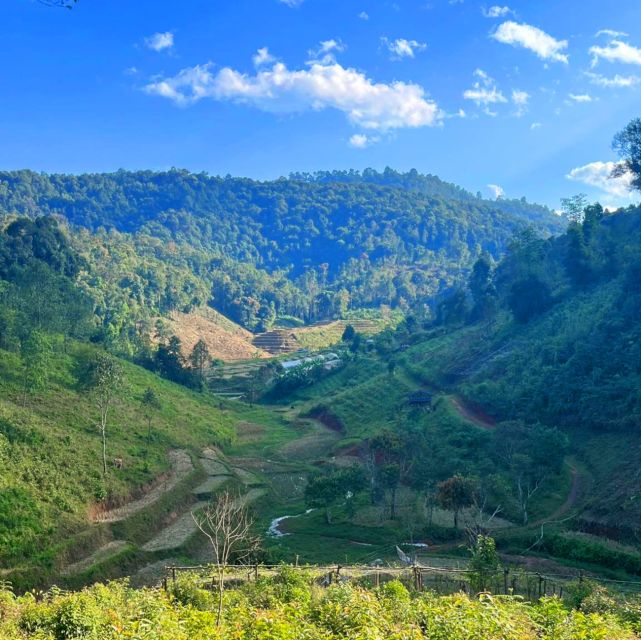
The best part of this day is the change of pace. Within a few hours, you leave Chiang Mai’s traffic behind and reach Mae Wang, where paddy fields, bamboo forest, and Karen villages replace city streets. The day mixes walking, swimming, local food, and a quiet river ride rather than packing in one more temple.
I like the private format, especially if you want to set the walking pace or ask direct questions about village life. I also like the two very different water stops: one comes after a walk through fields and mixed forest, while the other follows a longer stretch through bamboo and evergreen forest.
The main caution is that the day can change. One recent outing had no afternoon hike, only one waterfall, and no Karen village visit as expected. If you need every advertised stop, ask about trail and water conditions before setting out.
Key points to know
- Mae Wang is a long way from Chiang Mai: Expect about 1.5 to 2 hours in the van each way.
- The route is physically demanding: Walking takes roughly five hours in total, with uneven forest paths and wet conditions possible.
- Swimming is part of the plan, not a guarantee: Bring swimwear and a towel, but weather and water conditions can alter the stops.
- Karen culture is part of the visit: You may see traditional weaving, share food, and learn about village life, though the exact cultural stop can change.
- Lunch is local and hands-on: The meal includes Karen-style food, with a cooking activity described as helping prepare a dish.
- Bamboo rafting is a calm finale: The 45-minute ride is gentle and scenic, but it follows a full day on foot.
From Chiang Mai to Mae Wang by 8:30 am
Your day begins with hotel pickup in Chiang Mai at about 8:30 am. You should wait in the hotel lobby, since the transfer is included and the schedule starts early.
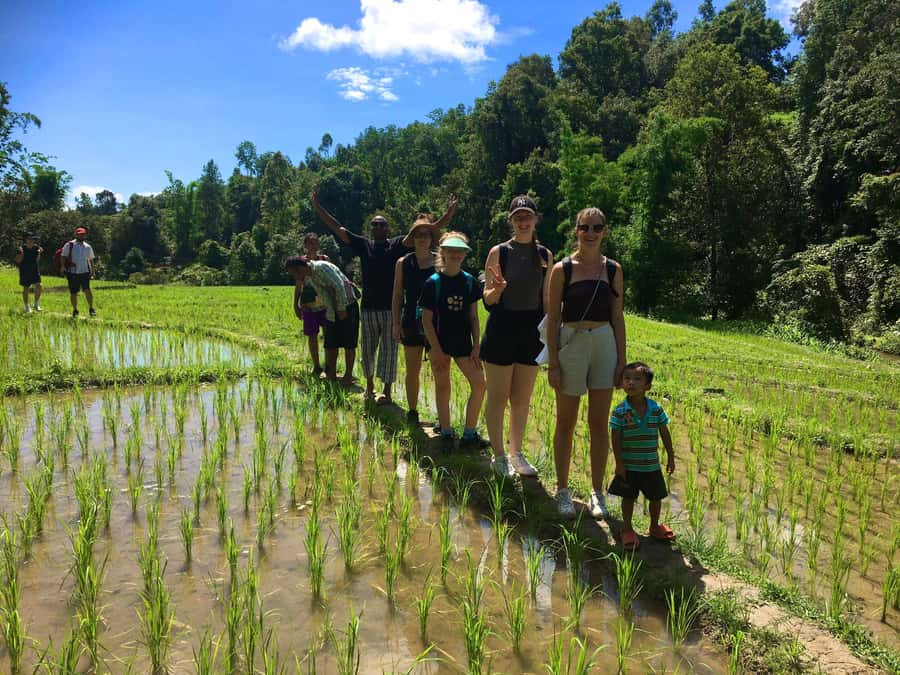
The drive to Mae Wang takes around 1.5 to 2 hours. That is a serious chunk of the day, but it is also what makes this outing different from a short city excursion. You are heading into a rural district rather than staying near Chiang Mai’s main sights.
The tour uses a van for the road sections, and the group is private. The listed price is $343 for up to two people, not per person. For a couple or two friends, that works out to about $171.50 each before any additional booking costs. That is not a cheap day out, but it includes private transport, a guide, lunch, drinking water, bamboo rafting, and accident insurance.
The value depends on what you want. If you only want a waterfall and a short walk, you can find less costly options. If you want a full day with private transport, village contact, food, two possible waterfall stops, and rafting, the price is easier to justify. The long transfer also makes a private vehicle more comfortable than joining a large bus group.
More Waterfall Treks in Chiang Mai
- Chiang Mai: 2-Days Jungle Trek, Waterfalls and Karen Village
★ 4.8 · 103 reviews - Chiang Mai ATV & White Water Rafting & Trekking to Waterfall
★ 4.7 · 84 reviews - Chiang Mai Untouched Elephant: Nature Walk & Waterfall Trek
★ 4.7 · 77 reviews
Starting at Huai Khao Lip
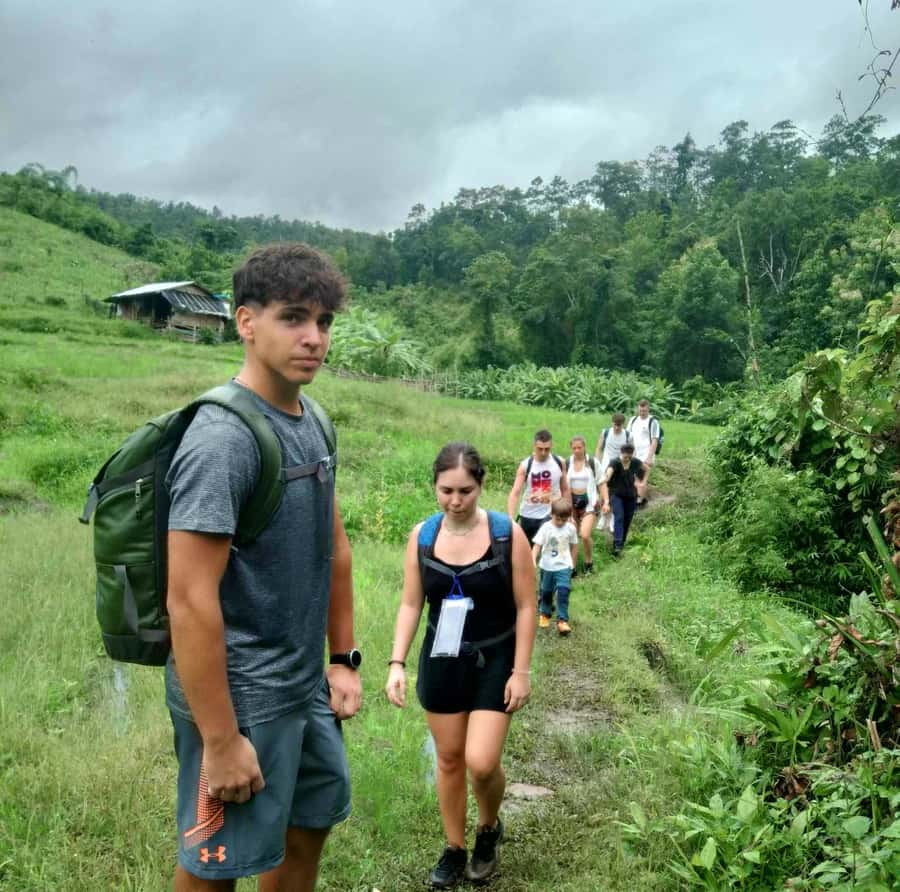
The first village stop is Ban Huai Khao Lip, a Karen community and the starting point for the trek. This is where the day shifts from road travel to walking.
The cultural side of the stop matters. You are not simply being driven to a photo stop, then sent back to the van. The plan is to meet local people and learn about Karen culture before walking through the surrounding countryside.
Keep your expectations grounded. Karen communities are not a single staged attraction, and the visit may feel more like a short introduction than a formal museum tour. One account of the day included a chance to see Karen weaving. The weaver was not wearing the neck rings sometimes associated with the phrase long-neck village, which is a useful reminder that Karen identity is broader and more varied than that tourist image.
The cultural stop has also changed on at least one outing. The village visit did not take place as expected, so you should treat this part as dependent on local arrangements, weather, and the guide’s route. A good approach is to ask respectful questions and avoid expecting a performance.
Two hours through fields and forest
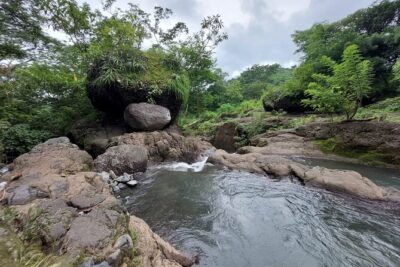
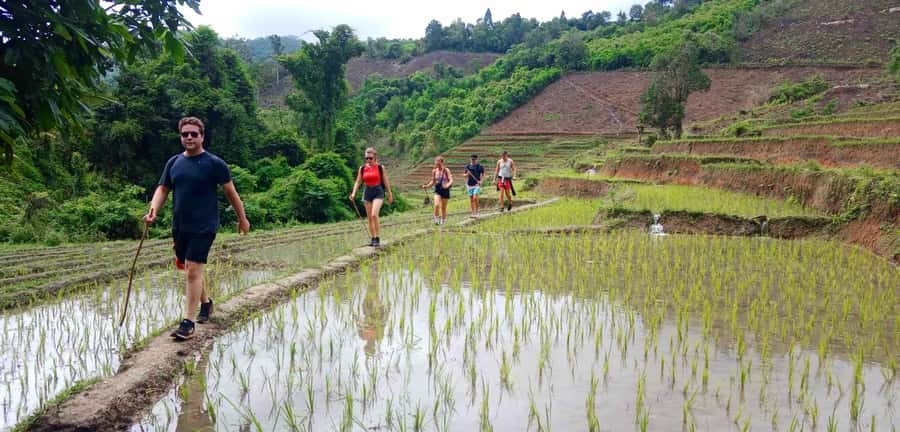
The first walk lasts about two hours. The route passes through paddy fields and mixed forest before reaching a waterfall.
This is a good section for seeing how rural life and forest trails fit together. Paddy fields open the view, while the forest provides shade and a more enclosed walk. The terrain is varied, but it is not described as a paved nature path. You should expect uneven ground, mud after rain, and roots or stones underfoot.
At the waterfall, you can pause, take photos, and swim if conditions allow. The itinerary also mentions a jungle swing, which adds a playful touch to the stop. Bring clothes that can get dirty, and do not rely on wearing your best hiking outfit all day.
The waterfall experience is weather-sensitive. In one account, the water was not suitable for swimming, so a promised dip became a viewing stop instead. That is not unusual for a rural stream outing. Water levels, rain, safety, and seasonal conditions can all change the plan.
A towel, swimwear, flip-flops, insect repellent, sunscreen, and a sun hat are useful. Wear proper hiking shoes for the walking sections, then change into something easier around the water.
Lunch and Karen cooking in the village
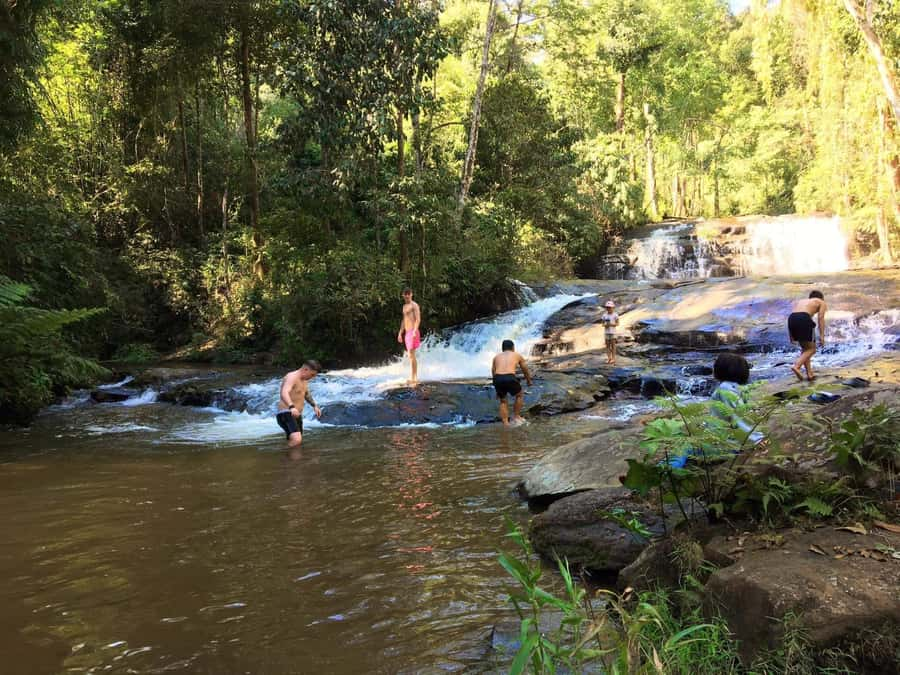
After the first waterfall, you walk for about 20 minutes to a Karen village. This is a short connection between the forest and the food stop, but it is also one of the more personal parts of the day.
Lunch is included, and the plan is to help prepare and taste traditional Karen-style food. The precise format matters here. You should not expect a long cooking school with several recipes and a printed lesson. The activity may involve helping with one dish and receiving guidance from a local host.
One version of the day included lunch prepared by Lee’s wife, who waited for the group and helped with the final dish. That sounds more like a family meal with participation than a formal restaurant service, which is exactly why the stop can feel special. You get food connected to the place, not a generic packed lunch.
At the same time, the cooking portion may feel brief if you expect a full class. One outing included only one prepared dish, rather than several dishes or extensive tasting. Ask your guide what will be prepared that day if the food element is a major reason for booking.
The village stop is best approached with respect. You are entering a working community, not a set built for photographs. Ask before taking pictures, particularly during weaving or cooking.
More Waterfall Treks in Thailand
- Chiang Mai: Whitewater Rafting and Waterfall Trekking Tour
★ 4.9 · 58 reviews - Chiang Mai Adventure: Trekking, Tubing & Waterfall Slide
★ 4.9 · 20 reviews - Chiang Mai: Elephant Sanctuary & Jungle Trek w/ Waterfall
★ 4.5 · 18 reviews - Chiang Mai: Mae Ya Waterfall & Pha Dok Siew Trail Trek
★ 5.0 · 13 reviews
The longer forest walk to the second waterfall
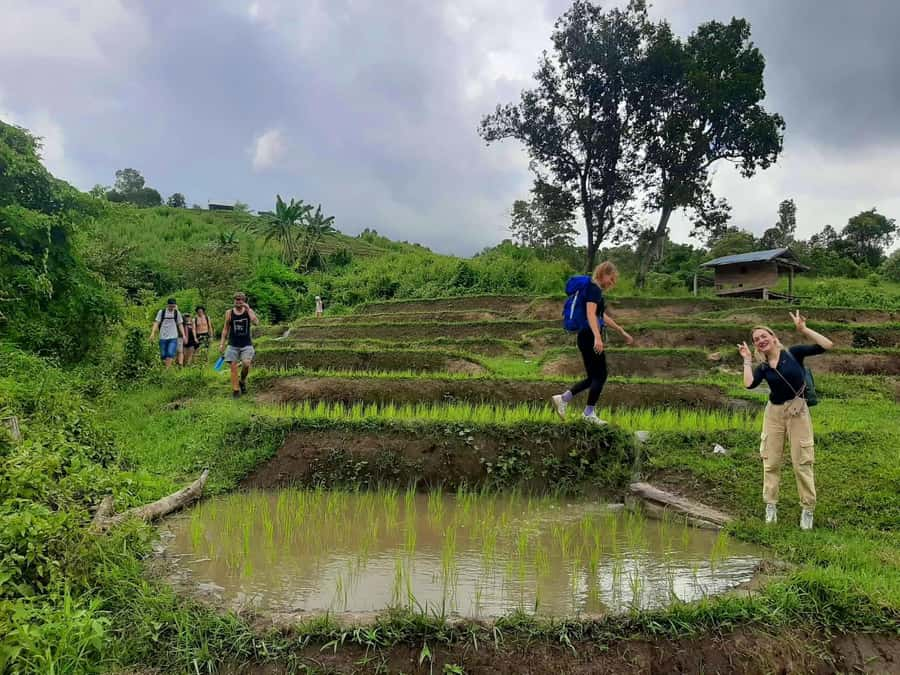
After lunch, the planned route continues for about two hours through bamboo and evergreen forest. This is the most demanding walking section and the part most likely to test your fitness.
Bamboo forest changes the feel of the walk. Tall, narrow stems create shade and a different rhythm from the open paddy fields. Evergreen forest adds thicker cover and a quieter atmosphere. The route is not just a straight march to a waterfall. It is a sustained outing through changing terrain.
A second waterfall is the reward. You can stop to rest, take pictures, and swim when conditions are safe. The second water stop gives the day a useful sense of progression: the first comes after fields and mixed forest, while this one follows deeper forest walking.
Still, you need to be realistic. The advertised sequence has not happened every time. One day ended the afternoon hike early and went straight to rafting. If rain, trail conditions, or local logistics affect the route, the second waterfall may be skipped.
That is why I would not book this as a guaranteed two-waterfall swimming trip. Book it as a private Mae Wang trek with two planned waterfall stops. That small shift in expectation will help you enjoy the day even if the route is adjusted.
Walking into Mae Sapok
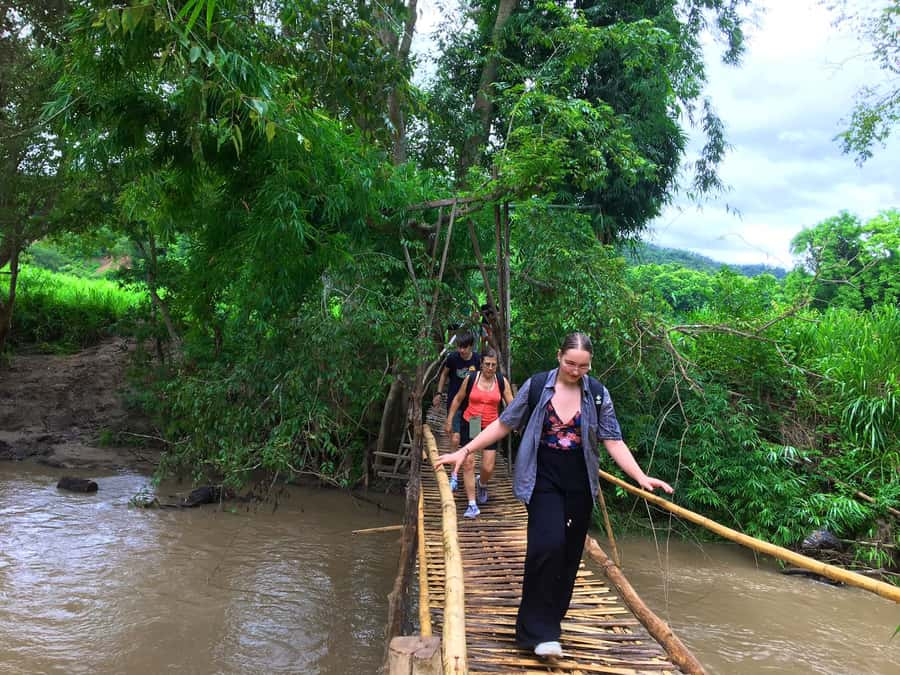
From the second waterfall, the planned route continues for about an hour to Mae Sapok village. This final walk brings the total time on foot to roughly five hours, not counting the short walk between the first waterfall and the village.
By this point, your legs may be tired. You should have drinking water, but the tour includes water as well. Wear shoes with a solid grip, and do not bring anything you cannot protect from mud or rain.
Mae Sapok is the transfer point for the rafting portion. You do not stay on the trail all the way to the river camp. A van takes you for about 15 minutes, giving you a welcome break before the final activity.
The change from walking to road transfer works well. After a full afternoon on forest paths, you get to sit down, dry off, and reset before heading onto the water.
Forty-five minutes on a bamboo raft
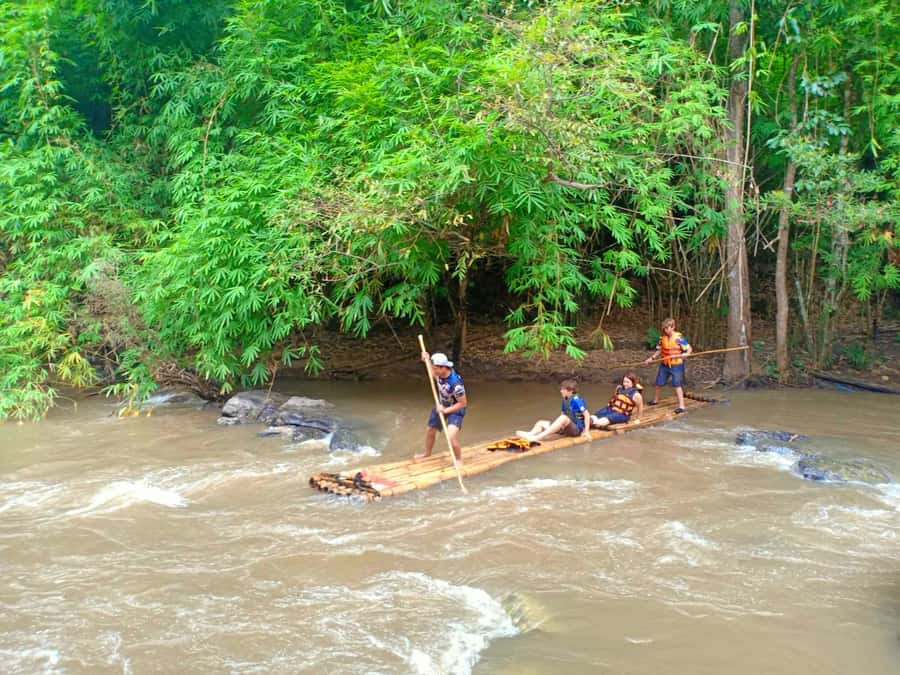
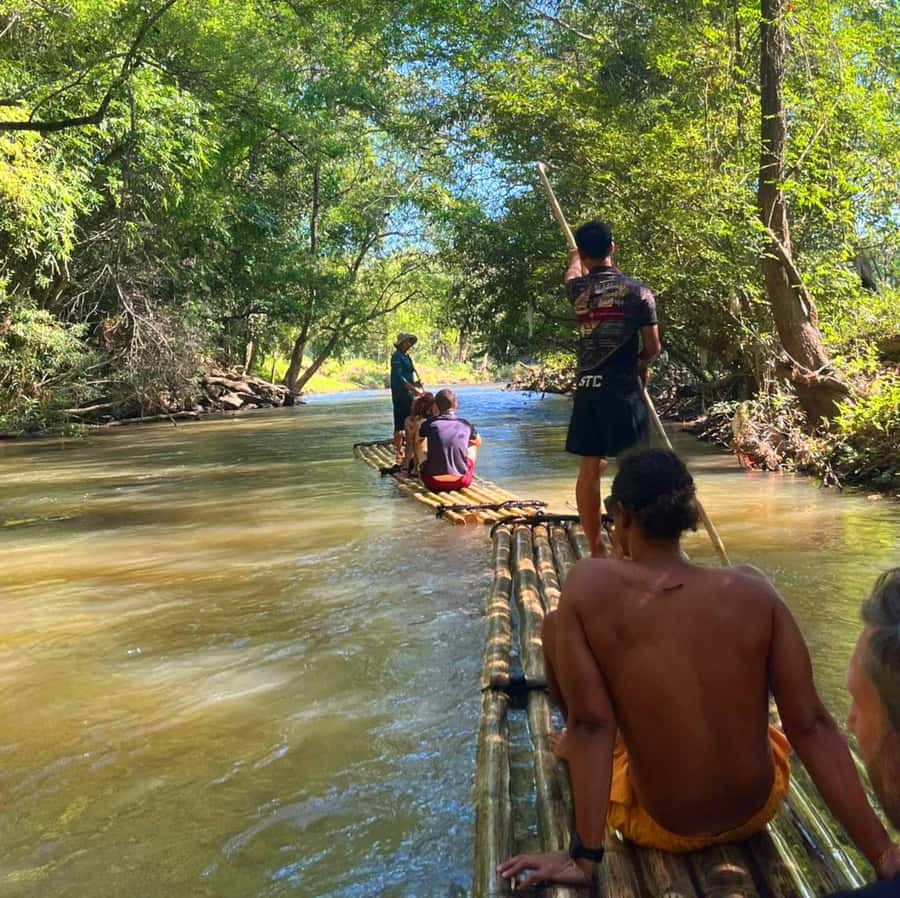
The bamboo rafting section lasts about 45 minutes. This is not a whitewater thrill ride. It is a quiet way to finish, with the river and surrounding forest doing most of the work.
After the physical walking, the slower pace is welcome. You can sit back, watch the banks pass, and let the day settle. If you are booking for adventure alone, rafting may seem mild. If you want a peaceful ending after several hours on foot, it fits the day well.
The rafting camp is reached by van from Mae Sapok, and the ride back to Chiang Mai takes about an hour. The planned return to your hotel is around 5:00 pm, though road conditions and changes to the route can affect timing.
What the private format really gives you
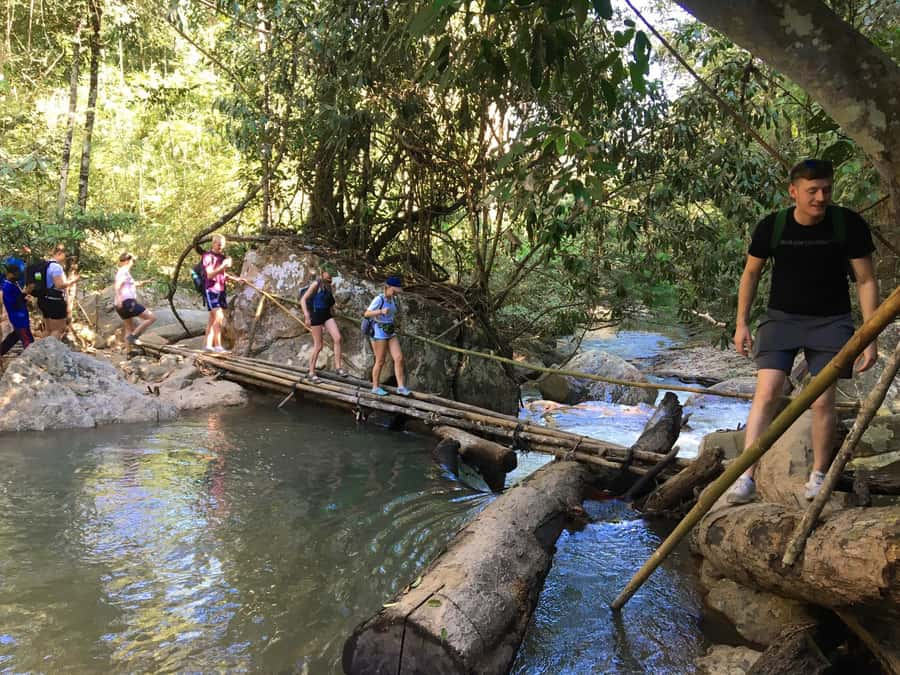
A private group of up to two gives you more control than a standard shared excursion. You can ask questions without competing with a busload of people, and the guide can respond to your pace more easily.
The listed guides are English and Thai speaking. Lee and Moo are associated with the experience, and one account particularly praised the warm welcome and the personal lunch arrangement involving Lee’s wife.
Private does not mean effortless. The route still has several hours of walking, and a private group cannot change the weather or water conditions. It does mean you have a better chance of discussing alternatives if the trail becomes unsafe or someone in your group needs a slower pace.
This is also a better fit for people who care about local contact. The village, weaving, cooking, and food stops are small-scale experiences. They are not polished attractions with a fixed script, so flexibility helps.
Fitness, clothing, and practical planning
The tour is not suitable for pregnant women, wheelchair users, people with mobility impairments, people with heart problems, children under two, or people with a low level of fitness. Those limits make sense given the long walking sections, forest terrain, swimming areas, and transfer between activities.
Bring:
- Hiking shoes with good grip
- Swimwear and a towel
- Flip-flops for use around the water
- Insect repellent
- Sunscreen and a sun hat
- Sunglasses
- Clothing that can get dirty or wet
A small day bag is useful, but keep it light. You will carry it through fields and forest, and it may be exposed to splashes or mud.
The itinerary can change because of bad weather or other events outside the operator’s control. That is not fine print to ignore. Rain may affect walking, waterfall access, swimming, rafting, and the timing of your return.
The operator supports local communities and eco-tourism. You can support that effort by staying on appropriate paths, carrying out rubbish, asking before taking photographs, and treating village homes and work areas as private spaces.
Who should book this Mae Wang day trek
I would choose this trip if you want several kinds of experience in one day: a rural drive, a substantial walk, village contact, a local meal, waterfalls, and bamboo rafting. It is a strong match for an active couple or two friends who value a private guide and do not mind a long day.
I would also choose it if you want to get beyond Chiang Mai’s city sights without arranging transport and local contacts yourself. The included van removes much of the planning work.
I would hesitate if your main goal is guaranteed swimming, a formal cooking class, or a fixed two-waterfall route. The schedule is weather-dependent, and at least one outing changed considerably. The private format helps, but it does not make rural conditions predictable.
Cancellation is flexible up to 24 hours before the activity for a full refund, and you can reserve now and pay later. Pickup is included, with the usual instruction to wait in your hotel lobby.
Should you book it?
Book this private trek if you want a full, active day in Mae Wang and can accept that the village visit, waterfalls, and afternoon walk may shift. The strongest reasons are the private attention, the mix of forest and fields, the chance to share a Karen-style meal, and the gentle bamboo raft finish.
Skip it if you want an easy outing or a guaranteed schedule. At $343 for up to two people, the value is best when both of you will walk for several hours and appreciate local contact rather than simply collecting waterfall photographs.
FAQ
How long is the Chiang Mai private trek?
It lasts one day. Pickup is planned for about 8:30 am, with return to Chiang Mai around 5:00 pm.
How long is the drive from Chiang Mai to Mae Wang?
The drive to Mae Wang takes about 1.5 to 2 hours. The return drive takes about one hour, according to the planned schedule.
How much walking is involved?
The planned route includes about two hours from Huai Khao Lip to the first waterfall, a 20-minute walk to the Karen village, another two hours through bamboo and evergreen forest, and about one hour to Mae Sapok.
Can I swim at both waterfalls?
Swimming is planned at both waterfall stops, but it is not guaranteed. Weather and water conditions can change the route, and one outing had only one waterfall that was not suitable for swimming.
Is lunch included?
Yes. Lunch and drinking water are included. The meal is planned as Karen-style food, with a cooking activity involving preparation of a dish.
Is the tour private?
Yes. It is a private group experience for up to two people, with a live guide speaking English or Thai.
Is bamboo rafting included?
Yes. Bamboo rafting lasts about 45 minutes and takes place after the transfer to the rafting camp near Mae Sapok.
What should I bring?
Bring sunglasses, swimwear, a towel, hiking shoes, sunscreen, flip-flops, insect repellent, clothes that can get dirty, and a sun hat.
New treks around Chiang Mai
- Private Tour Doi Inthanon, Trekking Kew Mae Pan Nature Trail★ 5.0 · 11 reviews
- Private Doi Inthanon, Nature Trail, Wat Phra That Doi Kham★ 5.0 · 6 reviews
- Inthanon national park, Trekking and Sightseeing in one day.★ 5.0 · 5 reviews
- Eco-Friendly: Doi Inthanon & Pha Dok Siew Trekking Day Trip★ 4.1 · 5 reviews
- Private Doi Inthanon With Trekking Pha Dok Siew Nature Trail★ 5.0 · 7 reviews
- Chiang Mai: Jungle Trek, Elephants care & Bamboo Rafting★ 4.5 · 8 reviews
- Chiang Mai: Mae Ya Waterfall & Pha Dok Siew Trail Trek★ 5.0 · 13 reviews
- Chiang Mai: Hmong Village, Doi Suthep and Wat Pha Lat Trek★ 5.0 · 3 reviews
Waterfall Treks, side by side.

Bali: Munduk Waterfalls Trek, Twin Lakes and Temple Tour
Read our review →
Khao Sok: Private Waterfalls and Wildlife Half-Day Trek
Read our review →
Selogriyo Temple and Trekking Java Rice Terraces, hidden waterfall -Nature Java
Read our review →
Ubud: Rice Terrace, Holy Water Temple & Waterfalls Trek Tour
Read our review →
Trekking to Waterfall Adventure Tubing 45 mins. (Only Khao lak)
Read our review →
Chiang Mai: 2-Days Jungle Trek, Waterfalls and Karen Village
Read our review →
Wild Elephant Anakulam & Waterfalls Tour(munnar valley Trekking)
Read our review →