
Review · PERU
Salkantay Trek to Machu Picchu 5 Days with Sky Lodge Domes
The turquoise water of Humantay Lake and the high crossing at Salkantay Pass make this a serious Andean trek, not simply a way to reach Machu Picchu. I like the mix of big mountain scenery and old Inca paths, and I like that your bags, meals, and camp equipment are handled while you walk with a group limited to eight.
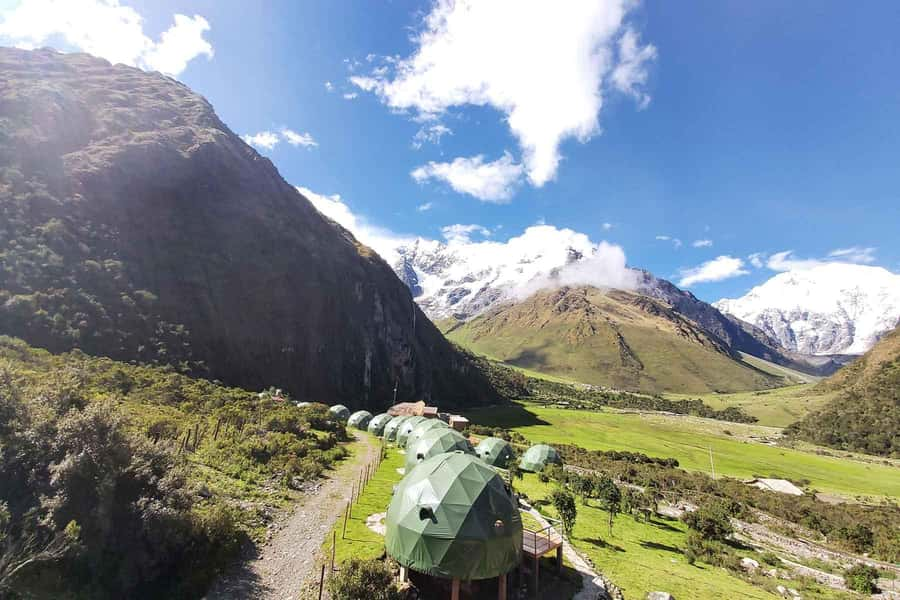
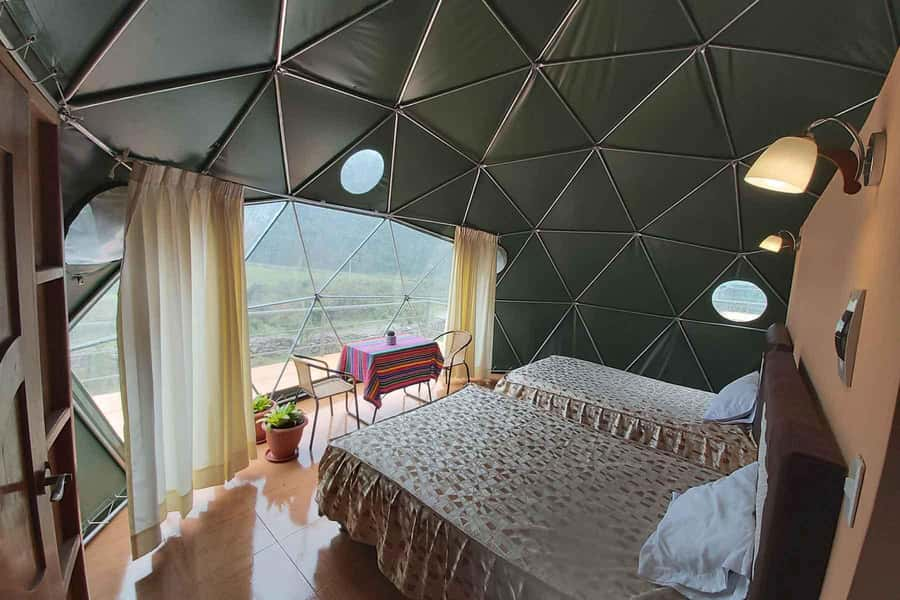
The Sky Lodge Domes add real comfort, with private bathrooms and hot showers after long days. The catch is altitude and effort: the Salkantay Pass is demanding, the first pickup is early, and the second night can feel more basic than the domes advertised elsewhere.
Key points to know before booking
- Humantay Lake comes early: You hike to the turquoise glacial lake on day one, before the toughest pass.
- Salkantay Pass is the physical test: Expect high mountain views and a demanding climb before descending to Chaullay.
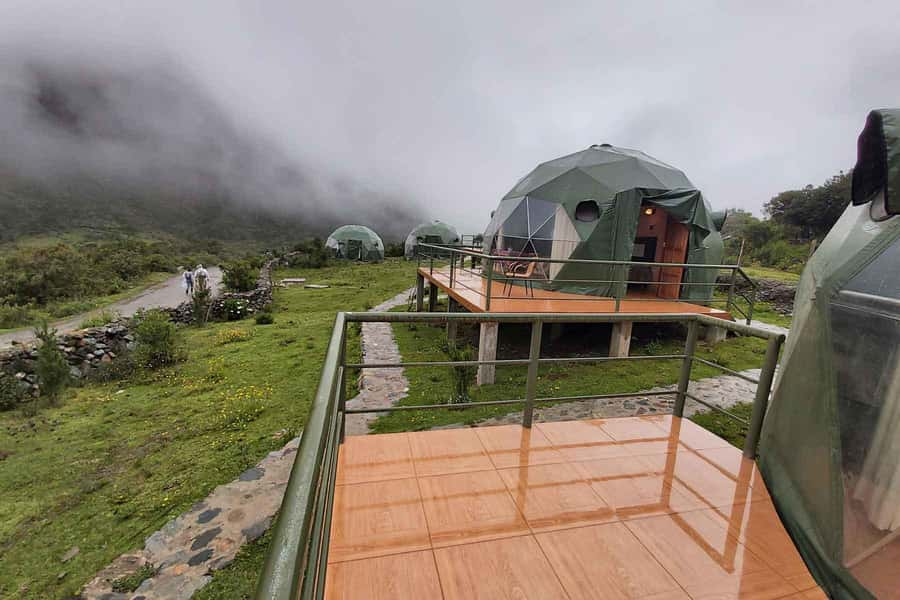
- Three dome nights add comfort: Private bathrooms, hot showers, dining equipment, and prepared meals make camp life easier.
- Your luggage is limited to 7 kilos: Mules carry equipment, food, and your personal duffel, while you keep a daypack.
- Llactapata gives you an early Machu Picchu view: You reach an Inca site on day four before continuing to Aguas Calientes.
- The group stays small: Up to eight participants allows your English or Spanish guide to keep a closer eye on the pace.
Why this five-day Salkantay route works
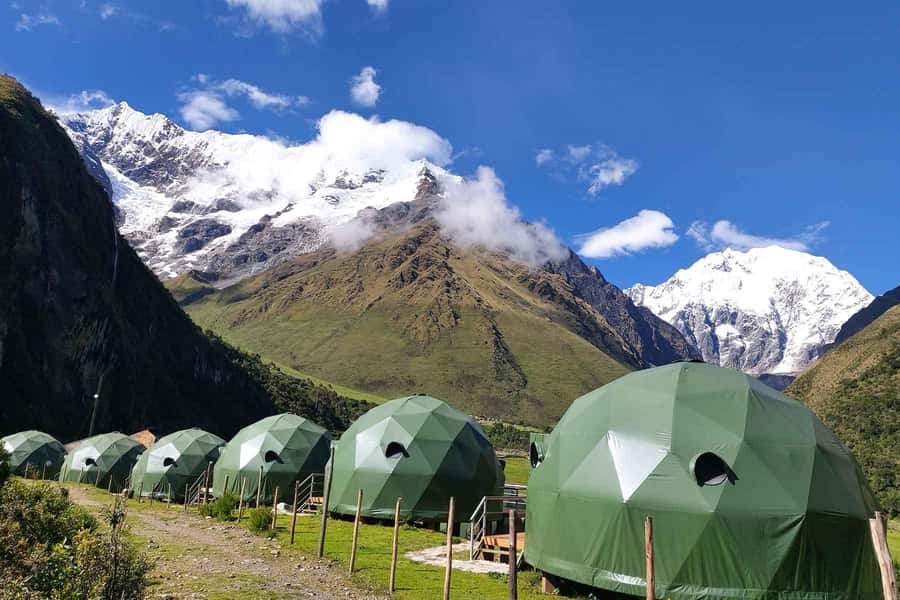
At $680 per person, this trek sits in the comfort-focused range for a five-day route to Machu Picchu. You are paying for more than the walk itself: private transport from Cusco to the trailhead, a bilingual guide, cooks, mule support, camping equipment, three nights in Sky Lodge Domes, a hotel in Aguas Calientes, Machu Picchu admission, and the return train and transfer arrangement.
I see the value most clearly if you want the Salkantay experience without carrying a full pack or sleeping in a basic tent every night. Meals, a duffel, tables, chairs, and hot showers remove several chores that can wear you down at altitude.
Still, this is not a soft adventure. The route climbs to a high pass, begins with an early departure, and includes long walking days. You should also confirm the exact second-night accommodation before paying, since the comfort there may be more modest than the domes.
The briefing takes place at 6:00 p.m. the night before in your Cusco hotel. Use it well. Confirm the pickup time, ask what belongs in your 7-kilo duffel, and check whether you need to rent a sleeping bag or trekking poles. Both are extra, and both can matter on a cold, uneven route.
More Inca Trail treks around Peru:
- Salkantay Trek Challenge – 3 Days / 2 Nights
★ 5.0 · 101 reviews - Choquequirao Trek 4 days and 3 nights
★ 5.0 · 81 reviews - Machu Picchu: 5-Day Salkantay Trek with Panoramic Train
★ 5.0 · 79 reviews
Day one: Mollepata, Challacancha, and Humantay Lake
Your day begins with pickup in Cusco and a drive to Mollepata for breakfast. From there, private transport continues to Challacancha, the trailhead for the Salkantay route.
This transfer makes the opening morning efficient, but it also means you should prepare for an early start. Your first breakfast is not included, so budget for it and do not assume the tour has already fed you before the walk begins.
From Challacancha, you hike toward Soraypampa, where the first Sky Lodge Dome awaits. The route introduces you to the scale of the Andes quickly. Mountain scenery replaces city streets, and the air becomes part of the challenge.
The main outing is the hike to Humantay Lake. The lake sits below snow-covered peaks, with water that can appear intensely turquoise in clear conditions. It is a short but steep test at altitude, so you may find the return more tiring than the distance suggests.
This first afternoon is well chosen. You see one of the trek’s most memorable natural sights before the hardest day, then return to a dome rather than a plain campsite. A private bathroom and hot shower are especially welcome after the uphill walk.
Dinner is prepared by the camp cook, with the package covering four breakfasts, four lunches, four dinners, and three snacks from the camping portion of the trip. The food is one of the practical strengths here. After a long day, varied, fresh, traditional meals matter more than fancy presentation.
Day two: Salkantay Pass and the descent to Chaullay
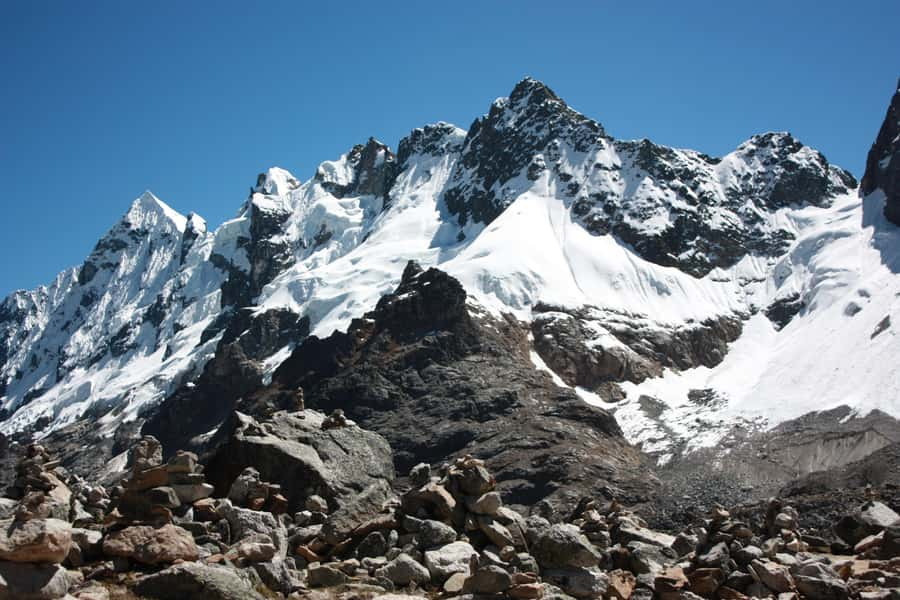
Day two is the physical centerpiece. You leave early and climb toward Salkantay Pass, one of the highest points on the route. The payoff is a wide view of Andean peaks and a strong sense of being far above ordinary roads and towns.
The pass requires steady pacing. Do not treat the climb as a race. Keep water and warm clothing close, protect yourself from strong sun, and let your guide know early if altitude is affecting you.
The descent toward Chaullay changes the feel of the day. After the exposed high section, the trail drops toward lower country, and the scenery begins to shift. This contrast is one reason to choose Salkantay instead of a route with less change in altitude.
Mules and horsemen carry food, equipment, and up to 7 kilos of personal luggage per person. You still need a daypack with water, rain gear, sun protection, warm layers, and anything you need during the day. Pack that small bag carefully, because you will not want to search through the duffel at every stop.
The second night deserves a practical warning. The trip includes a night in the Chaullay area, but the comfort may be more basic than the Sky Lodge Dome standard. If a private bathroom and hot shower every night are important to you, ask exactly what is provided on this night.
For anyone worried about altitude or fatigue, horseback assistance may be available for an added fee. That option is useful as a safety valve, not as a sign that you have failed. A difficult mountain route can change from hour to hour.
Day three: through the Santa Teresa Valley
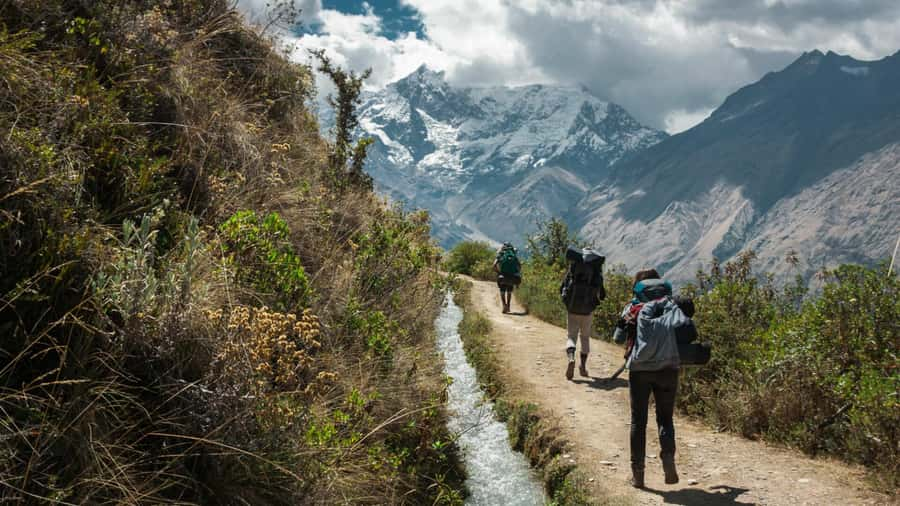
Day three is described as the easier walking day, which is welcome after the pass. You continue through the Santa Teresa Valley, where the setting shifts again from high mountain country toward greener, lower terrain.
The route’s variety is its main reward. You are not looking at the same type of scenery for five days. Snow peaks, glacial water, high passes, valley vegetation, Inca remains, and rail connections all form part of the journey.
Hot springs are optional on this day. They can be a good choice if your legs need recovery, but the added cost is not included. Ask your guide how the stop fits the day’s timing before deciding, especially if you prefer more walking or want a quiet evening.
You spend another night in a Sky Lodge Dome. This is when the accommodation concept makes the most sense. You have spent two demanding days on foot, and the combination of a bed-like shelter, private bathroom, hot shower, and cooked dinner gives you a chance to reset.
The camp dining setup includes portable chairs and tables. That sounds minor, but it changes the evening. You can sit down properly for meals instead of balancing a plate on your knees or retreating straight into your sleeping space.
More five-day treks around Peru
- Ausangate Trek 5 Days
★ 5.0 · 74 reviews - 5-Day Salkantay Trek to Machupicchu Sky Lodge Dome
★ 4.0 · 6 reviews - 5-Day Classic Salkantay Trek to Machu Picchu return by Train
★ 5.0 · 3 reviews - From Cusco: Salkantay trek 5 days/4 nights meals included
★ 4.0 · 3 reviews
Day four: Inca paths, Llactapata, and Aguas Calientes
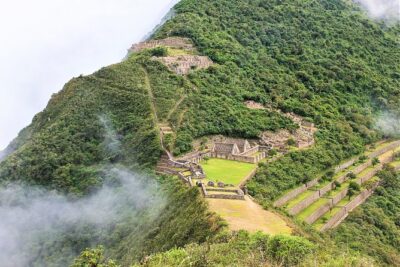
Day four connects the mountain trek with the Machu Picchu story. You pass along part of the Original Inca Trail and visit Llactapata, an Inca site with views toward Machu Picchu.
Llactapata is valuable because it gives you a different way to approach the famous citadel. Instead of seeing Machu Picchu only at the end, you begin to place it within the surrounding mountains. The view is not the same as the final lookout, but it builds anticipation without giving away the main visit.
From there, you continue toward Aguas Calientes, either by hiking or taking a train. The train option is worth considering if your legs are tired after three days of walking, or if you want to arrive with more energy for the next morning.
You spend the night in a hotel in Aguas Calientes. This change from dome to town hotel is practical. You have a regular base before the early visit to Machu Picchu, and you no longer need to think about camp routines.
The last dinner is not included, so plan for that separately. The first breakfast is also excluded, while the four breakfasts during the organized camp portion are included. These small omissions are easy to miss when comparing prices.
Day five: Machu Picchu with a guided visit
The final morning starts with a bus ride to Machu Picchu. Entrance to the site is included, as is a guided tour in English or Spanish.
A guide adds useful structure here. Machu Picchu can feel overwhelming at first, with terraces, stonework, steep mountain walls, and a set route through the site. A good guide helps you understand what you are seeing instead of leaving you to guess which details matter.
The guide team can make a real difference. Fernando has led departures with clear explanations of local culture, plants, and mountains, while Nildo has been praised for taking time with the group and watching each person’s needs. Your assigned guide may be someone else, but the small group format gives you a better chance to ask questions and receive help.
Additional hikes may be available at Machu Picchu, depending on the ticket and current arrangements. Do not assume every extra mountain or viewpoint is included. Ask at the briefing or ticket office, where the guide can help you choose the right option.
After the visit, you take the train to Ollantaytambo and transfer back to Cusco. This makes for a long final day, but it avoids adding another night to the trip. If you want a slower ending, ask how the return timing works before booking.
Guides, meals, and the human side of the trek
The strongest part of this experience is likely to be the staff. The package includes a professional bilingual guide, horsemen, mule support, and a cook. That combination matters on a route where weather, altitude, tired legs, and changing trail conditions can all affect the day.
The cooks have earned especially strong praise for varied, healthy, traditional food. That is not a small luxury. Four lunches and dinners in the mountains can become repetitive on poorly run trips, while good meals help you keep walking.
The guide style also matters. Fernando has been described as giving the right amount of information rather than talking without pause, with strong English and help at the ticket office. Nildo has been praised for care and close attention. These details suggest you should expect a guide who is active in the day, not just someone leading from the front.
A group capped at eight is another plus. You will still need to share the pace with other hikers, but a small group makes it easier to communicate about altitude, weather, and optional choices such as horseback assistance or hot springs.
What to pack for comfort and safety
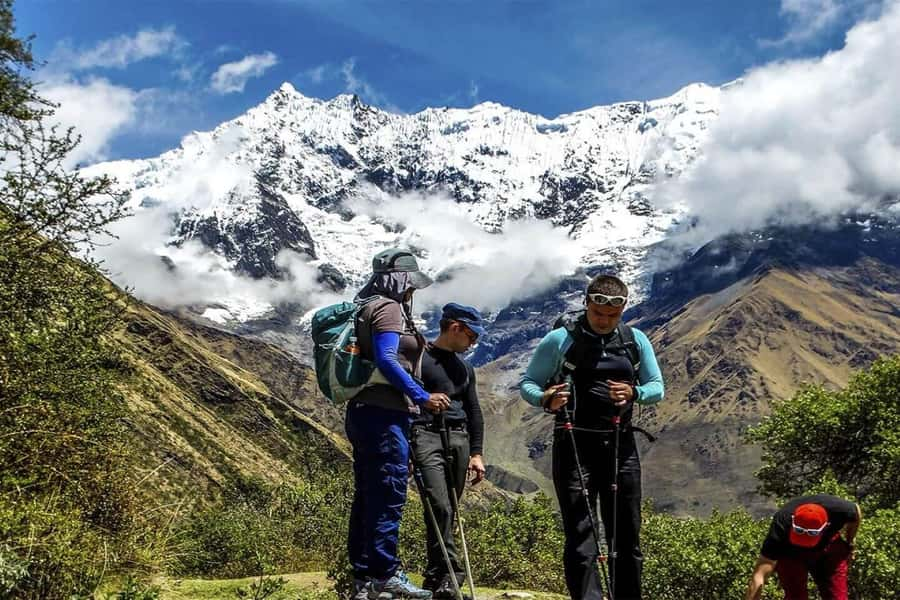
The supplied list is sensible, but the mountain conditions call for careful packing. Bring your passport, warm clothing, sunglasses, a sun hat, hiking shoes, sunscreen, rain gear, a daypack, and hiking pants.
Keep rain gear accessible, not buried in your duffel. The same goes for warm layers and sun protection. High-altitude weather can shift, and you may need both a hat and a jacket on the same day.
A sleeping bag and trekking poles are not included, but both can be rented. Poles are useful for the descent from Salkantay Pass, while a sleeping bag may add comfort on the colder nights.
The tour carries a first-aid kit and one oxygen tank. That is reassuring, but it does not remove the need to tell your guide when you feel unwell. The trek is not suitable for pregnant women or people with back or heart problems.
Who should book this Salkantay trek?
I would choose this trip if you want a demanding mountain route with a comfortable base at night. It suits hikers who want Humantay Lake, Salkantay Pass, Inca ruins, and Machu Picchu in one five-day plan without carrying all their camping gear.
It also works well if you value a small group and good food. The combination of a bilingual guide, mule support, chef, and private dome facilities gives the route a more supported feel than a basic trek.
I would hesitate if you dislike early starts, steep climbs, basic accommodation on any night, or a fixed group schedule. The title may suggest five nights of the same dome comfort, but the second night can be simpler. Ask for that detail before booking.
Cancellation is free up to 24 hours before departure, and you can reserve now and pay later. Those terms help if your Cusco plans are still shifting, though you should still confirm Machu Picchu ticket arrangements and the exact departure time.
Should you book it?
Book this Salkantay trek if your priority is a strong mix of scenery, Inca sites, support, and comfort at camp. At $680, the price is reasonable for the included transport, meals, staff, luggage support, accommodation, Machu Picchu entrance, and return connections.
Choose another option if you want a slower walk, a cheaper basic trek, or guaranteed upscale accommodation every night. For an active hiker who wants the pass, Humantay Lake, Llactapata, and Machu Picchu in one well-supported route, this is a compelling choice. Confirm the second-night lodging and extra rental costs first, then pack for the mountains rather than the brochure.
FAQ
How long is the Salkantay Trek to Machu Picchu?
The trek lasts five days and includes the walk from Challacancha to Machu Picchu, followed by transport back to Cusco.
What is the price per person?
The listed price is $680 per person.
What languages does the guide speak?
The tour provides a live bilingual guide in English and Spanish.
How large is the group?
The group is limited to eight participants.
Are the Sky Lodge Domes included?
Yes. The package includes three nights in Sky Lodge Domes with private bathrooms and hot showers.
Is a hotel night included?
Yes. One night in a hotel in Aguas Calientes is included.
Are meals included?
The camping portion includes four breakfasts, four lunches, four dinners, and three snacks. The first breakfast and final dinner are not included.
What should I bring?
Bring your passport, warm clothing, sunglasses, a sun hat, hiking shoes, sunscreen, rain gear, a daypack, and hiking pants. Sleeping bags and trekking poles can be rented separately.
New treks around Peru
- Salkantay trek to Machu Picchu – 5D/4N – Premium★ 3.3 · 3 reviews
- Salkantay Humantay lake trek with Domes-2d-1n★ 5.0 · 2 reviews
- 5-Day Classic Salkantay Trek to Machu Picchu return by Train★ 5.0 · 3 reviews
- From Cusco: 5-Night Trip with Salkantay Trek & Machu Picchu★ 4.7 · 6 reviews
- Salkantay Trek to Machu Picchu 5D/4N or 4D/3N by glamping★ 4.4 · 35 reviews
- Rainbow Mountain Trek 1 Day★ 5.0 · 2 reviews
- Rainbow Mountain and Red Valley Hike trek adventure★ 4.5 · 2 reviews
- Tour Pallay Punchu Trek Full Day★ 4.2 · 3 reviews
Machu Picchu and Inca Trail Treks, side by side.
Machu Picchu: 5-Day Salkantay Trek with Panoramic Train
Read our review →
Ancascocha Trek To Machu Picchu 4 Days And 3 Nights
Read our review →
Salkantay Trek to Machu Picchu 5D/4N or 4D/3N by glamping
Read our review →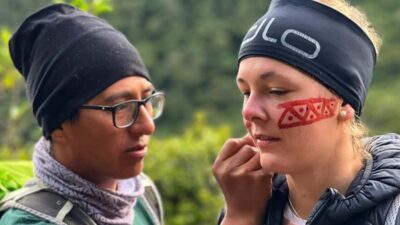
4 days/3 nights: Inka Jungle Trek to Machu Picchu
Read our review →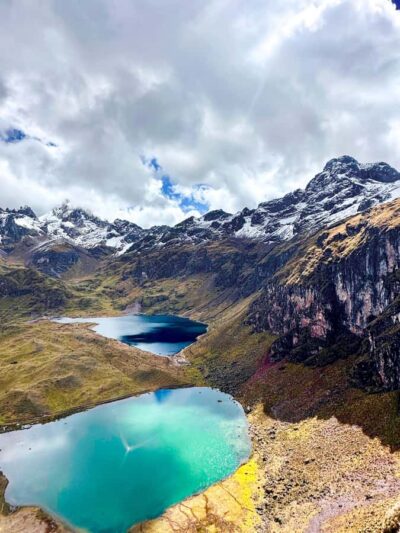
Cusco: 4-Day Lares Trek to Machu Picchu with Panoramic Train
Read our review →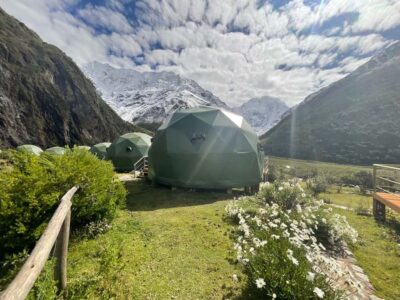
5-Day Salkantay Trek to Machupicchu Sky Lodge Dome
Read our review →Lists this trek appears in