
Review · MOROCCO
From Marrakech: Private Tour to Oasis and Trekking in the Desert of Erg Chigaga
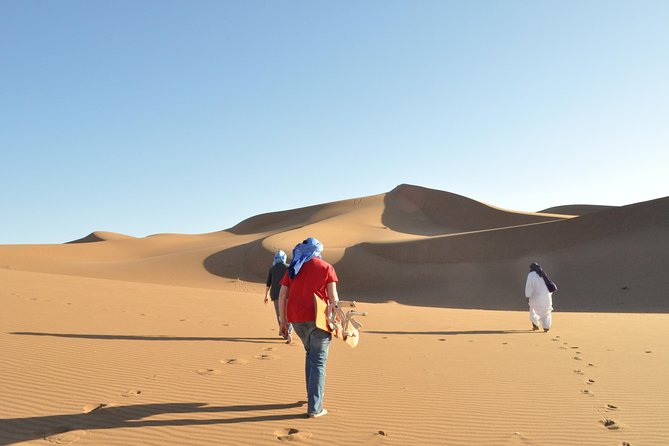
The best part of this trip is the long, gradual change from Marrakech to open Sahara. You cross the High Atlas, pass old kasbahs and date palms, then leave the pavement for 50 kilometers of desert track before reaching the huge Erg Chigaga dunes. I like the private vehicle and flexible guiding, and I like that you spend two nights in the desert instead of rushing in and out after one sunset.
The tradeoff is time on the road. Day one can run close to ten hours, and the return to Marrakech on day four is also long. If you want a quick desert photo stop, this is too much driving. If you want the Draa Valley, the dunes, camel trekking, and a real sense of distance, the pace makes sense.
Key things to know before booking
- Erg Chigaga feels remote: You leave M’Hamid by jeep and travel about 50 kilometers over desert tracks to reach the camp.
- Two desert nights make a difference: You have time for sunrise, a full camel trek, lunch beneath tamarind trees, sunset, and evening music.
- The trip is genuinely private: Only your group takes part, with round-trip pickup and transport arranged from Marrakech.
- The Draa Valley adds variety: Your first night is in a Moroccan riad in Agdz, among date palms and oasis paths.
- This is a road trip as much as a desert tour: Expect long hours in the vehicle, mountain passes, paved highways, and rough tracks.
- Meals are built in: The package includes three breakfasts, three dinners, and one lunch, with a traditional nomadic lunch on the trekking day.
Why Erg Chigaga is worth the long road
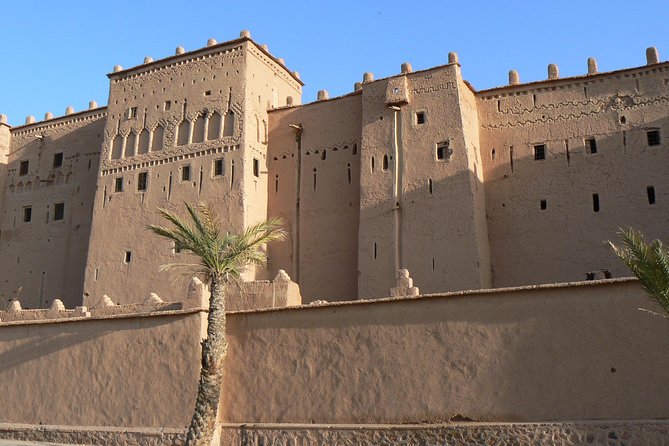
Erg Chigaga is the main reason to choose this trip over a shorter desert outing. It is reached from M’Hamid by off-road jeep, not by a simple paved transfer, so the arrival feels like a proper change of worlds. The route passes the Iriki oasis, where you stop for tea, then continues toward the tall dunes.
That distance is both the attraction and the warning. You get a quieter desert setting and a stronger sense of remoteness, but you also spend part of day two in a vehicle. The rough track can be tiring, particularly after the long drive from Agdz. I would choose this route only if the desert itself is a central goal.
The camp has been described as comfortable, with good food and a friendly atmosphere. Exact tent facilities are not detailed, so you should ask the operator about bathrooms, electricity, bedding, and heating before you pay. Desert nights can feel very different from warm days.
More treks around Morocco:
- Mt Toubkal Ascent Express Trek 2 Days 1 Nights
★ 4.7 · 962 reviews - Marrakesh: 2-Day Mt. Toubkal Trek with 1-Night Stay & Meals
★ 4.7 · 795 reviews - Marrakech: 2-Day Atlas Mountains Trek with Village Stay
★ 4.8 · 717 reviews
Day one: Atlas passes, Ait Benhaddou, and Agdz
Pickup begins at Menara Airport at 8:30 a.m., though the tour is described as door to door, so confirm the exact pickup point if you are staying in a hotel or riad. Your driver-guide takes you south from Marrakech toward the High Atlas.
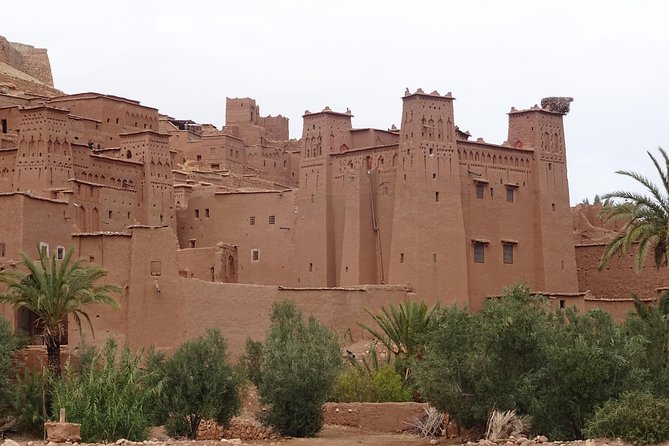
The first major stop is Ait Benhaddou, the famous fortified village and UNESCO World Heritage Site. Its earthen buildings rise in a compact cluster, making it one of Morocco’s most memorable historic stops. The village has appeared in films including Lawrence of Arabia, Jesus of Nazareth, and The Gladiator.
You have about an hour here, with lunch planned in the area. That is enough for a walk and photographs, but not an unhurried study of every corner. The film connection adds interest, yet Ait Benhaddou is more than a movie backdrop. Its setting and packed-earth architecture show how settlements were built along old routes across southern Morocco.
From there, you continue to Ouarzazate. The stated stop is short, around 15 minutes, with the option to visit Kasbah Taourirt and film studios if you wish. That wording matters: these visits may not be central to the fixed program, so ask your guide about available time and any entrance costs.
The day continues through the Draa Valley to Agdz. The valley is known for its millions of date palms, with harvesting taking place between September and December. A walk in the oasis gives you a welcome break from the car and shows why this strip of green has supported communities in such a dry part of Morocco.
Your first night is in a Moroccan riad in Agdz. Tea service and a full dinner are included, along with breakfast the next morning. This is a useful halfway point, not just a bed for the night. You get courtyard lodging and an oasis setting before the desert portion begins.
Still, day one is demanding. The route is listed at about ten hours, including stops. I would keep lunch relaxed, wear comfortable clothes for the car, and avoid planning anything in Marrakech for the evening. This is not a day for squeezing in a late-night restaurant reservation.
Day two: pottery, caravan routes, and the rough track to camp
After breakfast, the road continues through the Draa Valley toward Zagora, Tamegroute, and M’Hamid. The route follows an old caravan world connected with journeys toward Timbuktu. That background helps explain the towns and the importance of desert transport long before modern roads.
Tamegroute is known for its pottery production. The program does not give a set visit length, so treat it as a possible cultural stop rather than a guaranteed workshop visit. Zagora and Tamegroute also provide a useful change of scene before you reach the desert outpost of M’Hamid.
M’Hamid is where the paved journey gives way to the Sahara. From here, a jeep carries you off road to Erg Chigaga. The trip covers roughly 50 kilometers of desert track, with a tea stop at the Iriki oasis along the way.
This is one of the most distinctive parts of the experience. The drive is not polished sightseeing. It is a rougher, more open journey, and the route can make the dunes feel earned when they finally appear. If you are prone to motion sickness or dislike bumpy roads, prepare accordingly and ask about the vehicle before departure.
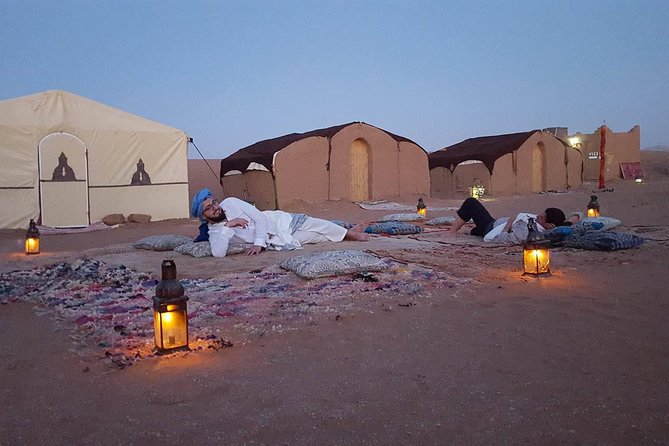
At the camp, you settle in for the first of two nights. The extra night is important. Many desert trips arrive late, provide a quick camel ride, and leave the next morning. Here, you have time to slow down, eat dinner, listen to music, and see the dunes without constantly watching the clock.
Dinner and breakfast are included, and the evening may include Berber music and tea. The camp’s high comfort level has been praised, but do not confuse desert comfort with city-hotel convenience. Confirm the facilities if a private bathroom, charging access, or a particular tent standard matters to you.
Day three: sunrise, dromedaries, and lunch under tamarind trees
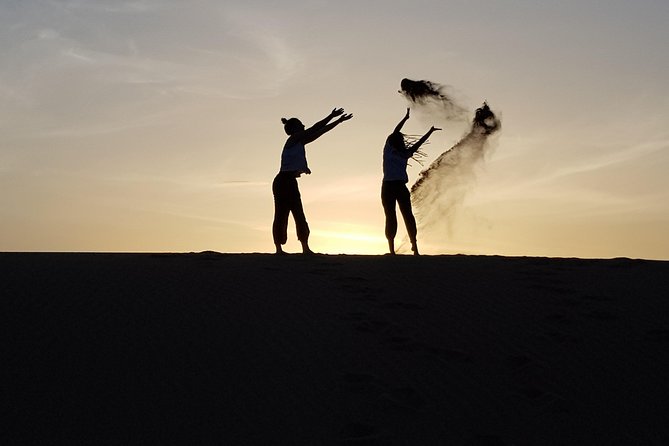
Day three is the heart of the trip. You can watch sunrise over Erg Chigaga, when low light turns the dunes gold and brings out their curves. This is the moment to protect from scheduling pressure, so rise early and keep your camera ready.
After breakfast, you set out with dromedaries. The ride lasts several hours and takes you through the dunes toward tamarind trees. Riding a dromedary is not fast, and the gait can feel awkward at first. The reward is a slow view of the desert, with fewer distractions and time to notice the silence.
The stop beneath the trees is practical as well as scenic. The guides prepare a traditional nomadic lunch of kebabs and fresh bread. One of the strongest features of this trip is that lunch is part of the day’s desert experience, rather than another meal eaten quickly beside a highway.
The afternoon route passes back through the dunes toward camp. You have time to rest before sunset, then eat dinner and drink tea. Evening music is part of the experience, and the clear desert sky can be one of the most memorable details of the entire trip.
The schedule says about eight hours, but the actual feel will depend on your group and the conditions. You should be comfortable with sun, sand, sitting on a camel, and a full day outside. Take water, sun protection, closed shoes, and a light layer for the night. The supplied information does not specify whether sandboarding or extra activities are included, so do not count on them unless the operator confirms them.
Same mountains, a different route up:
- From Marrakech: 3-Day Mount Toubkal Climbing Trek
★ 4.7 · 597 reviews - From Marrakesh: 2-Day Mount Toubkal Trek
★ 4.7 · 591 reviews - From Agadir: Camel Ride and Flamingo Trek
★ 4.7 · 371 reviews - From Marrakech: Atlas Mountains Summit Trek
★ 4.9 · 228 reviews
Day four: Iriki, the Paris-Dakar track, and the Atlas return
After breakfast, you leave the dunes by jeep along the old Paris-Dakar rally track. The route reaches the dried-up salt lake of Iriki and passes below a fossil mountain before leaving the desert.
There is a short stop in Foum Zguid for fresh orange juice. It is a small detail, but a welcome one after the rough track. Once back on paved roads, you continue to Tazenakht for lunch.
Tazenakht is known for woven rugs, giving you a chance to see or purchase Moroccan textiles. This can be an enjoyable shopping stop if you want a rug, but approach it with a clear budget and no pressure to buy. Ask about size, materials, shipping, and how the price was reached. The program describes this as an opportunity, not a compulsory purchase.
The final major section crosses the High Atlas through the Tizi-n-Tichka pass at 2,260 meters. The road passes oak woods, walnut groves, Berber villages, and high valleys where goats and sheep roam. The views are excellent, but mountain roads can be tiring after several days of driving.
You reach Marrakech in the early evening. Because the return time depends on road conditions and stops, I would avoid booking a tight onward connection that night. The tour begins at the airport, but the return timing should be confirmed if you need to catch a flight.
The guide and vehicle matter here
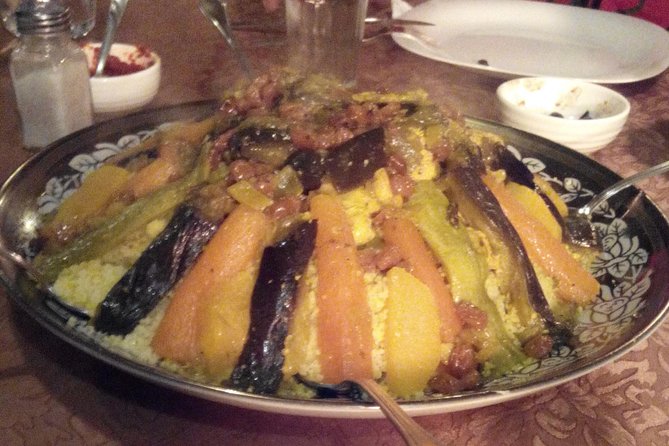
A private desert trip depends heavily on the person behind the wheel. Ali is repeatedly identified with the experience, both as a guide and as a local nomad, while Mustafa and Brahim are also named in connection with successful journeys. The most useful pattern is the attention to driving, food stops, communication, and personal adjustments to the program.
Helena handles correspondence for the company and is described as quick to answer questions. That is useful before departure, particularly when you want to clarify lodging, pickup, camp facilities, or food needs.
The private format gives you more control than a large bus trip. You can ask for a longer pause in the oasis, discuss how much time to spend at a pottery or rug stop, and make the long drive feel less rigid. It does not remove the distance. You are still covering a large part of southern Morocco in four days.
What the $614.14 price means
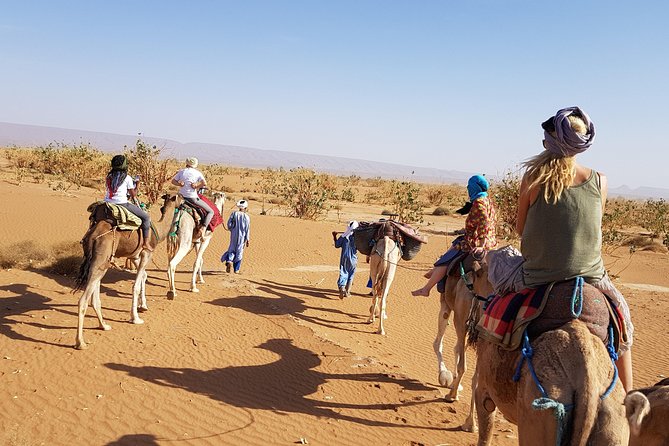
At $614.14 per person, this is not a budget excursion. The value depends on your group size and on how much you would otherwise spend arranging transport, hotels, meals, desert transfers, and a camel outing separately.
Included are private round-trip transport, guiding, two nights in the desert, one night in an Agdz riad, three breakfasts, three dinners, and one lunch. You also receive the convenience of one booking for a complicated route that crosses mountains, oasis country, paved roads, and desert tracks.
The price is easier to justify for a small private group that values comfort and control. It is harder to justify if you mainly want one desert night or if you are happy joining a shared minibus. You should also budget for any entrance charges, optional visits, drinks, rug purchases, and other costs not clearly included.
The tour has a 100 percent recommendation rate and a five-star rating based on 115 ratings. The most consistently praised elements are the camp, the food, the drivers, the desert silence, the stars, and the personal care from the team. Those are the parts that matter most in deciding if the price works for you.
Who should book this desert tour?
I would recommend it to you if you want a full southern Morocco experience rather than a single attraction. It suits couples, families with older children, friends, and small private groups who want their own vehicle and do not mind long travel days.
It is also a good fit if you care about local contact. The route includes an oasis walk, traditional meals, nomadic-style desert hospitality, dromedaries, Berber music, and time in a riad. The experience is not only about photographing dunes.
I would hesitate if you have limited tolerance for rough roads, long vehicle days, or uncertain arrival times. Families should note that children must be accompanied by an adult, and the child rate applies only when sharing with two paying adults. Most people can participate, and service animals are allowed, but the operator should answer specific mobility questions before booking.
Free cancellation is available if you cancel at least 24 hours before the start time. Inside that window, the payment is not refunded, and changes are not accepted.
Should you book it?
Book this trip if you want two proper nights in Erg Chigaga, not a rushed desert stop. The camel ride, tamarind-tree lunch, sunrise, sunset, music, and star-filled nights give the desert time to work its quiet magic.
Skip it if you want a short, low-cost outing or if spending many hours in a vehicle sounds miserable. For the right kind of visitor, the price buys more than transport. It buys a carefully linked route from the High Atlas to the Draa Valley and into one of Morocco’s most remote dune areas, with a private guide to manage the hard parts.
FAQ
Where does the tour start?
The stated meeting point is Menara Airport in Marrakech, Morocco, with an 8:30 a.m. start. Pickup is offered, and the tour is described as door to door, so confirm the exact pickup location when booking.
How long does the tour last?
The experience lasts approximately four days. You return to Marrakech in the early evening on day four.
Where do I sleep?
You spend one night in a Moroccan riad in Agdz and two nights in a Berber tent at the Erg Chigaga desert camp.
What meals are included?
The package includes three breakfasts, three dinners, and one lunch. On the camel trekking day, the guides prepare a nomadic lunch of kebabs and fresh bread beneath tamarind trees.
Is this a private tour?
Yes. Only your group participates, with private round-trip transport and guiding.
Can I cancel for a full refund?
Yes, if you cancel at least 24 hours before the experience start time. Cancellations within 24 hours are not refunded, and changes made within that period are not accepted.
New treks around Morocco
- Mount Toubkal Trek 2 Days & 1 Night★ 4.5 · 26 reviews
- Marrakech: Mount Toubkal 2-Day trek from Marrakech★ 5.0 · 2 reviews
- Marrakech: Guided 2-Day Trek to Imlil and Imnan Valleys★ 4.6 · 14 reviews
- Marrakech: 6 Day Trekking Tachedirt To Toubkal Via Ifni Lake★ 5.0 · 3 reviews
- Marrakech: High Atlas Tedali Summit Guided Day Trek★ 5.0 · 4 reviews
- Marrakech: 2 Day Toubkal Trek & 1 Nights with Hotel Pick up★ 5.0 · 2 reviews
- Marrakech: 2 Day Trek Atlas Mountains & Taoudja Summit 2724M★ 5.0 · 2 reviews
- Marrakech: 3-Day High Atlas Mountains and Three Valleys Trek★ 4.8 · 63 reviews
Morocco Trekking Tours, side by side.
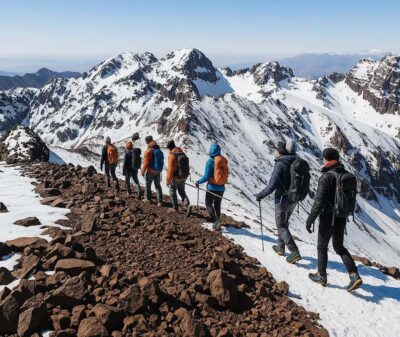
Mt Toubkal Ascent Express Trek 2 Days 1 Nights
Read our review →
Marrakesh: 2-Day Mt. Toubkal Trek with 1-Night Stay & Meals
Read our review →
Marrakech: 2-Day Atlas Mountains Trek with Village Stay
Read our review →
From Marrakech: 3-Day Mount Toubkal Climbing Trek
Read our review →
Summiting and Hiking the Atlas Mountains Day Trek from Marrakech
Read our review →
Lists this trek appears in