
Review · CHIANG RAI
Cultural trekking and boat trip
The most memorable part of this Chiang Rai day is the mix of river travel, hill walking, village life, and a small act of conservation. You plant a tree along the trekking route, choose its spot, then continue through bamboo forest and farmland toward Lahu and Akha villages. The long-tail boat ride and the stop at Huay Kaew Waterfall add welcome variety.
I like the way lunch is tied to local food and the chance to share simple cooking in a bamboo hut. I also like the guides’ practical background: the company has spent 20 years leading hikes, and its guides are ex-soldiers. The main drawback is the uphill start, which can be hard in the sun for the first 20 to 30 minutes.
I would choose this for a full, active day rather than a quiet sightseeing outing. You will walk for roughly three to three and a half hours, and the route includes a climb, uneven ground, and time outdoors. June, one guide named in the feedback, was praised for being warm, experienced, and clear in explaining local nature and culture.
Key points to know before booking
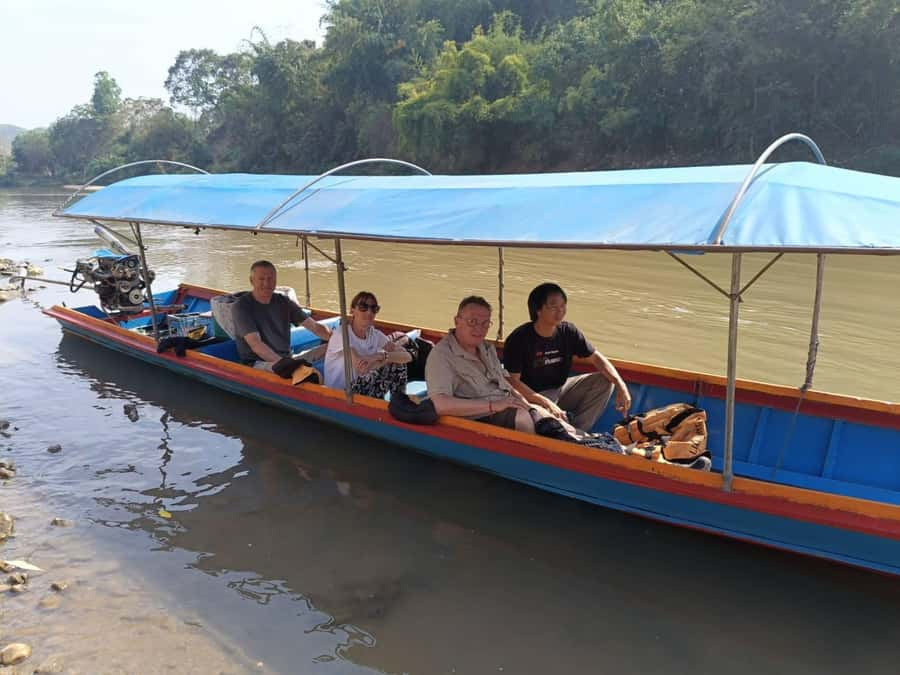
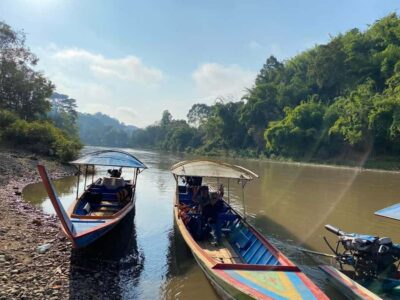
- A 45-minute Mae Kok River ride: You travel by motorized long-tail boat from the pier toward Buddha Cave, with the river providing a calm opening to the day.
- A tree-planting stop: Your supplied plant becomes a small personal marker along the trekking route, and you choose where to plant it.
- A sunny uphill section: The first 20 to 30 minutes can feel demanding before the trail becomes easier to manage.
- Lahu and Akha village visits: The walk brings you to two hill-tribe communities, with time to see village life and hear about local culture.
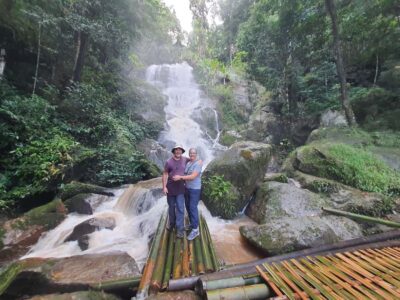
- Huay Kaew Waterfall: You can swim at Chiang Rai’s second-largest waterfall, so bring suitable clothing.
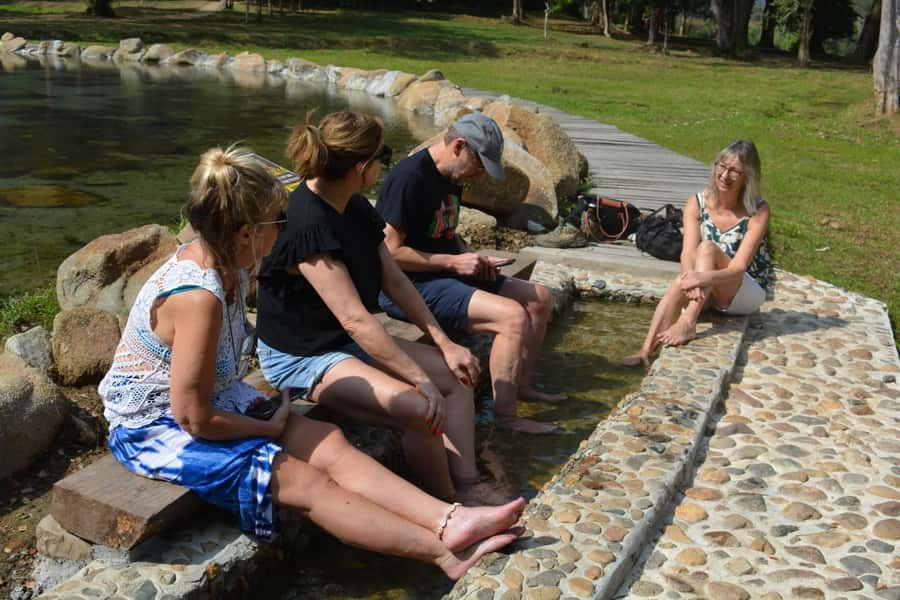
- A hot mineral bath at day’s end: After the hike, the hot spring is a useful way to rest before the drive back to Chiang Rai.
Why this day feels different from a standard Chiang Rai tour
Many Chiang Rai outings focus on temples, viewpoints, or a quick village stop. This one is built around movement and contact with the countryside. You go by river, on foot, and by car, with meals, village visits, a tree-planting activity, and a hot bath all packed into one day.
That variety is the main reason I find the $94 price reasonable. The cost includes hotel, airport, or bus-station pickup, transportation, the boat trip, a licensed TAT guide, lunch, drinking water, a tree to plant, and the hot bath. You are not paying only for a walk. You are paying for a long day with several forms of transport and a guide who manages the route.
The tradeoff is a busy schedule. You will not spend hours at each stop. The value comes from seeing several sides of the area in one outing, not from lingering at one attraction. If you prefer a slow morning and long cafe breaks, this may feel too full. If you want a good sample of Chiang Rai’s rural surroundings, it makes sense.
More treks around Chiang Rai:
- Chiang Rai: Jungle Adventure-Group Trekking & Bamboo Cooking
★ 4.9 · 166 reviews - 1 Day Trekking in Chiang Rai forest (walk only)
★ 4.9 · 95 reviews - Authentic trek only walk in Chiang Rai jungle
★ 5.0 · 90 reviews
The 45-minute long-tail boat ride on the Mae Kok River
The day begins with pickup in Chiang Rai and a transfer to the boat pier. The boat ride lasts about 45 minutes and follows the Mae Kok River toward Buddha Cave. A motorized long-tail boat is noisy and open to the air, but that is part of its appeal. You get a clear view of the river and the banks rather than looking through a coach window.
This is a useful first section because it eases you into the day. You are not asked to climb straight away. The boat gives you time to look around, take photos, and see how the river connects Chiang Rai with rural communities.
The trip information says plants are prepared before the boat ride, so the conservation activity is part of the day from the start. The exact planting setup may depend on conditions, but you should expect to carry a young tree to the trekking area and place it yourself.
Buddha Cave is the boat destination listed for this section. The information does not provide a detailed stop length or a full description of the cave, so you should think of it mainly as the point where the walking portion begins, rather than expecting a long cave visit.
Local lunch and cooking in a bamboo hut
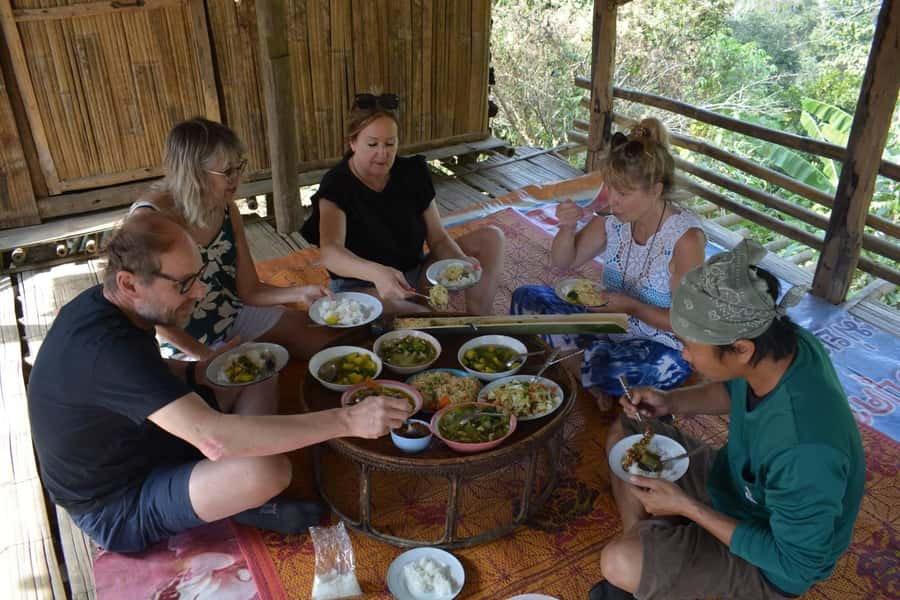
Lunch comes at a local restaurant and lasts about an hour. Food is included, as is drinking water, which keeps the day simple and helps you avoid carrying a full supply from town.
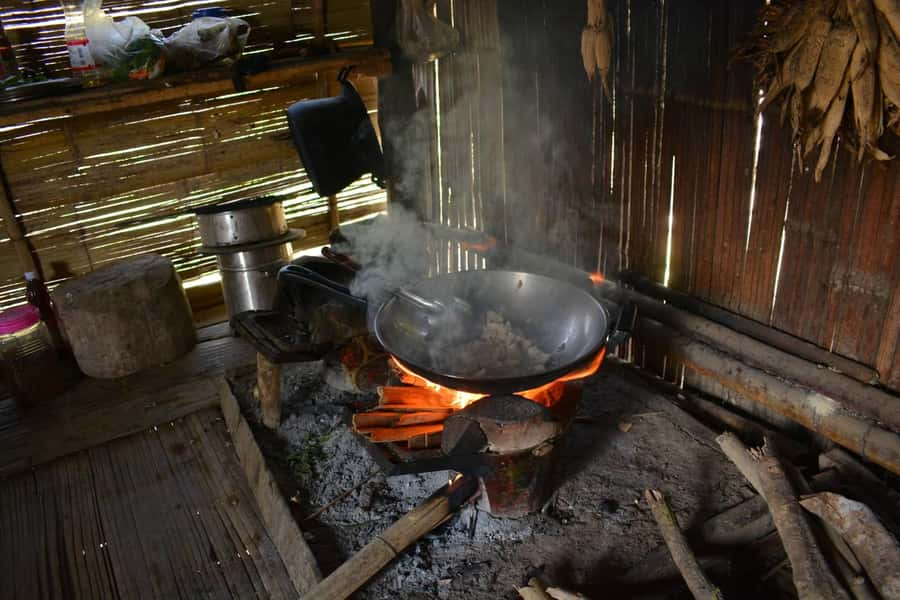
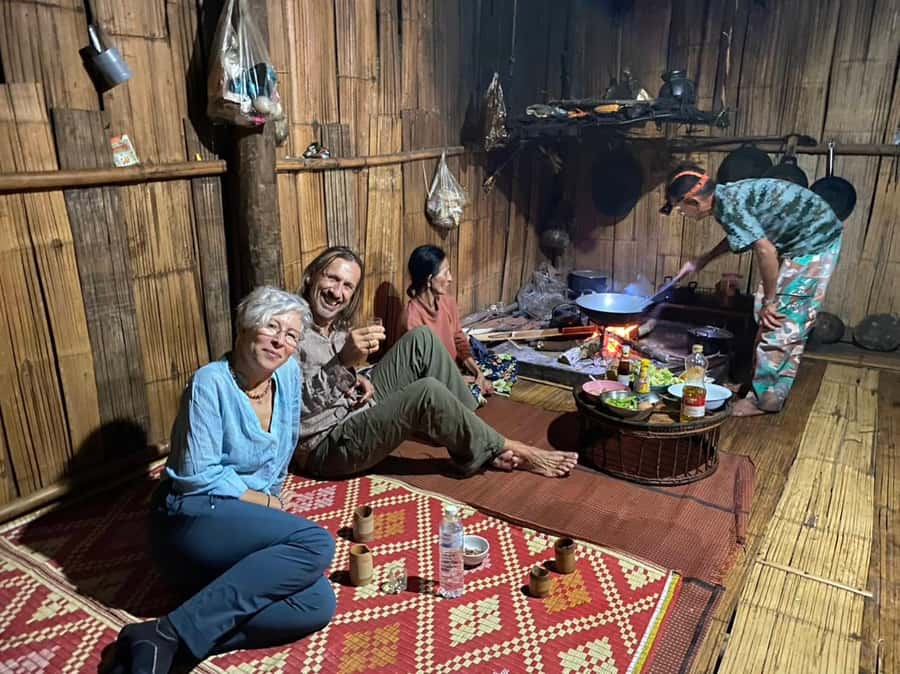
The food is one of the stronger parts of the experience because it fits the tour’s aim: eat and drink in a local way rather than simply stopping at a familiar tourist restaurant. One account also describes shared cooking in a simple bamboo hut, where a good meal was made with very little. That detail matters. You may not get a polished dining room or a broad menu, but you get a closer look at how food is prepared in a rural setting.
I would keep your expectations practical. This is not a cooking class with a long lesson plan, and the supplied details do not promise a set menu or specific dishes. Instead, you can expect a local meal during a day that keeps you close to farms, forest, and villages.
An hour is enough time to eat and rest, but not so long that the schedule loses pace. If you have dietary restrictions, the available information does not say how they are handled, so ask before booking.
Bamboo forest, farmland, and planting your tree
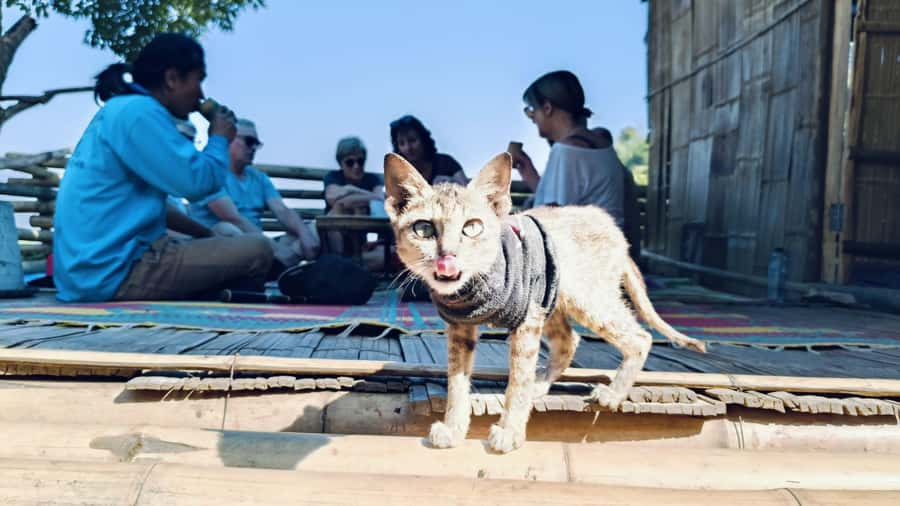
After lunch, the walking route continues through bamboo forest and farmland. This is where the tour becomes more than a list of stops. You move through working rural areas and see the setting around the villages at walking speed.
The tree planting is a small but thoughtful feature. You carry a plant to the trekking area, select your own spot, and put it in the ground. It gives the walk a personal marker, though you should not expect a formal ceremony or a named tree program based on the details provided.
The trail is not completely flat. The first 20 to 30 minutes can be steep and exposed to the sun, according to the supplied firsthand account. After that opening climb, the route is described as easier to manage. That makes footwear and pacing important. Hiking shoes are not included, and they are specifically listed among the things to bring.
I would start slowly, especially if you are not used to walking in warm conditions. The guides have long trekking experience and the company says its guides are former soldiers, but that does not remove the need for sensible pacing. Drink water, use sunscreen, and carry cash for any personal purchases.
Same mountains, a different route up:
- Chiang Rai: 1-Day Trekking and Longtail Boat Trip
★ 4.9 · 53 reviews - Akha & Lahu village trekking 1 day
★ 4.8 · 18 reviews - 1 Day trekking : Chiang Rai popular activity,Fun in Nature.
★ 4.8 · 18 reviews - Chiang Rai: 2-Day Jungle Trek only walk with Waterfall
★ 4.8 · 17 reviews
Lahu and Akha villages with time for cultural context
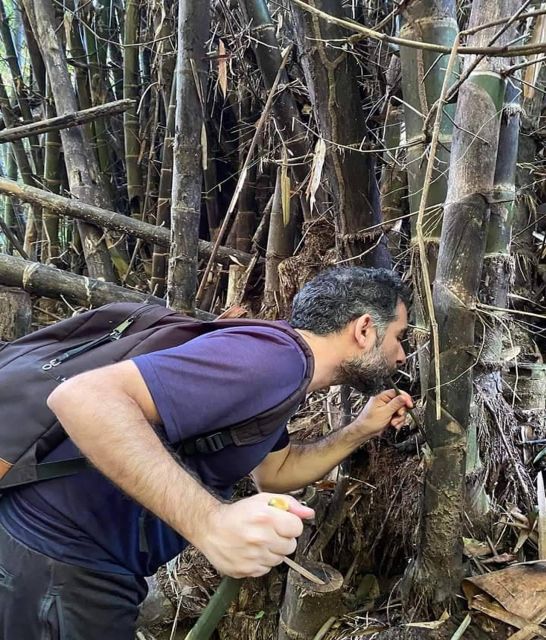
The route continues to Lahu and Akha hill-tribe villages. The value here depends heavily on the guide. A village visit can feel rushed or shallow if you only walk through, take photos, and leave. A good explanation gives meaning to what you see and helps you approach the communities with more care.
The guide speaks Thai and English. June was specifically praised for explaining local nature and culture throughout the walk, and for being warm and informative. You may not have June on your date, but the stated tour languages and guiding service mean you should have a guide able to explain the area in English or Thai.
The villages are described as friendly and open, but you should still act as a respectful visitor. Follow the guide’s lead about photography, avoid treating homes as scenery, and listen when village life is explained. The tour’s appeal is the chance to meet people in their own setting, not to turn the villages into a stage show.
The walk between the villages also gives the day a useful rhythm. You are not simply driven from attraction to attraction. You reach the communities on foot, after passing through forest and farm land, so the setting makes more sense.
Swimming at Huay Kaew Waterfall
Huay Kaew Waterfall is described as the second-largest waterfall in Chiang Rai, and it is the day’s best chance to cool off. You can swim there if conditions allow and if you feel comfortable doing so.
This stop is especially welcome after the sunny uphill section. A waterfall swim breaks up the walking and gives you a little control over the pace. You can enjoy the water, sit nearby, or simply rest if you do not want to swim.
Bring a swimsuit. It is not included, and the tour specifically lists it among the items you need. Mosquito repellent is also not included, so pack that as well. The information does not provide changing facilities, water depth, or safety arrangements, so keep your gear modest and easy to carry.
Do not treat swimming as guaranteed in every condition. Weather and water conditions can affect access, and the supplied details do not promise a fixed amount of time at the waterfall. Still, if you like combining a hike with a swim, this is one of the strongest reasons to choose this outing.
Chinese village, tea plantation, and the final hot spring
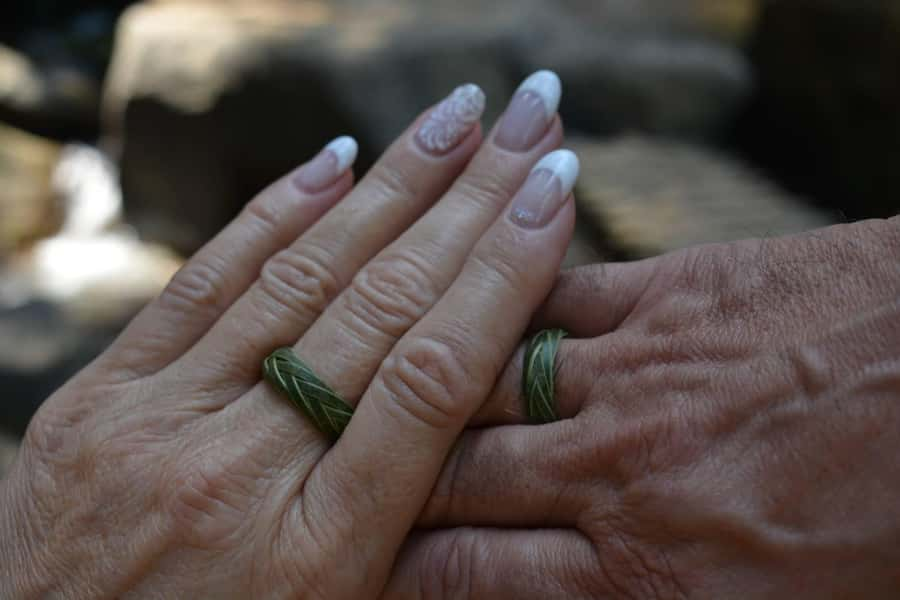
After the waterfall, the route continues toward a Chinese village and tea plantation. These stops add another layer to the area’s cultural mix. You have already walked through farmland and visited Lahu and Akha communities, so the Chinese village and tea fields widen your view of northern Thailand beyond a single local tradition.
The schedule does not give separate durations for these stops. I would expect them to be short viewing and walking sections rather than extended tours. They are useful as part of the route, but you should not book the day expecting a detailed tea workshop or a long plantation visit.
The hot spring comes near the end. You can take a mineral hot bath before returning by car to Chiang Rai. After several hours on foot, this is a practical finish rather than a decorative extra. The warm water lets you relax before the final transfer.
The tour includes the hot bath, but it does not state how long you stay or whether towels are provided. Bring only what you need and confirm any personal requirements in advance. The return is by car, so you do not need to walk back after the hot spring.
How difficult is the three-hour walk?
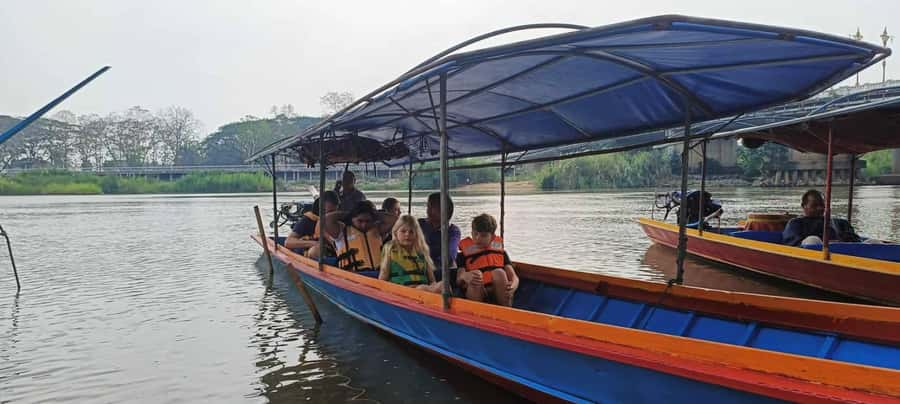
The walking time is given as about three hours, while the detailed schedule lists 1.5 hours of hiking, a one-hour lunch, and another two hours of hiking. In practice, plan for roughly three to three and a half hours of walking, with stops and transitions adding to the full day.
The key point is not the number alone. The early climb is the demanding part. It can be steep and sunny, then the trail becomes more manageable. You need to be comfortable walking on uneven outdoor paths and handling warm weather.
This tour is not suitable for people with diabetes, babies under one year, or people over 95 years old, according to the stated restrictions. Those rules are unusually specific, so take them seriously when deciding if the outing fits your group.
You do not need to be an expert hiker, but you should bring proper shoes. Sandals may be fine for the boat or hot spring, but they are a poor choice for the uphill trail. A camera, cash, water, mosquito repellent, and swimwear are the practical items to pack.
Guide quality and the value of the day

Guide quality is central here. The company has been leading hikes for 20 years, and the guides are ex-soldiers. That background suggests a disciplined approach to timing and route management, though it does not guarantee that every guide will have the same personality.
June received particular praise for being human, experienced, and informative. The feedback also highlights good organization, a friendly driver, clear explanations, and careful control of the schedule. Those details matter because this is a long day with several moving parts.
The tour is available in Thai and English. If you want detailed cultural explanation, make that clear when booking, since the guide’s storytelling can shape the village and nature sections. You can enjoy the scenery without much explanation, but you will get more from the day if you ask questions.
At $94 per person, I see solid value for anyone who uses most of the inclusions. Pickup, boat transport, guide, lunch, water, the tree, hot bath, and return transportation would cost more to arrange separately, and arranging the boat and village route yourself would take work.
Who should book this Chiang Rai day?
You should book this if you want a full rural outing with walking, local food, village visits, a waterfall swim, and a hot spring in one day. It suits active adults, couples, friends, and families with older children who can manage the hike.
You should think twice if your priority is comfort, a gentle pace, or long time at each stop. The early climb can be hot, and the schedule is packed. People with mobility concerns should also ask detailed questions before booking, since the route includes a steep uphill section and uneven trail.
The free cancellation policy allows cancellation up to 24 hours before the activity for a full refund. You can also reserve and pay later, which is useful if your Chiang Rai plans are still shifting. Pickup is available from a hotel, airport, or bus station in Chiang Rai.
Should you book it?
I would book this tour if you want to see Chiang Rai through several local settings rather than spend the day at one major attraction. The best features are the river ride, the personal tree planting, the village route, and the chance to cool off at Huay Kaew Waterfall before the hot spring.
I would not book it for a purely relaxing day. Come prepared for sun, an uphill start, and several hours on foot. Bring hiking shoes, mosquito repellent, swimwear, a camera, and cash, then let the guide handle the route. For an active visitor who values local food and direct contact with rural life, $94 is a fair price for a very full day.
FAQ
How long does the activity last?
It is a full-day experience in Chiang Rai. The listed walking time is roughly three hours, while the detailed schedule allows about three and a half hours of hiking.
How long is the boat trip?
The motorized long-tail boat ride lasts about 45 minutes and travels along the Mae Kok River toward Buddha Cave.
Is hotel pickup included?
Yes. Pickup is included from a hotel, airport, or bus station in Chiang Rai.
Is lunch included?
Yes. Lunch and drinking water are included. The meal is served at a local restaurant, and the day may also include shared cooking in a simple bamboo hut.
Can I swim during the tour?
Yes. You can enjoy a swim at Huay Kaew Waterfall. Bring your own swimsuit because it is not included.
What languages does the guide speak?
The live guide service is available in Thai and English.
What should I bring?
Bring a camera, hiking shoes, cash, mosquito repellent, and a swimsuit. A swimsuit and hiking shoes are not included with the tour.
New treks around Chiang Rai
- Chiangrai: Group Trekking with Bamboo Cooking★ 4.8 · 5 reviews
- Chiang Rai Trek: 4 Hilltribes Villages & Waterfall Only Walk★ 4.8 · 8 reviews
- Chiang Rai Trek:Jungle Hike, Bamboo-Cooked Lunch & Boat Ride★ 5.0 · 7 reviews
- Chiang Rai: The Adventure of Trekking & Bamboo Cooking★ 5.0 · 3 reviews
- Chiang Rai 1 Day Jungle Trek with Bamboo Lunch & Local Guide★ 5.0 · 5 reviews
- Chiang Rai: 2-Day Jungle Trek only walk with Waterfall★ 4.8 · 17 reviews
- Chiang Rai Jungle Trek & Bamboo Tube Cooking Adventure★ 5.0 · 5 reviews
- Akha & Lahu village trekking 1 day★ 4.8 · 18 reviews
Chiang Rai Trekking Tours, side by side.
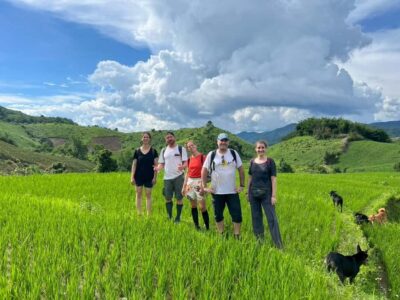
Chiang Rai: Jungle Adventure-Group Trekking & Bamboo Cooking
Read our review →
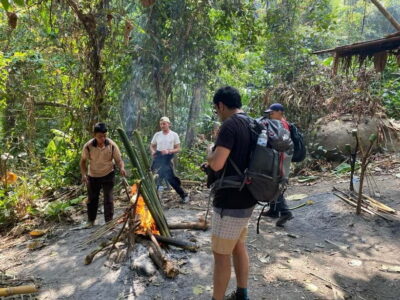
Chiang Rai: 1-Day Trekking and Longtail Boat Trip
Read our review →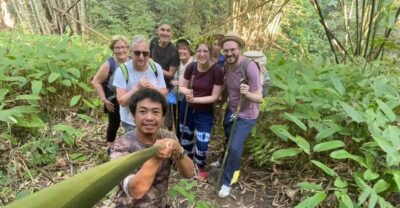
1 Day trekking : Chiang Rai popular activity,Fun in Nature.
Read our review →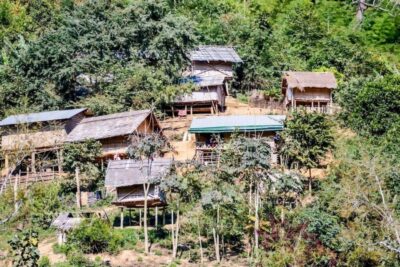
Chiang Rai: 2-Day Jungle Trek only walk with Waterfall
Read our review →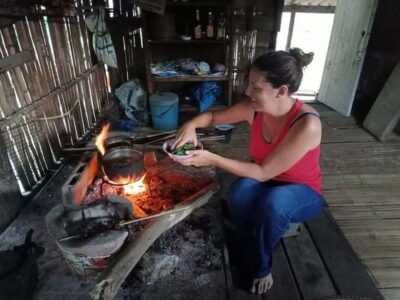
Chiang Rai Trek: 4 Hilltribes Villages & Waterfall Only Walk
Read our review →Lists this trek appears in