
Review · SPAIN
Alicante: Via Ferrata del Ponoig Guided Trek and Climb
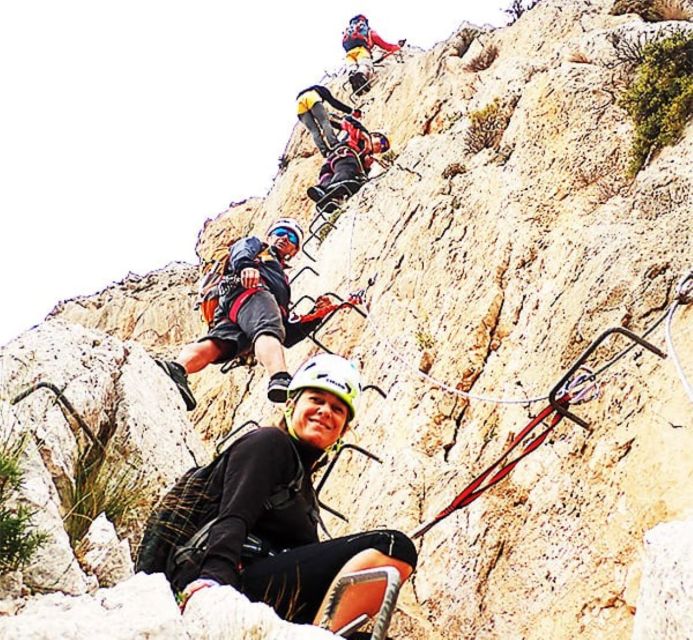
The real draw here is the near-vertical climb up Via Ferrata del Ponoig, where metal staples lead you above the Valley of Guadalest and toward wide views of the Mediterranean. You are not simply hiking to a viewpoint. You are working your way up a cliff, clipped to a safety cable, with your legs and arms doing the work.
I like two things right away: the guide-led practice before the climb, and the small group capped at 10 people. You also get a helmet, harness, Ferrata kit, and photos, which makes the $65 price feel fair for a five-hour outing.
The catch is simple: this is a K4 route with significant physical activity, not a gentle mountain walk. You need hiking shoes, water, suitable clothing, and a head for heights. It is not suitable for children under 18, pregnant women, people with mobility impairments, or anyone with vertigo.
Key points to know before you book
- A true cliff climb: You ascend using thick metal staples fixed into the rock and a continuous security cable.
- A useful practice session: Your guide explains the climbing basics and lets you try the equipment before the main ascent.
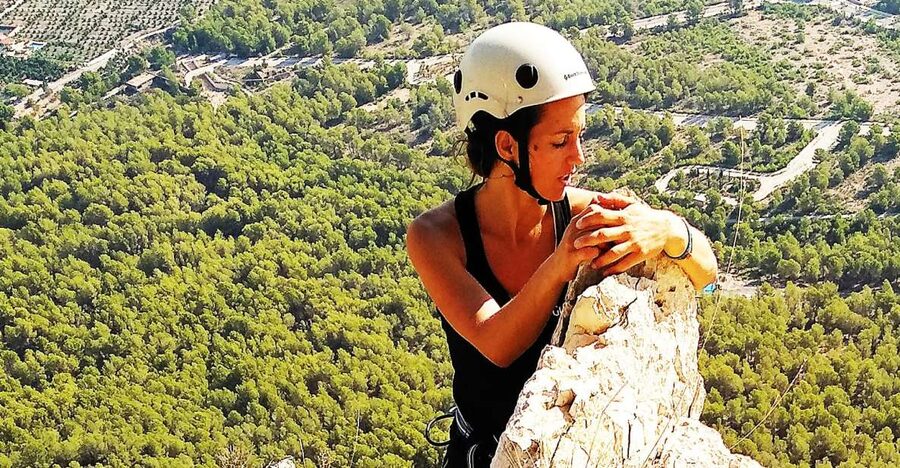
- Big mountain and sea views: Look across the Valley of Guadalest, the Sierras de Aixortá and Bernia, and the Mediterranean coast.
- Five hours from parking lot to parking lot: The outing begins and ends at Parking Vía Ferrata Ponoig.
- Good guide support: Frank and Osmar have been singled out for clear explanations, patience, and calm handling of the group.
- Bring your own shoes and supplies: Safety equipment is included, but shoes, food, drinks, water, and sunscreen are your responsibility.
What Via Ferrata del Ponoig feels like
A via ferrata sits between hiking and rock climbing. You follow a marked route across and up the rock, using iron staples, steps, and a fixed cable for protection. You are not relying on a rope system in the same way as a traditional climbing course, but you are still climbing and must stay clipped in as instructed.
At Ponoig, the route is categorized as K4. The supplied details describe steep, aerial, spectacular sections and a nearly vertical climb. That tells me you should treat this as a serious active excursion, even if you have never climbed outdoors before.
The metal staples give you handholds and footholds as the rock rises. In places, the main challenge is not technical climbing skill but keeping a steady rhythm while your arms and legs work together. You will need to pay attention to where you place your feet and follow the guide’s instructions closely.
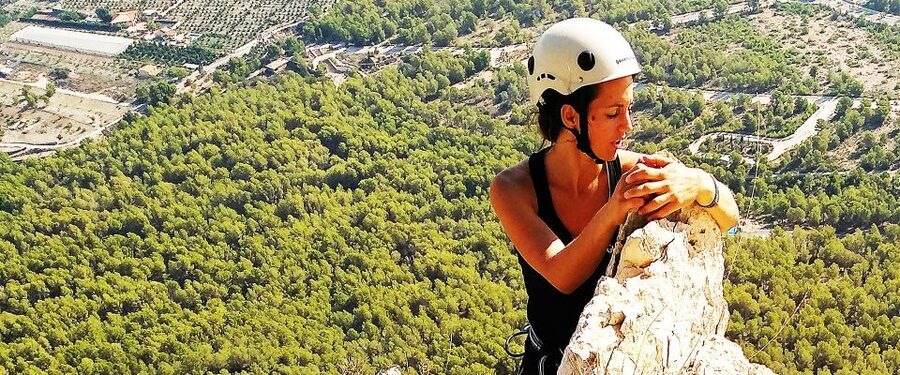
The reward comes when you look away from the rock. The Valley of Guadalest opens below, with the Sierras de Aixortá and Bernia spreading across the view. The Mediterranean coast appears beyond the mountain scenery. These are the kind of views that feel earned because you reach them under your own power.
More guided trips around Spain
- La Palma: Tajogaite Volcano Guided Trek
★ 4.8 · 1,810 reviews - Caminito del Rey: Trekking Tour with Hiking Guide
★ 4.1 · 295 reviews - Fuerteventura: Guided Trekking Tour with Island Goats
★ 4.9 · 146 reviews
Meeting your guide at Parking Vía Ferrata Ponoig
Your day begins at Parking Vía Ferrata Ponoig. Look for the guide holding a visible sign. The activity returns to this same parking area, so you do not need to arrange a separate pickup from the end of the route.
The meeting point is practical, but you should plan your arrival carefully. The provided details do not include transportation, so you need to make your own way to the parking area. They also do not specify a hotel pickup service.
Once the group gathers, the guide fits you with a harness, helmet, and Ferrata kit. Spanish and English are available. The group limit is 10 participants, which is small enough for the guide to watch the group and adjust the pace more easily than on a large bus-style excursion.
Past departures have included guides named Frank and Osmar. Frank was praised for choosing the right amount of English for the group, while Osmar was noted for patience and very clear instructions. Those details matter here. A calm guide can make a big difference when you are standing at the base of a steep rock face and deciding whether you really want to go upward.
The safety briefing and practice climb
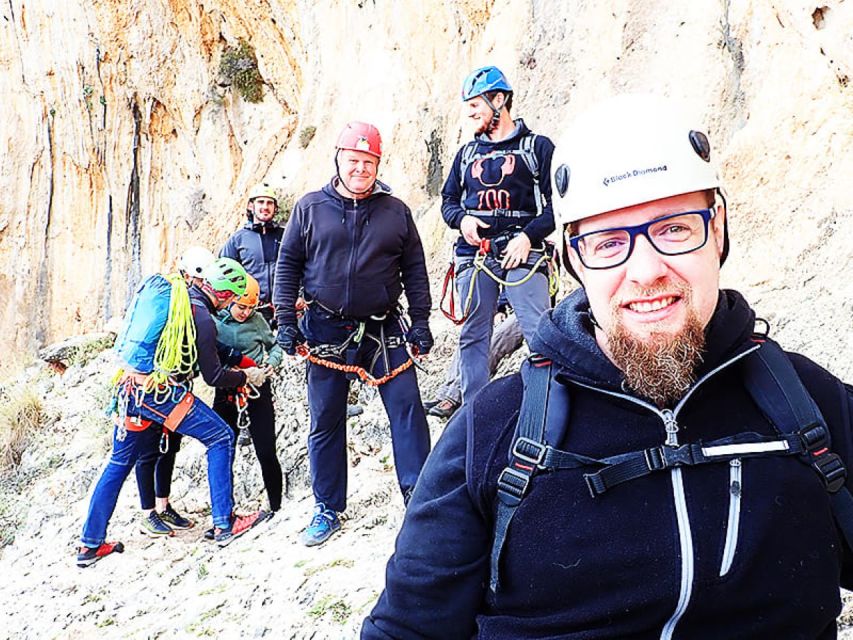
Before the main route begins, you learn how the equipment works and practice climbing on a rock wall with the guide. This is one of the most useful parts of the activity, especially if via ferrata is new to you.
You will be shown how to use the harness and Ferrata kit with the fixed cable. The guide also covers the basic movement needed to climb with metal staples. The exact length of the practice session is not given, but the briefing and guided route together take about four hours, within a five-hour total outing.
Do not rush through this part. You want to understand how to move your equipment along the cable and how to keep your body balanced on the rock. Ask questions here, while your feet are still on manageable ground.
The practice also gives you a chance to judge the route honestly. If the first vertical section makes you uncomfortable, speak up early. A guide can help you understand what lies ahead, but you should not treat this as an activity where you can simply walk away from the physical demands once the climb is underway.
Climbing the staples above the Valley of Guadalest
The main route takes you directly up the rock using thick metal staples and a new security cable. This is the part that gives the outing its punch. You will climb rather than stroll, and the exposure creates the feeling of being high above the ground.
I would expect the effort to come in short bursts. You climb a section, pause to get your balance and look around, then continue. The route description emphasizes straight-up movement, so you should be prepared for your arms to work as much as your legs.
Your guide leads the group and helps maintain a safe rhythm. The small-group format is helpful because climbers naturally move at different speeds. The supplied information says the guide adapts to the group’s pace, an important point for beginners who may need extra time on a vertical section.
The route is not suitable for anyone with vertigo. That warning is worth taking seriously. The views are part of the reward, but the same height that makes them impressive can make the climb uncomfortable if you dislike exposure.
You also need to keep your attention on the route. This is not a place to spend the whole climb taking photos. The included photo service lets you enjoy the ascent without trying to manage a camera at every step. Food and drinks are not included, so pack water and any snack you want for the five-hour outing.
More treks around Spain:
- Lanzarote: Timanfaya Natural Park Trekking Tour
★ 4.8 · 766 reviews - Volcano Trekking Tour (Timanfaya eruptions)
★ 5.0 · 339 reviews - La Palma: Guided Trekking Tour to El Roque de los Muchachos
★ 4.6 · 104 reviews - Caminito del Rey Trekking Walkway
★ 4.0 · 100 reviews
The views from Ponoig’s rock face
The view is not limited to one final summit point. As you climb, you can look over the Valley of Guadalest and across the Sierras de Aixortá and Bernia. The Mediterranean coast provides a broad, distant horizon beyond the mountain ridges.
The combination is what makes Ponoig memorable. You get the close texture of the rock, the immediate concentration of climbing, and then a much wider view whenever the route opens out. It is a very different way to see the Alicante area than from a road overlook.
You should also expect the scenery to compete with your concentration. The safest approach is to stop when the guide allows it, get your balance, and then take in the view. The supplied reviews repeatedly praise the views from the top, but the route itself is also part of the visual experience.
Bring sun protection. One participant specifically advised taking plenty of water and sunscreen, along with a small rucksack and a snack. The activity does not include food or drinks, and the five-hour duration makes those supplies more than a minor convenience.
What the $65 price includes
At $65 per person, this is priced as a guided active excursion rather than a basic self-guided hike. The fee includes the climbing guide, safety gear, and photos.
The equipment matters. You would otherwise need access to a harness, helmet, and Ferrata kit, plus enough confidence to use it correctly on a steep route. The guide’s instruction is just as important as the gear, particularly if you are new to via ferrata.
The price does not include shoes, food, or drinks. You need hiking shoes, not ordinary casual trainers, and you should bring water and weather-appropriate clothing. A small rucksack is useful for carrying these items, though the information does not specify a required bag size.
I see good value here for someone who wants an organized first experience on a demanding route. The cost covers the guide and core safety equipment, while the five-hour duration gives you a full half-day in the mountains. If you already own Ferrata equipment and are comfortable on this kind of route, the value may feel less striking. For most first-timers, however, the instruction and gear make the fee easier to justify.
Who should choose this climb
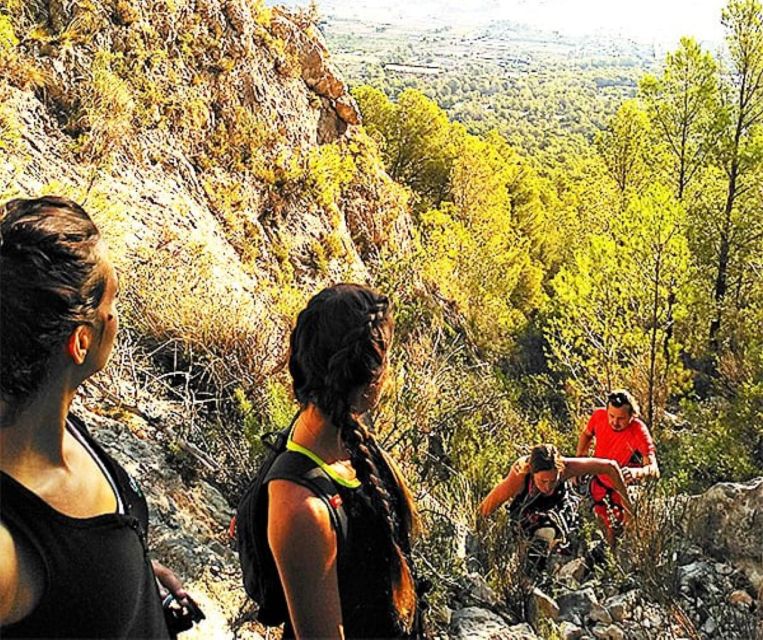
This activity suits adults who are active, curious, and ready for a challenge. You do not need to be described as an expert climber to consider it, since the guide teaches the basics and provides practice before the main route. Still, you must be comfortable with a nearly vertical climb and sustained physical effort.
I would choose it if you want more than a scenic walk and like the idea of earning the view through movement. It is also a good fit if you prefer a small group and want a guide who can explain each step in English or Spanish.
I would not choose it if you have vertigo, limited mobility, are pregnant, or are looking for a family activity. Children under 18 are not accepted. The K4 rating and the direct warning about physical activity should guide your decision more than the attractive price.
Previous guide feedback puts a useful emphasis on communication. Frank was praised for his English and his sense of how much explanation the group needed. Osmar was praised for patience and clear instructions. You cannot assume a particular guide will lead your date, but these examples show the type of support to value when you book.
Timing, clothing, and practical preparation
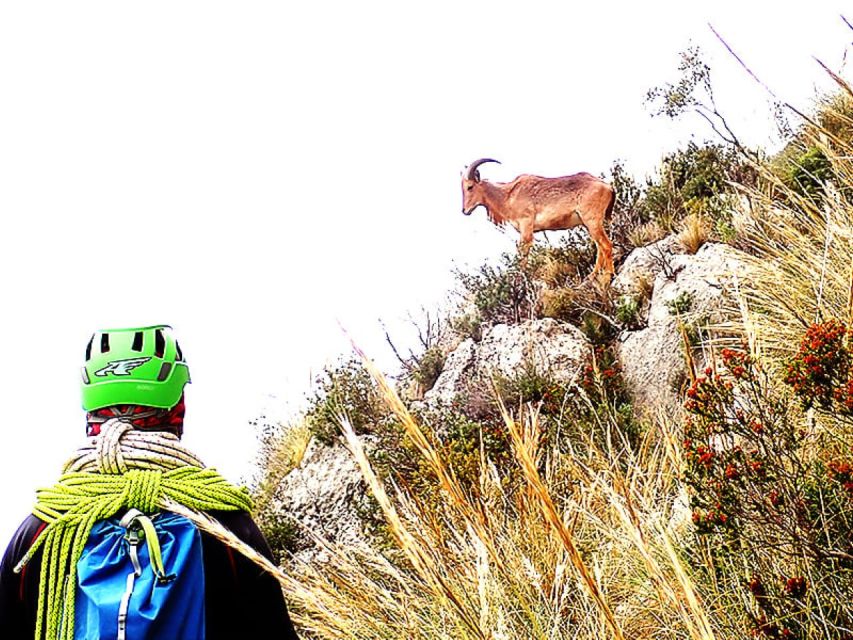
The total duration is five hours, with the guided climb and safety briefing taking about four hours in the route outline. Starting times depend on availability, so check the schedule when choosing your date.
Wear hiking shoes with a secure fit. Shoes are not supplied, and footwear is especially important when your feet are working on narrow metal staples. Add water, weather-appropriate clothing, sunscreen, and a small snack.
The route is outdoors and exposed, so conditions can affect how comfortable the day feels. The supplied information does not state a weather cancellation policy, so check the conditions and any provider update before setting out.
You should also allow enough time to get to Parking Vía Ferrata Ponoig without rushing. A calm start helps you listen to the briefing and check your gear properly. Since the activity ends back at the parking area, you can leave your day open afterward without arranging another meeting location.
Free cancellation is available up to 24 hours in advance for a full refund, and you can reserve without paying immediately. That flexibility is useful when your Alicante plans depend on weather or changing schedules.
Is Via Ferrata del Ponoig worth booking?
I would book this if you want a proper mountain adventure with a guide, safety equipment, and views that open onto both inland valleys and the Mediterranean. The practice session, small group, included photos, and strong guide feedback add real value to the $65 cost.
I would skip it if you want a relaxed hike, dislike heights, or are not prepared to carry water and wear proper hiking shoes. The route is demanding, and the K4 classification is not decoration.
For a fit adult who wants to try via ferrata with patient instruction and a manageable group size, this is a strong choice near Alicante. Go in expecting a climb first and a sightseeing trip second. That is exactly why the views should feel so satisfying.
FAQ
Where does the Via Ferrata del Ponoig activity begin and end?
It begins at Parking Vía Ferrata Ponoig and returns to the same parking area.
How long does the activity last?
The total duration is five hours. The route outline lists about four hours for the guided tour and safety briefing.
What equipment is included?
The activity includes a climbing guide, helmet, harness, Ferrata kit, and photos.
Do I need to bring climbing shoes?
Shoes are not included. You should bring hiking shoes, along with water and clothing suited to the weather.
Is the activity available in English?
Yes. The live guide service is available in Spanish and English.
Who cannot take part?
The activity is not suitable for pregnant women, people with mobility impairments, people with vertigo, or children under 18. It also involves significant physical activity and a nearly vertical climb.
New treks around Spain
- Mallorca: Torrent de Pareis trekking Adventure★ 5.0 · 3 reviews
- La Palma: Guided e-bike tour (trekking)★ 5.0 · 6 reviews
- La Palma: Guided trekking tour to volcanoes south★ 4.9 · 44 reviews
- Granada: Sierra Nevada Veleta Peak Trek with Lunch★ 4.9 · 60 reviews
- Fuerteventura: Trekking Tour Through the North of the Island★ 4.8 · 43 reviews
- La Palma: Guided Trekking Tour To Cubo de la Galga★ 4.4 · 90 reviews
- Trekking in the Volcanoes Natural Park in a small group★ 5.0 · 97 reviews
- Caminito del Rey Trekking Walkway★ 4.0 · 100 reviews
Spain Trekking Tours, side by side.
Lanzarote: Timanfaya Natural Park Trekking Tour
Read our review →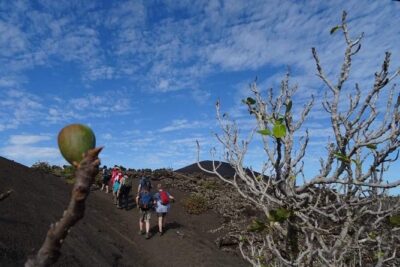
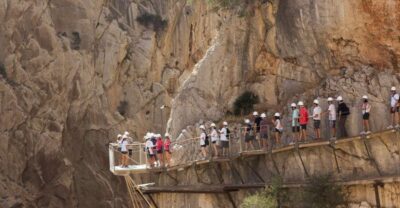
Caminito del Rey: Trekking Tour with Hiking Guide
Read our review →
Fuerteventura: Guided Trekking Tour with Island Goats
Read our review →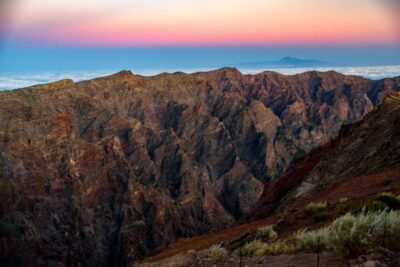
La Palma: Guided Trekking Tour to El Roque de los Muchachos
Read our review →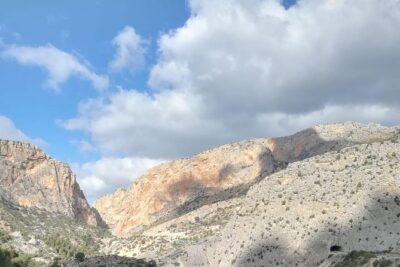
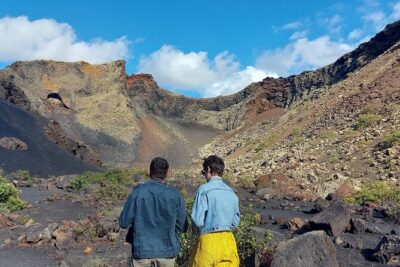
Trekking in the Volcanoes Natural Park in a small group
Read our review →Lists this trek appears in